Newfoundland’s 20 km/h Shoulder Limit
Oh, the infamous highway shoulder! If you’ve spent any time riding an ATV or UTV in Newfoundland, you know the struggle is real. You’ve got a fantastic trail just across the road or a short distance down the shoulder, but there’s that nagging question: "Can I even ride here? And how fast?" That little stretch of pavement or gravel can feel like a minefield of regulations. This guide is going to clear up all that confusion, especially focusing on Newfoundland's strict 20 km/h shoulder limit and what it means for your rides.
Why Newfoundland Limits Your Speed on Highway Shoulders
It’s easy to feel like these rules are just there to make life difficult for us riders, isn't it? Like the powers-that-be are just trying to curb our fun. But when you dig a little deeper, you realize there’s a lot of thought – and a lot of safety – behind why Newfoundland has such specific, and sometimes restrictive, rules for off-road vehicles on highway shoulders. It really boils down to keeping everyone safe, whether they’re in a truck going 100 km/h or on a quad puttering along at 20 km/h.
The Core Principle: Safety First
Let's be brutally honest: highways are designed for cars, trucks, and tractor-trailers moving at high speeds. Your ATV or UTV, while incredibly capable off-road, is fundamentally different. It's slower, often less stable on paved surfaces, and far less visible than a car. When you introduce a slow-moving, smaller vehicle onto the shoulder of a high-speed highway, you create a significant safety hazard. The speed differential alone is alarming; a car approaching at 100 km/h has very little time to react to an ORV moving at 20 km/h, especially if there's any visual obstruction.
Think about it from a driver's perspective. They’re usually looking for other cars, judging distances for passing, and scanning for deer. An ATV or side-by-side, especially one partially obscured by roadside brush or an oncoming vehicle, can easily be missed until it's too late. The law isn't trying to penalize you; it's trying to prevent devastating collisions that could result in serious injury or worse, given the inherent vulnerability of an ORV rider compared to someone encased in a steel vehicle.
The slow speed limit on shoulders is a direct response to this risk. It's an attempt to minimize the closing speed between an ORV and highway traffic, giving everyone a precious extra second or two to react. It forces riders to be hyper-aware of their surroundings and highway drivers to exercise extreme caution if they spot an ORV. It’s a compromise, aimed at allowing some access while mitigating the most dangerous aspects of mixing these very different types of traffic.
Protecting Road Infrastructure and Maintaining Flow
Beyond immediate safety, there's also the practical consideration of the roads themselves. Highway shoulders, while seemingly sturdy, aren't always designed for the constant travel of heavy, knobby-tired off-road vehicles. Repeated use can churn up gravel shoulders, leading to ruts and erosion, or cause wear and tear on paved edges not meant for lateral stress. This can necessitate costly repairs and maintenance, pulling resources away from other essential road upkeep.
Then there's the flow of traffic. Even if you're strictly on the shoulder, a slow-moving ORV can create a psychological ripple effect for highway drivers. Some might slow down unnecessarily, others might swerve slightly into the next lane, especially if they perceive you as a potential hazard. This disruption, even if minor for individual vehicles, can cumulatively affect traffic patterns and lead to congestion or increased frustration, particularly on busier routes. It’s not just about what you are doing, but how your presence impacts the entire system.
The province has to balance the recreational desires of ORV riders with the efficient and safe operation of its primary transportation network. These shoulder rules, including the speed limit and distance restrictions, are part of that delicate balance. They acknowledge the need for ORV users to sometimes interact with the highway system but strictly limit that interaction to preserve both safety and the integrity of the infrastructure.
Harmonizing ORV Use with Traffic Laws
The [Newfoundland's Off-Road Vehicles Act] isn't a standalone piece of legislation; it operates within the broader framework of provincial traffic laws. The challenge is trying to integrate vehicles designed for wilderness exploration into a system that has very different expectations for speed, visibility, and control. The 20 km/h limit on shoulders is a prime example of this harmonization effort. It acknowledges that while ORVs are distinct, when they venture onto portions of the highway system, they must adhere to rules that reflect the dangers present.
It essentially creates a temporary, highly constrained "road allowance" for ORVs, but it comes with stringent conditions. The provincial government understands that riders sometimes need to use a short segment of a shoulder to bridge a gap between trails, access private property, or make a safe crossing. Without these specific allowances, such actions would be entirely illegal, pushing riders onto trails that might be less accessible or forcing them to trespass.
So, while it might feel like a hassle to slow down to a crawl on a wide-open shoulder, remember that these rules are an attempt to create a legal, albeit restricted, pathway for you. It’s about ensuring that when you are near or on public roads, you’re operating under conditions that are as safe as possible, minimizing risk not just to yourself, but to every other road user out there. It’s a framework that asks for rider responsibility in exchange for limited access.
Deconstructing the 20 km/h Shoulder Limit
Okay, let's talk brass tacks about this speed limit. You're allowed on the shoulder for a very specific and limited purpose, and when you are, there's absolutely no ambiguity about how fast you can go. It’s a rule that’s often overlooked or intentionally bent, leading to a lot of frustration and, unfortunately, a fair share of tickets. But understanding exactly what "20 km/h" means and where it applies is crucial to staying on the right side of the law.
What "20 km/h" Truly Means on the Shoulder
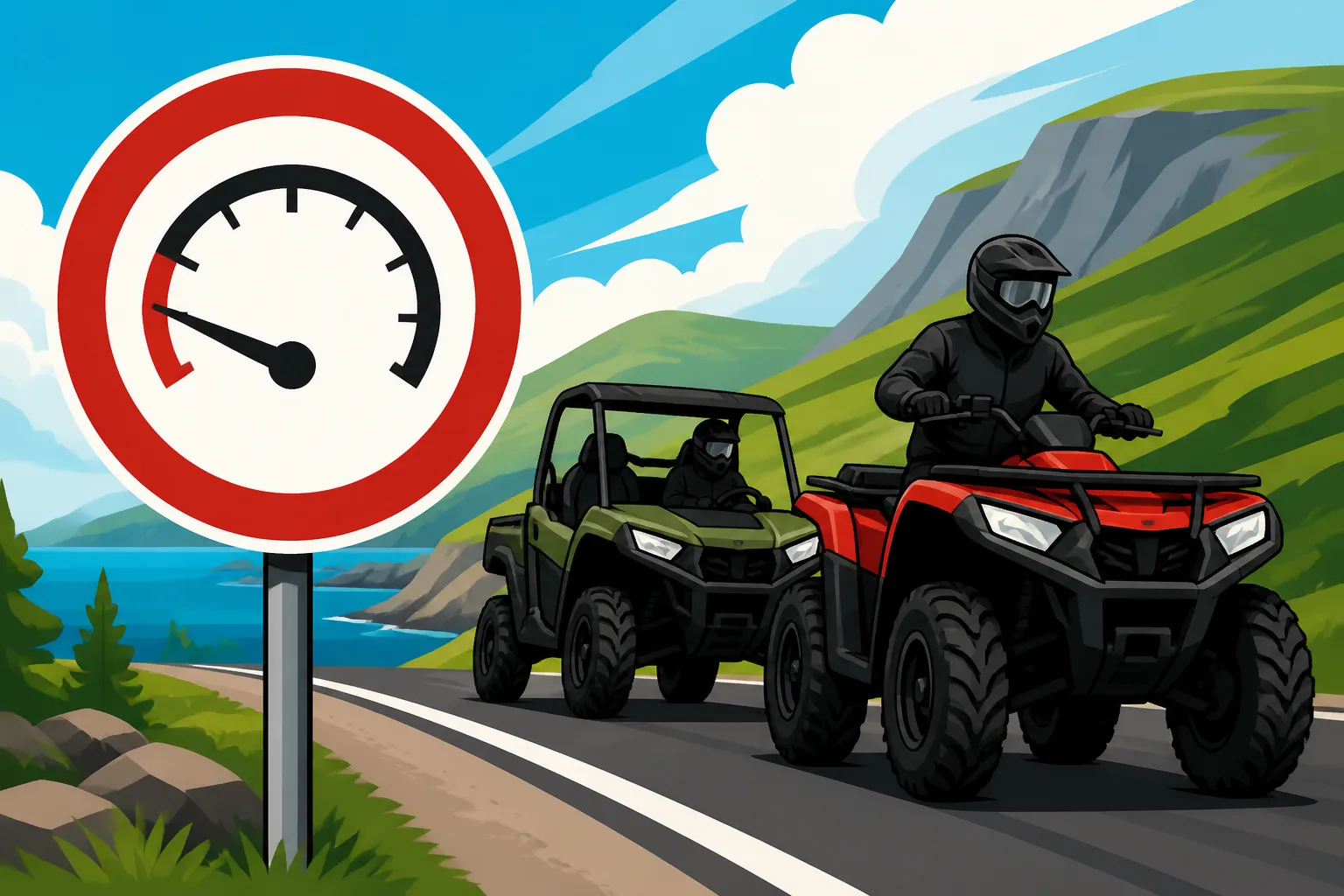
The number "20 km/h" isn't a suggestion, it's a hard, unyielding limit. It's not "around 20 km/h," or "slow enough," or "what feels safe." It is precisely 20 kilometres per hour, or less. Many riders find this speed incredibly slow, especially if they're used to cruising at higher speeds on trails or even on secondary roads where ORVs might have more leeway. It can feel like you're barely moving, and on a powerful machine, maintaining such a low speed can even be a bit awkward.
The challenge is often in monitoring your speed accurately. Most ATVs and UTVs have speedometers, but they might not be perfectly calibrated at such low speeds, or you might be relying on engine RPMs or simply a "feel" for your speed. However, an RNC officer's radar gun is not going to rely on your "feel." If you're clocked at 21 km/h, you're technically in violation. This isn't to say officers are always looking for a single km/h difference, but it underscores the seriousness of the limit. It’s a clear boundary, and crossing it carries consequences.
So, when you see the internal link [20 km/h on a Shoulder], understand that it's a critical piece of the puzzle for legal operation. Your best bet is to actively look at your speedometer and ensure you are well under that limit if possible. Err on the side of caution. If you have cruise control on your machine, it might even be helpful to set it if you can get it to hold such a low speed consistently.
Where This Limit Applies
This 20 km/h limit applies specifically to the shoulder of a public highway where ORV access is permitted for specific, limited purposes. This means that if you're riding a designated ORV trail that happens to run parallel to a highway but is clearly separated (for example, a section of the T'Railway that runs alongside the Trans-Canada Highway), the 20 km/h limit likely doesn't apply to the trail itself. In those cases, the trail's designated speed limit would apply.
However, the moment you transition from that separate trail onto the gravel or paved shoulder of the actual highway, the 20 km/h rule kicks in. This also applies to any stretches where you are using the shoulder to line up for a highway crossing, or to travel a short distance to access another trail or private property. It's a key part of the [Newfoundland ORV Road Rules Explained], and understanding this distinction is crucial. Don't confuse a parallel trail with the actual highway shoulder; the rules are dramatically different.
It's also important to differentiate between a public highway shoulder and a private access road or a cabin path. If you're on your own land, or a private road with permission, these specific highway rules don't apply. But any time you're on land that is unequivocally part of the public highway system – even if it's just the gravel strip beside the asphalt – you are subject to the 20 km/h limit. Ignorance of this distinction is not a defense, and can lead to immediate penalties.
The Peril of Underestimation
One of the biggest pitfalls for riders in Newfoundland is underestimating how seriously this 20 km/h limit is enforced. Many feel it’s unreasonably slow, leading them to creep up to 30 or 40 km/h, thinking it's still "slow enough" and unlikely to attract attention. This is a risky gamble. RNC officers and other enforcement agencies are well aware of the legal requirements for ORV use on shoulders, and speeding in these zones is a common reason for a roadside stop.
The financial penalty for exceeding this limit, combined with potential court costs and the time lost dealing with a ticket, can quickly ruin a weekend ride or even a season. It’s not just about the fine; it's the inconvenience and the feeling of being caught out. Officers prioritize safety violations, and excessive speed on a highway shoulder, where there's a high risk of interaction with fast-moving traffic, is definitely considered a safety issue. They're not just looking to write tickets; they're trying to prevent accidents.
So, while it might feel frustratingly slow to crawl along at 20 km/h, remember that this adherence is what allows you to use these areas legally at all. Pushing the limit, even by a small amount, significantly increases your chances of attracting unwanted attention from law enforcement. It's a small concession to make for legal access and, more importantly, for your own safety and the safety of others on the road.
The 1-Kilometre Rule: A Tight Leash for Access
Just when you get your head around the speed, there's another crucial restriction: the distance. Newfoundland's rules aren't designed to allow you to cruise indefinitely along highway shoulders, even if you’re meticulously sticking to 20 km/h. The 1-kilometre rule is a fundamental limitation that dictates how far you can travel on a shoulder, reinforcing that this access is for specific, short-distance needs only. It’s another point of frustration for many riders, but it's vital to respect to avoid legal trouble.
Defining the 1-Kilometre Limit
The law is very clear: you are permitted to operate an ORV on a highway shoulder for a maximum distance of one kilometre. This is specifically for the purpose of getting from your point of origin (like a private driveway or a designated ORV staging area) to an approved trail, or to cross a highway, or to access a property. It is not an invitation to travel from one town to the next, nor is it a shortcut to bypass a longer, more circuitous trail route. This is a strictly limited allowance for immediate access.
Think of it as a very short leash. The moment you exceed that 1-kilometre mark, you are technically in violation of the Off-Road Vehicles Act. It's not about your intent to just go a "little bit further"; it's about the measurable distance you've covered. This rule, combined with the 20 km/h speed limit, paints a picture of highly restricted, cautious, and brief interactions between your ORV and the highway system. It ensures that the primary mode of travel for your machine remains off-road.
This rule is why the internal link [Riding the Shoulder 1 Kilometre to Reach a Trail] is so important. It clearly states the maximum allowed distance. If your desired trail access point is 1.5 km down the shoulder from your starting point, you cannot legally ride your machine that far. You'd need to find an alternative, whether it's trailering your machine closer, finding a different access point, or exploring if there's a municipal road bypass.
Practical Scenarios for the 1-Kilometre Rule
Let's imagine a few real-life scenarios to clarify this rule. Picture this: you're leaving your cabin driveway, which is right off the Trans-Canada Highway. The entrance to your favourite railbed trail is 500 metres down the paved shoulder. In this case, riding those 500 metres at 20 km/h or less is perfectly legal. You're using the shoulder for a direct, limited access to an approved trail, and you're well within the 1-kilometre limit.
Another scenario might be using the shoulder to safely position yourself for a highway crossing. You pull out of a side road, travel 200 metres along the shoulder to a point where you have excellent visibility (we'll talk more about that 150-metre rule soon), and then cross directly. This too would fall within the legal parameters of the 1-kilometre rule, as it's for facilitating a necessary crossing.
What if your trail access point is exactly 1 kilometre from your driveway? That’s technically fine, but it leaves you no margin for error. If you misjudge your starting point or travel just a few extra metres, you could be in violation. It’s always best to aim for well under the limit if you can, just to give yourself some buffer. Remember, these are hard limits, not approximations.
When the 1-Kilometre Rule is Violated
The instant you pass that 1-kilometre mark on a highway shoulder, you are operating your ORV illegally. It doesn't matter if you were going 5 km/h; the distance itself is the violation. Many riders get caught by this, especially if they're not precisely measuring distances beforehand. It’s easy to eyeball a stretch of road and think, "Oh, that's less than a kilometre," only to find out from an RNC officer that it was, in fact, 1.2 kilometres.
From an officer's perspective, this isn't about intent or how careful you were. It's about a clear breach of the regulation. The rule exists for a reason – to minimize prolonged exposure of ORVs to highway traffic and to prevent the shoulder from becoming an unofficial trail. Violating this rule can lead to fines, and repeat offenses might even lead to more severe actions like machine seizure. This is why [Why 1 Kilometre Is the Hard Limit] is such a critical piece of information.
To avoid falling into this trap, it's highly advisable to use mapping tools to measure distances from your proposed starting point to your trail access. If it's over 1 km, you absolutely need to find an alternative. That might mean trailering your machine further down the road, finding a different trail entrance, or even exploring if a secondary, non-highway road can provide a legal bypass. Don't gamble with the distance; the consequences aren't worth the perceived convenience.
Essential Requirements for Legal Road and Shoulder Use
Using an ATV or UTV on a highway shoulder or crossing a road isn't like riding on your own private land or a designated off-road trail. The stakes are higher, and so are the legal requirements. You can’t just hop on your machine and expect to be fine; there are specific mandates regarding your licence, insurance, and safety gear that become absolutely non-negotiable the moment your tires touch any part of the public highway system.
Driver's Licence and Age Requirements
Here's a point of confusion for many: while you generally don't need a specific "ORV license" to operate an ATV or UTV on a designated trail in Newfoundland, that all changes when you interact with a public highway. If you are operating your machine on a highway shoulder or crossing a highway, you must possess a valid driver's licence. This means a Class 5 (passenger vehicle) licence, or equivalent, for the province you're licensed in. A learner's permit or a suspended licence won't cut it.
This requirement is fundamental for several reasons. Firstly, it ensures that anyone operating a vehicle, even temporarily, within the highway system has demonstrated a basic level of driving competency and understands road rules. Secondly, it's directly tied to insurance and liability – without a valid licence, many insurance policies become void in the event of an incident. Young riders, who might be legally allowed to ride certain ATVs on trails under supervision, are absolutely prohibited from operating an ORV on a highway or shoulder. The [Do You Need a Licence for an ATV in Newfoundland?] article provides more details on this.
It's a critical distinction: trail riding and road-adjacent riding are two different beasts in the eyes of the law. Don't assume that because you can ride your quad in the woods without a car licence, you can do the same to cross the Trans-Canada Highway. The moment you interact with the provincial road system, you need to meet the standards of a licensed driver.
Mandatory Insurance Coverage
This is another non-negotiable. When you're operating an ORV on any part of the highway system in Newfoundland – be it the shoulder or during a crossing – you are legally required to carry a minimum level of liability insurance. This isn't just a good idea; it's the law. This insurance is there to protect you financially in case you're involved in an accident that causes injury to another person or damage to their property. Without it, you could face enormous personal liability.
The province sets a [Newfoundland's Minimum Insurance Requirement] for ORVs on roads, typically a significant amount of liability coverage. This amount is meant to cover potential medical expenses, property damage, and legal costs arising from an incident. Carrying proof of this insurance is also mandatory. While you don't necessarily need to have the physical paper policy on your person, you must be able to produce proof of insurance to a peace officer within two business days if requested. Failing to do so can lead to fines and even machine impoundment.
Imagine the nightmare scenario: you're riding the shoulder, someone swerves, an accident happens, and you don't have insurance. The financial ruin could be catastrophic. This is why the insurance requirement isn't just a bureaucratic hurdle; it's a vital layer of protection for you and for the public. Make sure your policy covers road interaction for your ORV, as some policies might be trail-specific.
Helmets and Other Safety Gear
This one should be a no-brainer, but it's worth reiterating: helmets are always mandatory for both operators and passengers of ATVs and UTVs in Newfoundland, regardless of where you're riding. This is especially critical when you're on or near highways. The [Newfoundland Helmet Law for Every Rider] is strict, and for good reason: a helmet can be the difference between life and death in an accident.
Beyond simply wearing a helmet, it must be properly fitted, in good condition, and have the chin strap securely fastened. It also needs to meet an approved safety standard, such as CSA (Canadian Standards Association), DOT (US Department of Transportation), or ECE (European Economic Commission). An officer can, and will, check for these compliance markings. Don't skimp on helmet quality or neglect proper fitting; your brain isn't worth saving a few dollars.
Furthermore, eye protection is required (goggles or a windshield), and for side-by-sides, any factory-installed seatbelts must be worn by all occupants. These aren't optional accessories; they are critical safety components that are legally mandated for a reason. While companies like SuperATV offer fantastic upgrades for comfort and performance off-road, like enhanced suspension or durable tires, their most important product is arguably protective gear that keeps you safe. When you're on a shoulder near highway traffic, every piece of safety gear counts. Ensure your machine and your person are fully equipped before you even think about touching a public road.
Navigating Highway Crossings Safely (and Legally)
Okay, so you've got your licence, insurance, and gear all sorted. You've found a trail, but it means crossing a highway. This is where Newfoundland's rules get even more specific, and for good reason. Highway crossings are arguably the most dangerous part of interacting with public roads on an ORV. It's not just about getting from one side to the other; it's about doing it with extreme caution, maximum visibility, and a clear understanding of who has the right-of-way.
The 150-Metre Visibility Rule
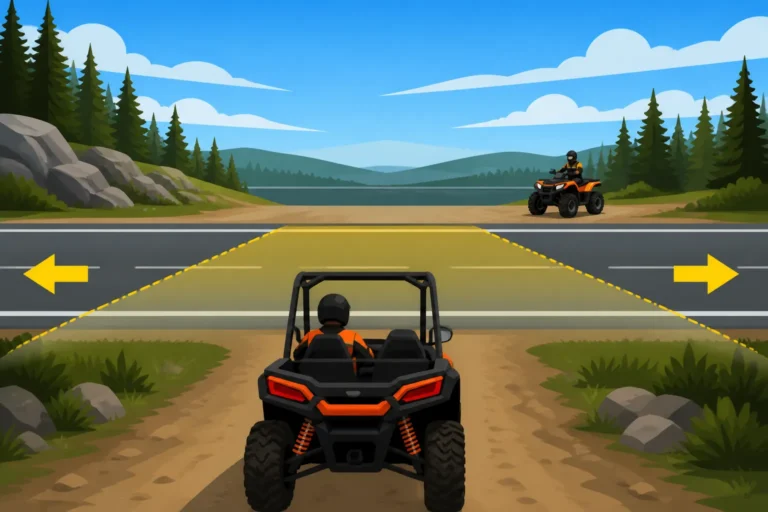
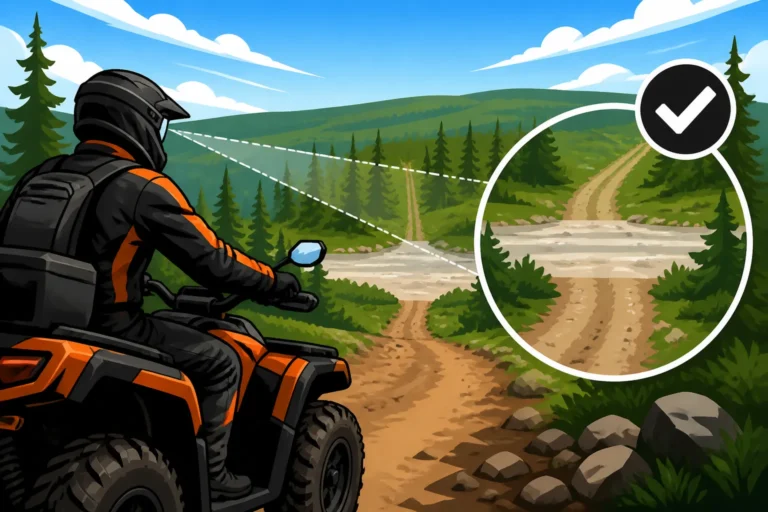
This rule is an absolute cornerstone of safe highway crossing, and it cannot be emphasized enough. Before you even think about starting to cross a highway, you must ensure you have an unobstructed view of at least 150 metres in both directions along the highway. That's a huge distance, roughly the length of 1.5 football fields. This rule is designed to give you, and any approaching highway traffic, ample warning and time to react.
Think about the dynamics: highway vehicles are moving fast. If you pop out from behind a blind corner, over a crest, or from heavy brush, a driver might not see you until it's far too late to brake or swerve safely. This rule forces you to choose your crossing points wisely. If you can't see 150 metres in either direction, you simply cannot cross there. You must find an alternative, even if it means backtracking or going out of your way. This is why the [Crossing a Newfoundland Highway Needs 150 Metres of Visibility] rule is so critical to internalize.
Judging 150 metres can be tricky. It's often much further than riders initially estimate, especially on winding or hilly roads common in Newfoundland. Practice spotting reference points along straight stretches to get a feel for that distance. And remember, "unobstructed" means truly clear – no parked cars, no dense bushes, no sharp turns immediately before your crossing point. If there's any doubt, don't cross.
Yielding to Highway Traffic Every Time
This rule is non-negotiable, fundamental, and absolutely critical for your survival: when crossing a highway, an ORV operator must always yield the right-of-way to all highway traffic. You are the guest on their road, and their safety, and yours, depends on you giving them absolute priority. This means waiting for a completely clear, safe gap in traffic before you even contemplate beginning your crossing.
Never, ever assume a highway vehicle sees you, or that they will slow down, or that they will make space for you. Their speed and momentum are vastly superior to yours. You must wait until there is no approaching traffic within that 150-metre visibility zone, or until any traffic is so far away that you can complete your crossing well before they reach your position. Impatience here can be deadly. As highlighted in [Newfoundland Riders Yield to Highway Traffic], you are always the one who needs to wait.
This often means prolonged waiting periods, especially on busier highways. It can be frustrating to sit and watch traffic stream by, but that wait is a small price to pay for your safety. Make sure your ORV is stopped completely off the traveled portion of the highway, ideally on the shoulder, while you wait. Be visible, be patient, and only proceed when you are absolutely certain it is safe to do so.
Straight Across and Off
Once you’ve confirmed a safe, clear gap, your highway crossing should be executed as quickly and directly as possible. This means aiming to cross the highway at a right angle (perpendicular to the flow of traffic), moving swiftly from one shoulder to the other, and not lingering in the lanes of travel. Your goal is to minimize your time spent directly in the path of highway vehicles.
Do not meander. Do not stop in the middle of the highway (unless absolutely necessary due to an unforeseen emergency). Plan your exit point on the opposite shoulder or trail entrance before you begin your crossing, so you have a clear path of travel. The less time you spend exposed on the highway, the safer you will be.
It’s also crucial to remember that this "straight across and off" principle means you shouldn't be traveling along the highway for any distance once you start your crossing. You get across, then immediately get off the main road surface and onto the shoulder or a connecting trail. Any prolonged travel along the highway itself would fall under the 1-kilometre shoulder rule, with its specific speed limits, and is not part of a crossing maneuver.
Consequences of Non-Compliance: Fines and Seizures
Okay, let's talk about the downside of not playing by the rules. We've gone over the speed limits, the distance restrictions, and the safety gear requirements. But what happens if you decide to push the envelope? Unfortunately, for many riders, finding out means a roadside stop, a ticket, and potentially a lot more hassle than they bargained for. The province isn't shy about enforcing these rules, and the penalties can range from hefty fines to the temporary (or even permanent) loss of your machine.
Understanding the Financial Penalties
The most common consequence of violating ORV regulations on or near highways is a financial penalty. Speeding on a shoulder, riding beyond the 1-kilometre limit, operating without a valid licence, or lacking mandatory insurance can all result in significant fines. These aren't just minor slaps on the wrist; they are designed to be deterrents. What might seem like a small shortcut or a bit of extra speed can quickly turn into a multi-hundred-dollar ticket.
Consider the cumulative effect: if you get caught speeding on the shoulder and you don't have proof of insurance immediately available, you could be looking at multiple citations, each with its own fine. These costs can quickly add up, easily overshadowing the initial $95 you paid for your [Newfoundland ORV Registration You Pay Once]. The provincial government sets [Newfoundland Fine Ranges by Offence] that can hit your wallet hard.
And it's not just the initial fine. If you dispute the ticket, you might incur court costs, legal fees, and the time off work to attend proceedings. The perceived convenience of ignoring a rule quickly evaporates when you're looking at a bill and a court date. Repeat offenders often face escalating fines and more severe penalties, making it clear that the province expects compliance.
Machine Seizure and Early Release Fees
This is where things get really serious. For certain violations, particularly those deemed dangerous or for repeat offenses, peace officers in Newfoundland have the authority to seize your ORV. Imagine being out on a beautiful day, pulled over, and told your machine is being loaded onto a tow truck. It's a nightmare scenario, and it's very real for riders who flagrantly disregard the rules. This is covered under [Newfoundland Machine Seizure Rules].
Getting your machine back from impound isn't a simple process, nor is it cheap. You'll likely face towing fees, daily storage fees at the impound lot, and potentially an "early release" application fee if you want it back before a certain period. These costs can quickly add up to hundreds, or even thousands, of dollars. It's designed to be a significant deterrent, making the experience of having your machine seized as inconvenient and expensive as possible.
The headache of retrieving a seized machine – dealing with paperwork, arranging transport, paying various fees – can be a huge drain on your time and resources. It serves as a stark reminder that operating an ORV is a privilege, not a right, and that privilege comes with responsibilities that, if ignored, can lead to serious consequences for your wallet and your machine.
Impact on Your Driving Record and Insurance
While an ORV infraction itself might not always directly add demerit points to your Class 5 driver's licence (for your car), certain severe violations can have ripple effects. For example, operating an ORV on a highway without mandatory insurance can certainly impact your ability to insure other vehicles or lead to higher premiums. If an accident occurs while you're in violation of a rule (like speeding on a shoulder), your insurance provider might deny coverage, leaving you personally responsible for all damages and injuries.
Furthermore, if an ORV incident on a highway shoulder involves reckless endangerment or impaired operation, these charges can absolutely cross over and affect your regular driver's licence and criminal record. Impaired riding carries some of the heaviest penalties under the Act, including potential jail time and long-term driving suspensions.
It’s crucial to understand that while ORV laws are specific, they don't operate in a vacuum. Your actions on your quad or side-by-side, particularly when interacting with the public road system, can have far-reaching consequences that extend beyond the immediate ORV ticket. Protect your driving record, your insurance rates, and your peace of mind by adhering to all the rules, no matter how minor they seem.
Planning Your Rides to Minimize Road Exposure
Given all the rules, restrictions, and potential penalties for operating an ORV on highway shoulders and crossings, it's pretty clear that minimizing your time in these areas is the smartest approach. While the law allows for limited interaction, a savvy rider plans their routes to avoid highways whenever possible. It's about maximizing your enjoyment and safety on the trails, and reducing the stress of constantly worrying about speed limits and distance restrictions.
Utilizing ORV-Friendly Access Points
The first step in minimizing road exposure is to research and identify trailheads and access points that don't require you to ride on a highway shoulder or make a risky crossing. Many designated ORV trails, particularly those managed by local clubs or the province, have specific staging areas or parking lots that allow you to unload your machine and hit the trail directly. These are your best friends.
Local ATV clubs are an invaluable resource here. They often have maps, local knowledge, and can tell you exactly where the safest and most legal access points are. Online mapping tools, sometimes even provided by manufacturers or aftermarket parts suppliers, can also help you visualize routes. For example, some riders using high-performance parts from companies like SuperATV might also be looking for trail systems that allow them to fully test their machine's capabilities without constant stops for road crossings. While SuperATV primarily focuses on parts, their community and resources can sometimes lead you to discussions about optimal trail access.
Parking your truck and trailer closer to the trail entrance, even if it adds a bit more driving time, is almost always preferable to riding your ORV illegally on a shoulder. It might seem like an extra step, but it completely bypasses the complex web of rules and the anxiety of potential fines.
Community Bylaws and Designated Access Roads
Don't assume all roads are highways with strict rules. Many municipalities in Newfoundland have their own bylaws regarding ORV use on local roads. Some towns and communities have designated specific roads or sections of roads where ORVs are permitted to travel, often at reduced speeds, to connect to trails or access services. These local rules can be a game-changer for getting to your destination without interacting with a busy highway.
However, the key here is "designated." You cannot assume a local road is open to ORVs without verifying. Always check with the local town council or the nearest RNC detachment to confirm specific bylaws for the area you plan to ride in. These rules can vary wildly from one community to the next. What's allowed in one town might be strictly prohibited in the next. The [Newfoundland Municipal Road Bylaws] are not uniform across the province.
Taking the time to make a phone call or check a municipal website before you head out can save you a lot of grief. These designated access roads, when they exist, offer a fantastic, legal alternative to highway shoulders, allowing you to seamlessly transition from your home or lodging directly onto the trail system.
Trailering as a Primary Transport Method
Ultimately, the safest, most stress-free, and most legally sound way to get your ATV or UTV to your favourite trails is to trailer it. This completely removes your machine from the highway system, eliminating all concerns about the 20 km/h shoulder limit, the 1-kilometre rule, highway crossings, and the associated licensing, insurance, and equipment mandates.
Investing in a good quality utility trailer and a reliable hitch for your truck or SUV is perhaps the best accessory you can buy for your ORV if you plan on exploring different trail systems. It provides the flexibility to access remote trails that are far from any legal ORV access points or those that require extensive, illegal highway travel. Plus, you can carry extra gear, fuel, and recovery equipment much more easily in a trailer. This is why [Hauling a Machine to a Railbed Trailhead] is often the preferred method for experienced riders.
While it means an extra vehicle to maintain and register, the peace of mind that comes from knowing you’re always operating legally, and not risking fines, seizures, or accidents on dangerous highway sections, is truly invaluable. Trailer your machine, find a safe staging area, and then hit the trails with confidence, knowing you’ve completely avoided the complexities of highway rules.
Key Differences: Trail Riding vs. Shoulder Riding
To wrap up, let's look at a clear comparison to summarize the crucial differences between hitting the trails and those limited moments you might find yourself on a highway shoulder. Understanding these distinctions is fundamental to safe and legal riding in Newfoundland.
| Feature | Designated ORV Trail Riding | Highway Shoulder Riding (Limited Access) |
|---|---|---|
| Primary Purpose | Recreation, Off-road Travel | Temporary access to trail, highway crossing, emergency detour |
| Speed Limit | Varies by trail/operator (often 50-70 km/h on railbeds) | Strictly 20 km/h |
| Distance Limit | No set limit, ride as far as the trail goes | Strictly 1 Kilometre maximum |
| Traffic Interaction | Minimal, mostly other ORVs, hikers, bikes | High interaction with high-speed highway vehicles |
| Required Licence | No specific ORV license, but training often mandatory | Valid driver's licence required |
| Required Insurance | Liability insurance recommended, but not always mandated for private land | Mandatory liability insurance for road sections |
| Yield Rules | Yield to non-motorized users | Always yield to highway traffic |
| Visibility Rule | Not applicable on trails | 150-metre clear visibility for crossings |
| Enforcement Focus | Environmental impact, safety gear, impaired operation | Speed, distance, licence, insurance, visibility, yielding |
Disclaimer
This article is for general informational purposes only and does not constitute professional advice. Laws, prices and regulations vary by location and change over time. Consult a qualified professional for guidance on your specific situation.