How the Off-Road Vehicles Act Rewrote Newfoundland’s Rules
For anyone who loves hitting the trails or heading out to the cabin on their ATV or UTV in Newfoundland, the rules of the road—or rather, the trail—can often feel like a moving target. It's frustrating when you think you've got everything sorted, only for the legislation to shift, leaving you wondering if your machine is still compliant. This guide is here to untangle the complexities of the Off-Road Vehicles Act, which fundamentally rewrote how ATVs, UTVs, and other off-road vehicles are regulated in Newfoundland and Labrador, ensuring you understand exactly what changed and what you need to do to stay legal.
The Big Shift: From Fragmented Rules to a Unified Act
Before the Off-Road Vehicles Act came into full force, the landscape for ATV and UTV enthusiasts in Newfoundland and Labrador was a bit of a patchwork. You might have found yourself dealing with various bits of legislation, municipal bylaws, and provincial guidelines that didn't always connect perfectly. This often led to confusion, inconsistencies, and a general sense of uncertainty for riders who just wanted to enjoy their machines without fear of unknowingly breaking a rule. It wasn't uncommon for people to scratch their heads, trying to figure out which regulation applied to their specific machine or riding scenario.
This fragmented approach was a significant pain point for many, especially when trying to understand something as seemingly straightforward as vehicle registration or transfer of ownership. Different rules might apply depending on the type of terrain, the age of the rider, or even the municipality you were in. This kind of complexity made it difficult for riders to feel confident they were doing everything by the book, and it certainly didn't help when trying to educate new riders on responsible machine use. The need for a clearer, more comprehensive framework was clear, and it was out of this need that the new Act emerged. [A Statute in Force Since May 2022] marked a pivotal moment for off-road vehicle regulation in the province.
The intention behind introducing the Off-Road Vehicles Act was to consolidate and modernize these regulations into a single, cohesive piece of legislation. This wasn't just about adding new rules; it was about bringing clarity and consistency to a system that many felt was long overdue for an overhaul. The province recognized that off-road vehicles play a huge role in the lifestyle and economy of Newfoundland and Labrador, from recreational riding to essential utility for rural communities and industries. Therefore, having a clear, unified set of rules was paramount for safety, environmental protection, and ensuring everyone understood their responsibilities.
Why the Old Approach Just Wasn't Cutting It Anymore
The previous system, or lack thereof, struggled to keep pace with the evolving off-road vehicle market and the increasing popularity of machines like side-by-sides. When you're dealing with older legislation, it's often designed for a different era, perhaps when ATVs were simpler, less powerful, and less diverse in their uses. As machines became more sophisticated, and more people started embracing off-roading, the old rules simply couldn't address the new challenges that arose. For instance, the sheer variety of machines now available, from powerful utility vehicles to specialized recreational models, required a more nuanced approach than a one-size-fits-all regulation.
Another critical issue was enforcement. When rules are scattered across multiple documents, it becomes inherently harder for enforcement officers to apply them consistently, and for riders to understand them. This ambiguity could lead to situations where a rider might genuinely believe they were compliant, only to find out they weren't, simply because they missed a particular detail in an obscure regulation. The lack of a single, authoritative source for off-road vehicle laws created unnecessary friction and made it difficult for both authorities and the riding community to ensure safe and responsible practices.
Moreover, public safety and environmental concerns have grown over the years. With more machines on the trails, and the potential for greater impact on sensitive ecosystems, the need for robust, modern regulations became undeniable. The old system didn't adequately address issues like age restrictions, passenger safety, or specific equipment requirements in a comprehensive way. The new Act aimed to rectify these shortcomings, creating a safer environment for riders and a more protected natural landscape for everyone to enjoy.
Key Changes Introduced by the Off-Road Vehicles Act
The Off-Road Vehicles Act brought about several significant changes that fundamentally altered how off-road machines are registered, owned, and operated in Newfoundland and Labrador. One of the most impactful changes was the creation of a clear, single regulatory framework, replacing the previous fragmented system. This means that instead of sifting through various statutes and regulations, riders now have one primary Act to consult for comprehensive rules. This consolidation alone has been a massive relief for many who were previously overwhelmed by the bureaucratic maze.
Another major shift was the updated classification of off-road vehicles. The Act now provides clear definitions for different types of machines, including specific provisions for side-by-sides (UTVs), which had previously been in a bit of a grey area. This explicit recognition helps ensure that all types of off-road vehicles are properly accounted for under the law, making it easier for owners to understand their obligations. [Newfoundland Side-by-Sides Added in 2022] highlights this important update. These new classifications also inform specific rules regarding registration, operation, and safety equipment for each vehicle type, tailoring the regulations more closely to the characteristics and uses of the machines themselves.
Perhaps one of the most talked-about changes relates to registration and titling. The Act solidified the requirement for all off-road vehicles to be registered with the provincial Motor Registration Division, and it introduced the concept of a one-time registration fee. This is a significant departure from systems in other provinces that might require annual renewals. [Newfoundland ORV Registration You Pay Once] is a testament to this unique provincial approach, simplifying the long-term commitment for riders. This one-time fee covers the machine for as long as you own it, meaning no more annual renewal notices or forgetting to pay a fee, which was a common frustration for many.
Modernizing Vehicle Classifications and Registration
Under the new Act, gone are the days of trying to fit a square peg into a round hole when it came to registering modern off-road vehicles. The legislation clearly outlines various classes of off-road vehicles, making it far simpler to understand where your machine fits in and what specific rules apply to it. For example, the explicit inclusion and definition of side-by-sides ensures these popular machines have their own distinct category, with regulations tailored to their unique characteristics, such as passenger capacity and safety features. This specificity helps address the differing operational risks and requirements for each machine type.
This modernized classification system isn't just for bureaucratic neatness; it has real-world implications for riders. When you go to register your machine, the process is clearer because the categories are well-defined. It helps the Motor Registration Division accurately record your vehicle type, and it helps you, as the owner, understand what your responsibilities are. For instance, a small trail bike, which has a distinct fee structure, is clearly differentiated from a larger, more powerful ATV or UTV. [Newfoundland Charges $95 for an ATV] and [Newfoundland Charges $5 for a Trail Bike] show this differentiation in registration costs.
Furthermore, the new Act streamlined the registration process, emphasizing the importance of a proper chain of ownership. When buying or selling a machine, the requirement for a clear bill of sale and other documentation is now paramount. This helps combat issues with stolen machines and ensures legitimate ownership transfers. Tools like those offered by LawDepot can be incredibly helpful here, providing templates for legally sound bills of sale or affidavits, which can be essential pieces of [Newfoundland Registration Paperwork Explained] at the registry counter. This focus on clear documentation provides greater security for both buyers and sellers in the private sale market.
What the "No Expiry Date" Really Means for Owners
One of the most user-friendly changes introduced by the Off-Road Vehicles Act is the "no expiry date" clause for off-road vehicle registrations. This means that once you register your ATV, UTV, or other off-road vehicle, that registration remains valid for as long as you own the machine. You don't get annual renewal notices in the mail, and you don't have to worry about missing a deadline and facing fines. This has been a huge relief for many riders who previously dreaded the annual paperwork shuffle. [Newfoundland Registrations Never Expire] and [Newfoundland Registration Valid While You Own It] clearly spell out this benefit.
However, "no expiry date" doesn't mean "no responsibilities." While the registration itself doesn't expire, it's still crucial to notify Motor Registration if you sell the machine, or if there's any other significant change in ownership or the vehicle's status. For example, if you decide to sell your registered ATV, the responsibility falls on you, the seller, to ensure the transfer of ownership is properly recorded. This is a critical step to avoid any lingering liability for the machine once it's no longer yours. [What Happens to Your Registration When You Sell] is an important read in this context.
This policy aims to simplify the lives of long-term owners while maintaining an accurate registry of off-road vehicles in the province. It cuts down on administrative burden for both the government and the public, allowing riders to focus more on enjoying their machines and less on recurring paperwork. For anyone who has ever accidentally let a vehicle registration lapse, this change is a welcome innovation that reduces a common source of stress and potential penalties.
Practical Implications for Riders and Buyers
The new Off-Road Vehicles Act isn't just a collection of abstract legal clauses; it has very real, day-to-day impacts on how you acquire, maintain, and operate your off-road machine in Newfoundland and Labrador. For current owners, the main implications often revolve around understanding the new rules for transfers of ownership if they sell, or simply being aware of the ongoing responsibilities even without annual renewals. For prospective buyers, the Act brings a greater emphasis on due diligence, ensuring they receive proper documentation and understand the registration process from the get-go.
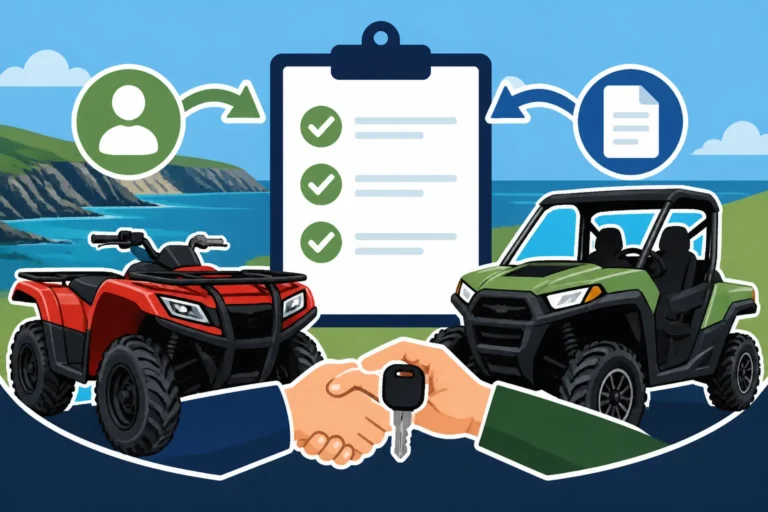
When you're looking to buy a used machine, for instance, the Act's focus on clear documentation means you need to be extra diligent about getting a proper [Newfoundland Bills of Sale From Each Owner]. This isn't just a formality; it's your legal proof of purchase and a crucial piece of the puzzle for getting the machine registered in your name. If you encounter a situation where the ownership history is unclear, or you're buying from a private seller who doesn't have all the paperwork, you might need to use tools like a sworn affidavit. LawDepot again can be a useful resource for finding templates for these kinds of legal documents, ensuring you have everything needed to satisfy Motor Registration requirements.
Furthermore, understanding the fee structure is important. While the registration itself is a one-time payment, there are still costs associated with transfers, duplicates, or replacements. For example, transferring ownership has a specific fee, though seniors might pay a reduced rate for this. [Newfoundland Transfers Cost $16 for Seniors] is a good example of this, showing a consideration for different groups within the fee structure. Knowing these potential costs upfront helps you budget and ensures there are no surprises when you head to the registry.
Navigating Ownership Transfers Under the New Act
Selling or buying an off-road machine in Newfoundland and Labrador now comes with a clearer set of steps thanks to the Off-Road Vehicles Act. The core principle is that the chain of ownership must be clear and documented. For sellers, this means ensuring you provide the buyer with a valid bill of sale and, ideally, the original registration permit for the machine. You also have a responsibility to notify Motor Registration within a specific timeframe (typically 10 days) that you've sold the machine. This ensures that the vehicle is no longer officially associated with you, preventing any issues if the new owner doesn't immediately register it. [Newfoundland Notification Within 10 Days] is a key point here.
For buyers, especially when purchasing from a private seller, the onus is on you to collect all necessary documents. This includes a clear bill of sale signed by both parties, and proof that the seller has satisfied any tax obligations, such as HST if applicable. If the machine hasn't been registered before, or if there's any doubt about its history, you might also need a [Newfoundland Sworn Affidavits and Indemnity Forms] to complete the registration. It's a bit of extra legwork, but it protects you as the new owner. Many people find it helpful to use reputable legal document providers like LawDepot to draft these forms, ensuring they meet the provincial requirements. This vigilance helps avoid future headaches and ensures a smooth transfer.
Transferring ownership is a process that requires attention to detail. If you're inheriting a machine, for example, the process might differ slightly, with [Newfoundland Transfers on Death Cost Nothing] being a specific provision under the Act, recognizing the unique circumstances of estate transfers. Regardless of the scenario, the goal of the Act is to ensure that the provincial registry accurately reflects who owns which machine, which is fundamental for both legal purposes and public safety. Taking the time to get the transfer right the first time will save you considerable trouble down the line.
| Aspect | Before the Off-Road Vehicles Act (Generalized) | Under the Off-Road Vehicles Act (2022) |
|---|---|---|
| Legislation Structure | Fragmented across multiple acts and regulations | Consolidated into a single, comprehensive Act |
| Vehicle Classification | Often vague, UTVs (side-by-sides) in a grey area | Clearer definitions, specific inclusion of UTVs/Side-by-Sides |
| Registration Expiry | Potentially annual renewals, varied by regulation | One-time registration, valid for the life of ownership |
| Transfer of Ownership | Less stringent documentation requirements, potential for gaps | Emphasis on clear bill of sale, affidavits, and timely notification |
| Primary Goal | Regulate ORVs, often as an afterthought to other acts | Dedicated, modern framework for ORV safety and operation |
Costs Beyond the Initial Registration Fee
While the one-time registration fee is a major selling point of the new Act, it's important for riders to be aware of other potential costs associated with their off-road vehicle throughout its lifespan. These aren't annual fees, but rather transactional costs that might arise due to changes in ownership, lost documents, or damaged plates. For example, if you lose your registration permit, getting a [Newfoundland Duplicate Registrations at $25] means a minor fee to replace the paperwork. Similarly, if your identification plate (license plate) is lost or damaged, you'll need to pay for a replacement. [Newfoundland Replacement Plates at $30] ensures you can easily get a new one to remain compliant.
These fees are put in place to cover the administrative costs of processing these specific requests. They are not recurring charges and only apply when you actually need one of these services. Understanding this structure helps manage expectations and ensures you're not caught off guard by unexpected expenses. It's a proactive approach to knowing the total financial picture of owning an off-road machine.
For anyone preparing documents for registration or transfer, whether it's a bill of sale or an affidavit, while LawDepot can provide cost-effective templates, remember to factor in any potential notary fees if your documents require sworn signatures. These are typically separate from provincial registration fees and are paid directly to the notary public. Being aware of all potential costs, both government and third-party, ensures a smooth and predictable process when dealing with your off-road vehicle's documentation.
Disclaimer
This article is for general informational purposes only and does not constitute professional advice. Laws, prices and regulations vary by location and change over time. Consult a qualified professional for guidance on your specific situation.