Buying From a Seller on the Mainland
Thinking about bringing an ATV or side-by-side to Newfoundland from the mainland can feel like tackling a whole different kind of trail – full of twists, turns, and unexpected bumps in the road. You’ve found the perfect machine, a real gem that simply wasn’t available locally, but now you're faced with the daunting task of figuring out the logistics, the paperwork, and all the little details that come with importing it. This guide is here to help you navigate that often-confusing process, ensuring your new-to-you off-road vehicle makes it safely to our shores and gets properly registered without a hitch.
The Unique Challenges of Buying an ORV Off-Island for Newfoundland
When you’re eyeing an off-road vehicle (ORV) that’s located off the island, say in Nova Scotia, New Brunswick, or even further afield in Ontario or Quebec, it's easy to get swept up in the excitement of the find. Perhaps it’s a specific model that's rare here, or maybe the price is just too good to pass up. Whatever the reason, deciding to purchase from the mainland introduces a layer of complexity that a local transaction just doesn't have. It's not just about agreeing on a price; it's about making sure your dream machine can actually make it here and become a legal part of your Newfoundland adventures.
Why Buying from the Mainland Feels Different
Buying an ATV or UTV from a seller outside of Newfoundland and Labrador isn't like picking one up down the road. For starters, you often can't physically inspect the machine in person unless you make a trip, which adds to the cost and time involved. You're relying heavily on photos, videos, and the seller's description, which, let's be honest, can sometimes paint a rosier picture than reality. This distance also complicates the negotiation process and the transfer of funds, as there's less immediate trust and accountability when you're dealing with someone you can't easily visit.
Beyond the physical inspection, there's the whole issue of provincial regulations. While Newfoundland has its [Newfoundland's Off-Road Vehicles Act], other provinces have their own rules regarding bills of sale, registration, and declarations of sale. You need to be sure that the paperwork from the selling province will be accepted here, and sometimes there are subtle differences that can cause headaches at Motor Registration. It’s not an insurmountable hurdle, but it requires a careful, methodical approach to ensure everything aligns with Newfoundland's specific requirements.
Common Pitfalls to Avoid When Importing an ORV
One of the biggest pitfalls when buying from the mainland is insufficient or incorrect documentation. Imagine driving all the way to St. John's, only to be told your bill of sale isn't quite right, or you're missing a crucial piece of previous ownership history. This can lead to significant delays and frustration, sometimes even requiring you to go back to the seller for corrections, which is a huge hassle when they're hundreds or thousands of kilometres away. Always verify the VIN (Vehicle Identification Number) against any existing registration and ensure it matches the bill of sale exactly.
Another common issue is underestimating the true cost of bringing the machine over. It’s not just the purchase price; you need to factor in shipping fees, insurance during transit, and potential taxes upon arrival. Sometimes, what seems like a great deal on the mainland can end up being more expensive than a comparable machine purchased locally once all these "hidden" costs are tallied. Be realistic about the total expenditure, and always get firm quotes for transportation and understand the tax implications before committing to a purchase. It’s better to know these costs upfront than to face an unpleasant surprise later.
Essential Paperwork: What You Absolutely Need
When you're dealing with an off-island purchase, the paperwork isn't just a formality; it's your lifeline. Without the correct documents, perfectly filled out and accounted for, you simply won't be able to register your new machine in Newfoundland. Think of this stage as preparing your ORV for its immigration process – every piece of documentation serves a vital purpose in proving its identity, ownership history, and legal journey to our province. Getting this right from the start will save you immense stress down the road.
The Bill of Sale: More Than Just a Receipt
The bill of sale is the cornerstone of your ownership transfer. It's not just a casual note; it needs to be a detailed, legally binding document. For any off-island purchase, ensure the bill of sale clearly states the full names and addresses of both the buyer and seller, the complete Vehicle Identification Number (VIN), the make, model, and year of the ORV, and the agreed-upon purchase price. It should also specify the date of the transaction. A generic template might not cut it; sometimes it’s worth using a comprehensive legal document, and this is where resources like LawDepot can be incredibly helpful for drafting a thorough bill of sale that covers all necessary bases.
If you’re buying from a private seller, having their signature witnessed can add an extra layer of security. Remember, for Newfoundland registration, any sales tax (HST) collected or due will be calculated based on this sale price, so an accurately recorded price is crucial. [Newfoundland Tax on a Private ATV Sale] explains more about this aspect. Don't accept a vague or incomplete bill of sale, as it will almost certainly be rejected by Motor Registration Division, forcing you to chase down the seller for corrections from afar. This document is your proof that the machine is legally yours.
Ownership History and Previous Registrations
Motor Registration in Newfoundland wants to see a clear chain of ownership. This means, ideally, you'll have the current seller's registration certificate or permit from their home province, along with any previous bills of sale if the current seller hasn't registered it in their name yet. This "paper trail" helps confirm that the machine wasn't stolen and that the seller has the legal right to transfer ownership. Think of it like a vehicle's resume; you want to see a consistent history without any gaps or red flags.
If the machine has been through several owners in the mainland province, try to obtain a bill of sale from each prior owner to establish this clear chain. While this isn't always possible, especially with older machines, having as much as you can is always better. In some cases, if the ownership history is a bit murky, or documents are missing, you might need additional declarations. For instance, if the machine was never registered in the seller's name, or they lost the prior owner's documentation, you might run into issues. This is where the registrar might require a sworn affidavit to bridge any gaps, which we'll discuss next.
The Importance of a Sworn Affidavit (and when you might need one)
A sworn affidavit, sometimes simply called an affidavit, is a formal written statement of fact made under oath or affirmation. It's essentially a legally binding declaration that you or the seller make, attesting to certain truths about the ORV's history or ownership. You might need one if, for example, the seller never registered the machine in their name after purchasing it, or if they've lost the original bill of sale from the previous owner. In Newfoundland, the registry calls this situation into question, and an affidavit serves as a crucial document to clarify the situation. [Newfoundland Registration Without a Bill of Sale] delves into this in more detail.
If you find yourself in a situation where the chain of ownership isn't perfectly clear, don't panic, but be prepared for extra steps. You may need the seller to sign an affidavit, declaring how they came into possession of the machine and why certain documents are missing. This often needs to be done in front of a commissioner of oaths or a notary public. Again, using a reputable template from a service like LawDepot can ensure the affidavit is properly structured and contains all the necessary legal language. It's a key tool for resolving ambiguities and proving legitimate ownership when standard paperwork falls short.
The Logistics of Getting Your Machine to Newfoundland
Once you've secured your off-road vehicle and gathered all the necessary paperwork, the next big hurdle is physically getting it from the mainland to Newfoundland. This isn't just about throwing it in the back of a pickup; it involves careful planning, understanding ferry schedules, and possibly dealing with shipping services. The vast expanse of ocean between us and the mainland means transportation is a critical and often costly part of the entire process.
Ferry Travel and Your ATV/UTV
For most private buyers, bringing an ORV to Newfoundland means a trip on Marine Atlantic. You'll need to book your crossing in advance, especially during peak summer months or holidays, as space for vehicles and trailers can fill up quickly. When booking, you'll specify the type of vehicle (ATV, UTV, or side-by-side) and if you're bringing a trailer. The cost for an ORV will be different from a standard passenger vehicle, so ensure you select the correct category to avoid issues at the terminal. [Newfoundland Ferry Fare for a Machine] explains the nuances of these costs.
Upon arrival at the ferry terminal, whether in North Sydney or Port aux Basques, you'll be directed to park your machine safely on the vehicle deck. Ensure it's securely tied down to prevent any movement during the crossing, as the seas can be unpredictable. Many riders opt to drive their machine onto the ferry in the back of a truck, which simplifies the tie-down process and means the ORV is protected from the elements. However you bring it, remember to have all your personal identification and ferry tickets readily accessible.
Brokerage and Shipping Services
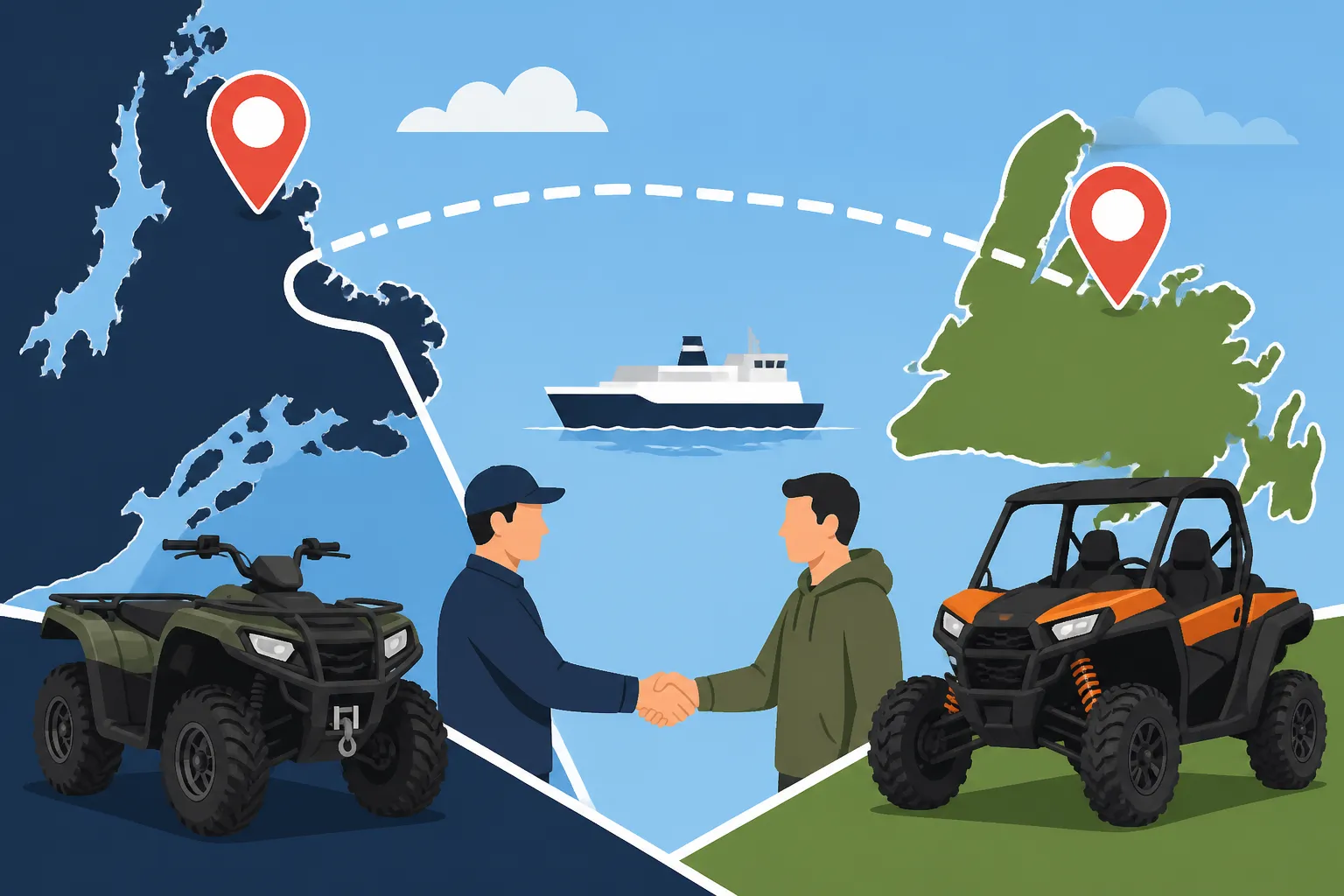
While many riders prefer to pick up their machine themselves and drive it onto the ferry, that's not always feasible. If the ORV is located too far away, or if you can't make the trip, you might consider using a professional shipping or brokerage service. These companies specialize in transporting vehicles, including ATVs and UTVs, across provincial lines and even across the water. They can handle everything from picking up the machine at the seller's location to delivering it to your doorstep in Newfoundland.
Using a shipping service adds to the overall cost, but it can save you a significant amount of time and hassle. When researching shippers, get multiple quotes, check their insurance coverage for damage during transit, and ask about their experience specifically with ORVs. They can often provide insights into the process that you might not have considered. Just remember, even with a shipper, you are still responsible for ensuring all the documentation discussed earlier is in order, as the shipping company will only move what you provide them.
What Happens at the Border or Port
When your machine arrives in Newfoundland, whether you're driving it off the ferry yourself or picking it up from a shipping depot, there isn't a traditional "border" check in the same way you might imagine between countries. However, your machine's journey isn't quite over. The significant "check" happens when you go to register it. While you might not be stopped at the Port aux Basques ferry terminal to inspect your ORV for taxes, the Motor Registration Division will certainly be asking about them.
The key thing to remember is that Provincial Sales Tax (HST in Newfoundland and Labrador) will be applied to the fair market value of your imported ORV at the time of registration, regardless of what you paid for it in another province. This is a common point of confusion for buyers. So, even if you paid tax in Ontario, for example, you'll still pay Newfoundland's HST when you register here. This isn't double taxation; it's the provincial sales tax levied upon bringing the item into the province for use. Make sure you've budgeted for this additional expense, as it can sometimes be a substantial amount.
Registering Your Mainland Machine in Newfoundland
You’ve done the hard work: found the machine, secured the correct paperwork, and navigated the logistics of getting it to Newfoundland. Now comes the final, crucial step: officially registering it with Motor Registration Division. This is where all your diligent preparation pays off, allowing you to legally hit the trails and enjoy your new off-road adventures. Failing to register it correctly means you’re risking fines and even seizure, so it’s vital to get this part absolutely right.
Your First Stop: Motor Registration Division
Once your ORV is safely on the island, your immediate next step is to head to a Motor Registration Division office. This is where you'll present all the documentation you've meticulously gathered. It’s highly recommended to [Booking an Appointment at Motor Registration Before You Go] to avoid long wait times. When you arrive, be prepared with your bill of sale, the previous owner's registration (if applicable), and any sworn affidavits or indemnity forms you may have needed. They’ll also need your personal identification to verify your residency.
The staff at Motor Registration will carefully review your documents to ensure everything is in order and that there's a clear, legal chain of ownership. They'll verify the VIN on your machine against the paperwork. This is why having comprehensive documents, perhaps even ones prepared with assistance from a resource like LawDepot, can make the process much smoother. Any inconsistencies or missing information could send you back, causing frustrating delays, especially if you have to contact a seller who's no longer nearby.
Understanding Taxes and Fees on Imported Machines
As mentioned earlier, expect to pay Newfoundland's HST on the purchase price of your machine when you register it. This is a crucial point that many people overlook when buying from outside the province. The tax is assessed based on the value declared on your bill of sale, or if the declared value seems unusually low, based on the Motor Registration Division’s assessment of fair market value. They have resources to estimate a machine's value, so trying to under-declare the price isn't advisable.
In addition to HST, there's the actual registration fee. [Newfoundland Charges $95 for an ATV] is the standard fee for a wheeled off-road vehicle, while a trail bike is less. This is a one-time fee, meaning [The Newfoundland Fee You Pay Once and Never Again] and your registration never expires as long as you own the machine. It’s a significant benefit compared to annual renewals in many other jurisdictions. Have your payment method ready for both the HST and the registration fee.
The Nitty-Gritty of the Newfoundland Registration Process
After all your documents are approved and fees are paid, Motor Registration will issue you an Off-Road Vehicle Permit and a unique identification plate. This plate must be securely attached to your machine, visible from the rear, and kept free of mud or cargo that might obstruct it. [Newfoundland Plates Kept Free of Mud] and [Newfoundland Plates Unobstructed by Cargo] are specific rules that must be followed. Make sure you understand [Do You Get a Plate or a Decal?] so you know what to expect.
Your new permit will include all the details of your machine and your registration number. Keep this document safe, as you'll need to carry proof of registration whenever you're operating your ORV off-road. You should also be aware of the [Newfoundland Notification Within 10 Days] rule, where you must inform the registry of any changes to your address or if you sell the machine. Congratulations! With your permit and plate in hand, your mainland machine is now officially ready to explore the vast and beautiful landscapes of Newfoundland.
| Document Type | Purpose | Key Details Needed | Where to Get/Find It | Potential Hurdles |
|---|---|---|---|---|
| Bill of Sale | Proof of purchase and ownership transfer | Buyer/Seller info, VIN, make/model/year, purchase price, date | Seller, LawDepot (template) | Incomplete info, missing signatures, under-declared value |
| Previous Registration | Establishes chain of ownership, confirms seller's right to sell | Seller's name matching, VIN, expiry if applicable | Seller's original document | Lost document, machine never registered by seller |
| Sworn Affidavit | Legal declaration to clarify ownership gaps or missing documents | Statement of facts, signed before Commissioner of Oaths/Notary | Prepared by buyer/seller, LawDepot (template) | Incorrect wording, not notarized, conflicting info |
| Proof of Identity | Verifies buyer's identity and residency | Driver's License, other government-issued ID | Your own wallet | Expired ID, non-resident without proper documentation |
| NVIS (New Vehicle Information Statement) | For brand new machines, proves first retail sale | VIN, manufacturer details, dealer info | Dealer (if buying new) | N/A (not applicable for used mainland purchases usually) |
Disclaimer
This article is for general informational purposes only and does not constitute professional advice. Laws, prices and regulations vary by location and change over time. Consult a qualified professional for guidance on your specific situation.