Newfoundland Machines Used Only at a Cabin
It's a common dilemma in Newfoundland: you've got an ATV or UTV that you primarily use at your cabin, maybe just puttering around your property, running a few errands on a nearby woods road, or heading to a secret fishing spot. The question often arises, "Do I really need to go through the hassle of registering this machine when it barely leaves the cabin area?" This guide is here to clear up that confusion and walk you through the realities of registering your off-road vehicle, even if its main home is at the cabin.
The Misconception: Does Your Cabin Machine Really Need Registration?
Many folks operate under the assumption that if an ATV or UTV stays mostly on private land, or only on roads directly leading to their cabin, it's exempt from provincial registration requirements. Unfortunately, for most situations in Newfoundland and Labrador, this isn't the case. The rules around off-road vehicles are quite broad, and what might seem like "private use" can quickly fall under the watchful eye of the law.
The Myth of "Private Land Only" Exemption
The idea that you don't need to register an off-road vehicle if it's only used on private land is a pervasive myth. While there are very specific, narrow exemptions in the Off-Road Vehicles Act for truly private land, they are far more restrictive than most people realize. For instance, if your cabin is accessed by a woods road that isn't solely owned by you, or if you ever venture onto Crown land (which much of Newfoundland's wilderness is), your machine needs to be registered. The moment your wheels touch public land, even a shared access road or a trail to the berry patch, registration becomes a legal necessity. This is a crucial point that can catch many cabin owners off guard, leading to potential fines and headaches.
It's tempting to think of your cabin as a secluded haven where provincial rules might not apply as stringently, but the reality is that the vast majority of off-road vehicle use, even in remote cabin country, falls under the scope of provincial regulation. Unless your machine literally never leaves your own titled property and never crosses any public access point, you're going to need that registration. Consider the scenario: you're just driving from your cabin to a friend's cabin a few kilometres away down a gravel track. Is that private? Usually not. That track is often Crown land, or an easement, meaning the public rules apply.
What Constitutes "Private Land" in the Eyes of the Law
Defining "private land" in the context of off-road vehicles is key. It means land that you, or an immediate family member, legally own and have exclusive rights to. This doesn't include communal cabin access roads, old logging roads that have become informal trails, or any parcel of Crown land, no matter how remote. Many cabins sit on leased Crown land, or are accessed by roads that cross various land designations. In these cases, the land is not considered private for the purpose of the off-road vehicle exemption. [Newfoundland Machines Used Only on Family Land] offers a deeper dive into this specific exemption.
Imagine you've built your cabin on a plot of land you bought outright, and the only way to get around is on your own, clearly delineated property. In that very specific scenario, you might be exempt. But if your property abuts Crown land, and you take your ATV across that boundary for even a short ride, the exemption vanishes. This is where many riders get into trouble, thinking their use is "private" when it legally isn't. The onus is on the rider to know the land designation, and that can be tricky in the vast Newfoundland wilderness.
Penalties for Unregistered Cabin Machines
Riding an unregistered off-road vehicle, even if you genuinely believe it's only for cabin use, can lead to significant penalties. Peace officers, including RCMP and Provincial Enforcement Officers, patrol many of the same areas where cabins are found. They have the authority to stop you and request proof of registration. If you can't provide it, you could face fines, and your machine could even be seized. Nobody wants a peaceful cabin getaway ruined by a roadside stop and a hefty fine, let alone the hassle and cost of retrieving a seized machine. [Newfoundland Penalties for Riding Illegally] covers the range of consequences for various infractions.
It's not just about getting caught; it's also about safety and accountability. The registration process helps ensure there's a record of ownership, which is vital in case of theft, accidents, or other incidents. Ignoring registration might seem like saving a few dollars, but it leaves you vulnerable to much greater costs and legal issues down the line. It's a small fee for peace of mind and compliance.
Understanding the "Why": Newfoundland's Off-Road Vehicles Act and Cabin Use
The current rules governing ATVs and UTVs in Newfoundland and Labrador are laid out in [Newfoundland's Off-Road Vehicles Act], which came into force in May 2022. This legislation was a significant update, bringing older rules up to date and clarifying many aspects of off-road vehicle operation, including registration. The act clearly defines what an off-road vehicle is and where and how it can be operated, regardless of whether it's primarily used in town or at a remote cabin.
The Scope of the Off-Road Vehicles Act
The Act defines an "off-road vehicle" quite broadly, encompassing ATVs, UTVs (side-by-sides), snowmobiles, dirt bikes, and even amphibious machines. It applies to any of these vehicles operated anywhere other than a public highway, unless specifically exempted. This means that woods roads, old railway lines, bogs, barrens, and trails – all common stomping grounds for cabin machines – fall directly under its jurisdiction. The purpose of the Act is to ensure responsible operation, safety, and proper identification of machines across the province, not just in populated areas.
Essentially, if it's a motorized vehicle designed for off-pavement travel, and it's not a regular car or truck, the Act probably applies to it. This broad scope ensures a consistent regulatory framework whether you're riding a groomed trail near a community or navigating rough terrain to your remote cabin. The provincial government recognizes that even "private" or "cabin" use can impact shared resources, public safety, and environmental concerns, hence the need for comprehensive legislation.
Why Registration Matters, Even for Remote Use
Registration isn't just a bureaucratic hurdle; it serves several practical purposes. It creates a public record of ownership, which is crucial for law enforcement in cases of theft or accidents. It also helps manage and track the number of off-road vehicles in the province, informing policy decisions regarding trail development, maintenance, and environmental protection. For cabin owners, having a registered machine means you're operating legally, protecting yourself from fines, and contributing to the overall system that helps keep trails and lands accessible.
Think of it as a small contribution to the bigger picture of responsible off-roading in Newfoundland. When a machine is registered, it has an identifiable plate, and its ownership is clear. This clarity benefits everyone, from the individual rider to the various government departments that manage land use. It also simplifies things like insurance claims or proving ownership if your machine is ever stolen from your cabin. [Newfoundland ORV Registration You Pay Once] highlights the perpetual nature of the registration once it's complete.
How Crown Land Access Plays a Role
Most cabins in Newfoundland, especially those accessed by longer routes or in more remote areas, involve travel across Crown land. Crown land makes up a vast portion of the province and is subject to specific rules regarding access and use. Even if you have a lease for your cabin on Crown land, the access route to that cabin, or any riding beyond your immediate leasehold, is typically still considered Crown land access. This means your machine must be registered, and you must adhere to all provincial regulations, including carrying appropriate documentation. [Newfoundland Crown Land Riding Rules] provides essential information about riding on these lands.
If your cabin is truly isolated and only accessible via your own private, titled land, and you never leave that land, then you might fall into the narrow exemption. However, such situations are exceedingly rare for most cabin owners. The moment you cross onto a traditional woods road, a former railway line, or any land not exclusively owned by you, you're on land where registration is mandatory. It's about ensuring traceability and accountability wherever you ride.
Navigating the Paperwork: How to Register Your Cabin Machine
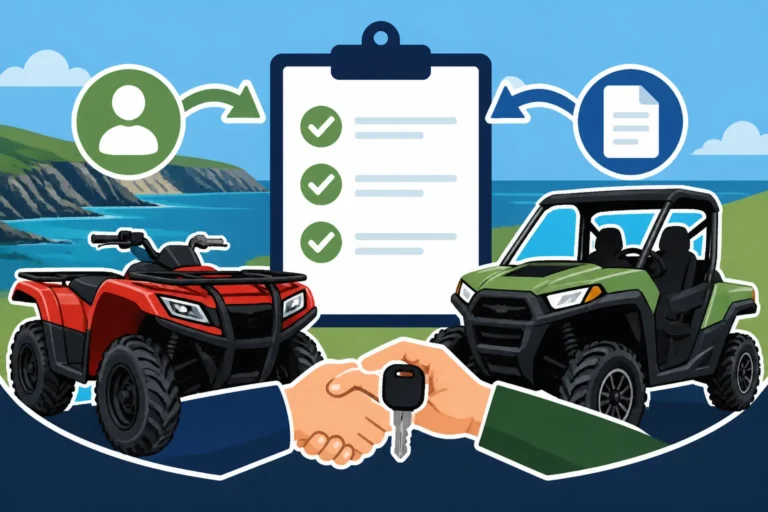
So, you've accepted that your beloved cabin machine needs to be registered. Now, what's the actual process? It's fairly straightforward, but like any bureaucratic process, it requires specific documentation and a trip to Motor Registration Division. Having all your ducks in a row before you go will save you a lot of time and frustration.
Essential Documents for Registration
To register your ATV or UTV, you'll generally need:
- Proof of Ownership: This is usually a bill of sale or a New Vehicle Information Statement (NVIS) if it's a new machine. If you're buying from a private seller, ensure you have a clear [Newfoundland Bills of Sale From Each Owner] showing the chain of ownership. If you don't have a bill of sale, or it's unclear, you might need a sworn affidavit. LawDepot provides templates for various legal documents, including bills of sale and affidavits, which can be very helpful in ensuring you have the correct format and content.
- Identification: Valid government-issued ID.
- Proof of Address: A document showing your current Newfoundland and Labrador residential address.
- Completed Application Form: Available at Motor Registration offices or online.
- Payment for Fees: The registration fee, which for an ATV is [$95] and for a side-by-side will be similar (always check current rates). This is a one-time fee as [Newfoundland Registrations Never Expire].
- Inspection (if required): In some cases, if there's no VIN or clear ownership, an inspection might be necessary.
It’s always a good idea to call ahead to your local Motor Registration office or check their official website for the most up-to-date list of requirements. Nothing is worse than getting to the counter only to find you're missing a critical piece of paper.
What if You Don't Have a Bill of Sale?
This is a common issue, especially with older machines or those passed down through family. If you don't have a clear bill of sale, you'll likely need to use a sworn affidavit of ownership. This is a legal document where you declare under oath that you are the rightful owner of the machine. It often needs to be witnessed by a commissioner for oaths. Again, legal document providers like LawDepot can be a valuable resource for drafting an affidavit that meets provincial requirements. You may also need to sign an indemnity form at the Registry, promising to take responsibility if a rightful owner ever comes forward. [Newfoundland Sworn Affidavits and Indemnity Forms] explains this process in more detail.
The registry's goal is to ensure legitimate ownership before issuing a registration. While they understand that not every private sale comes with perfect paperwork, they need a legally binding statement from you. Be prepared to provide as much detail as possible about how you acquired the machine, including any previous owners you might know. This step is critical for machines that have changed hands many times without formal documentation.
The Registration Plate and Sticker
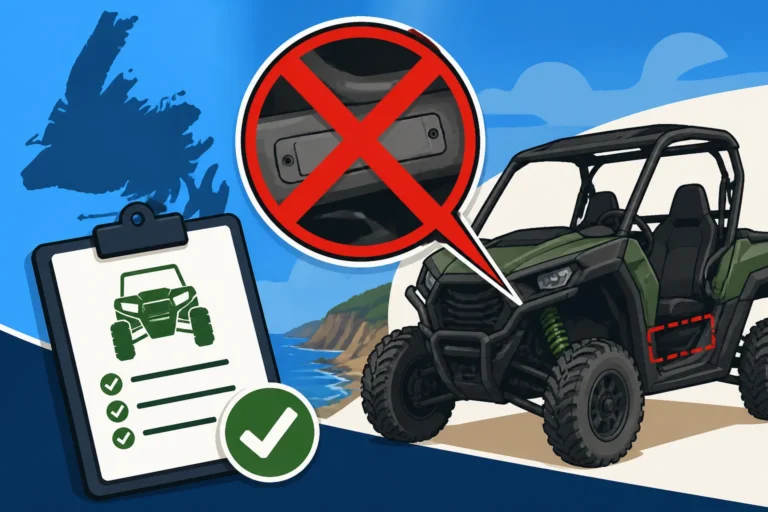
Once your registration is processed, you'll receive an identification plate (often referred to as a "licence plate") for your off-road vehicle. This plate must be securely attached to the rear of your machine, clearly visible and kept free of mud and obstructions. [Newfoundland Plate Placement on a Quad] dictates where it should go. Unlike car plates, your off-road vehicle plate does not expire or require annual renewal. It's a [Newfoundland Registration Valid While You Own It], a one-and-done deal, which is a significant convenience for riders. However, you'll still need to carry proof of registration with you whenever you ride.
The plate serves as the primary visual identifier for your machine. This makes it easier for peace officers to identify registered machines and helps deter theft. Keep it clean and visible, especially when riding in areas where enforcement is common. It's a small but vital part of legal operation.
| Document Type | Required For | Where to Get It | Special Notes |
|---|---|---|---|
| Bill of Sale | New purchases (private or dealer) | Seller, dealer | Must clearly show buyer, seller, machine details, date, price. |
| NVIS | New machines from a dealer | Dealer at time of purchase | New Vehicle Information Statement confirms first ownership. |
| Sworn Affidavit | No bill of sale, unclear ownership, older machines | Prepared by owner, witnessed by Commissioner for Oaths | Often used for inherited machines or those without a clear paper trail. LawDepot can provide templates. |
| Government ID | All registrants | Service NL, other provincial/federal agencies | Driver's licence or other valid photo ID. |
| Proof of Address | All registrants | Utility bill, government correspondence | Ensures current residency in NL. |
| Application Form | All registrants | Motor Registration Division office, online | Fill out accurately and completely. |
| Payment for Fees | All registrants | Motor Registration Division office (cash, debit, credit) | Check current fees; [Newfoundland Charges $95 for an ATV] (note: specific numbers can change, always verify with official sources). |
Beyond Registration: What Else You Need to Know for Cabin Country Riding
Getting your machine registered is a critical first step, but responsible cabin country riding involves more than just a plate. You'll need to understand local bylaws, safety requirements, and general etiquette to ensure your adventures remain enjoyable and lawful. Even out in the wilderness, there are rules that protect both riders and the environment.
Carrying Your Papers on the Trail
Always carry your proof of registration and proof of insurance with you when you're riding, even if it's "just around the cabin." Officers can request these documents at any time. While some people laminate copies, many choose to keep originals in a waterproof bag on their machine. It's better to be over-prepared than to be caught without them. [What an Officer Can Ask You to Produce] includes these documents, along with your driver's licence if you're riding on or crossing a highway.
This might seem like a minor detail, but it's important. A quick check from an officer can turn into a time-consuming hassle if you can't immediately produce the required paperwork. Being ready with your documents ensures a smooth interaction and demonstrates your commitment to safe and legal riding.
Local Bylaws and Municipal Roads
While your cabin might be in a remote area, it's often still within the boundaries of a municipality or local service district. Many of these local governments have their own bylaws regarding off-road vehicle use, especially on local roads or near residential areas. Always check with the local council office for the specific area around your cabin to ensure you're aware of any restrictions. Some communities have designated routes, specific hours of operation, or outright bans on certain roads. [Newfoundland Municipal Road Bylaws] vary greatly from one community to the next, so never assume.
For example, a gravel road leading to a cluster of cabins might be considered a municipal road, subject to specific speed limits or restrictions on ATV use. What feels like a remote, unpoliced area might actually have very specific local rules. A quick call to the local town council or service district office can save you a lot of trouble.
Safety Equipment and Operation
Beyond registration, the Off-Road Vehicles Act also mandates specific safety equipment and operational rules. This includes wearing an approved helmet ([Newfoundland Helmet Law for Every Rider]), having proper lighting for night riding ([Newfoundland Head and Tail Lamp Rules]), and ensuring your machine has an adequate muffler. Even on cabin roads, these rules apply. It's about personal safety and being a respectful rider. These regulations aren't relaxed just because you're away from a major town; they apply wherever you operate your machine.
Remember, safety isn't just about avoiding a fine; it's about protecting yourself and anyone riding with you. Accidents can happen anywhere, and having the right gear dramatically improves your chances of avoiding serious injury. Always prioritize safety, whether you're on a major trail or just heading down the lane to your cabin.
Insurance for Your Cabin Machine
While off-road vehicles don't require the same extensive insurance as highway vehicles, Newfoundland's Act mandates a minimum third-party liability insurance coverage for all registered off-road vehicles. This typically means a minimum of $200,000 in coverage. This is crucial for protecting yourself financially in case of an accident where you cause injury or property damage to someone else. Even in cabin country, accidents can happen, whether it's colliding with another machine, damaging private property, or injuring a pedestrian. [Newfoundland Insurance Requirements for Riders] details these requirements.
Many riders mistakenly believe that if they're only using their machine on what they consider "private" property or remote trails, insurance isn't necessary. However, the requirement is tied to registration and applies to any off-road vehicle operated under the Act. Imagine a scenario where you accidentally damage a neighbor's cabin or injure someone on a shared access road. Without insurance, you could be facing substantial personal financial liability. It's a small annual cost for significant peace of mind.
Disclaimer
This article is for general informational purposes only and does not constitute professional advice. Laws, prices and regulations vary by location and change over time. Consult a qualified professional for guidance on your specific situation.