Newfoundland Registration for a Labrador Rider
Riding an ATV or UTV in Labrador offers unparalleled access to some of the most stunning and rugged landscapes in the province. But navigating the provincial registration requirements from a distance, or simply understanding how the rules apply specifically to you as a Labrador resident, can feel like trying to cross a bog without a map. This guide is here to untangle the specifics of registering your off-road vehicle (ORV) in Newfoundland and Labrador, ensuring you, as a Labrador rider, are fully compliant and ready for the trail.
Understanding Your Obligation: Why Labrador Riders Need Newfoundland Registration
It's a common misconception that because Labrador is geographically distinct, it might operate under a different set of rules for off-road vehicles. However, when it comes to official registration, the province of Newfoundland and Labrador operates under a unified framework. This means that whether you're riding the vast barrens near Happy Valley-Goose Bay or cruising a woods road outside Stephenville, the same provincial laws apply to your machine's registration status. There's no separate "Labrador-only" registration system you need to worry about.
The Unified Provincial Act
The legal framework governing off-road vehicles across the entire province, including the entirety of Labrador, is established by [Newfoundland's Off-Road Vehicles Act]. This provincial legislation sets out the regulations for everything from machine classification and mandatory safety equipment to operator age limits and, crucially, vehicle registration. It's a comprehensive piece of legislation designed to ensure consistency and safety for all riders, regardless of where they reside within Newfoundland and Labrador. Understanding that this single Act applies universally is the first crucial step for any Labrador rider.
This unified approach means that the core requirements for registering your ATV or UTV are identical for everyone in the province. While the practicalities of reaching a Motor Registration Division office might differ significantly between St. John's and, say, Nain, the fundamental legal obligations and the paperwork you need to submit remain the same. Knowing this helps to demystify the process, as you're not looking for some unique Labrador-specific loophole, but rather navigating the provincial system designed for everyone. It's about knowing how to apply the provincial rules to your specific situation in Labrador.
Beyond the Basics: What Registration Provides
Registering your off-road vehicle is far more than just a bureaucratic hurdle; it's a fundamental step that provides you with legal authorization to operate your machine on most trails, Crown land, and to legally cross highways where permitted. Without proper registration, you risk fines, potential seizure of your machine, and a lot of headaches if you encounter a peace officer. The identification plate and permit you receive are proof that your machine meets the provincial requirements to be on the trail.
One of the most appealing aspects of the registration system in Newfoundland and Labrador, which benefits Labrador riders immensely, is its permanence. Unlike many other jurisdictions where you need to renew your registration annually, here, once your ORV is registered, it's registered for good – as long as you own it. This means [Newfoundland Registrations Never Expire] for the owner who initially registers the machine. It’s a one-time fee and a one-time process for the lifespan of your ownership, saving you the hassle of annual renewals. This long-term approach simplifies things considerably for riders, especially those in remote areas where frequent trips to a registry office aren't practical. This permanent registration, confirmed by [Your Registration Has No Expiry Date at All], eliminates a significant administrative burden and lets you focus on enjoying your machine.
Navigating the Registration Process from Labrador
For residents of Labrador, the main challenge in registering an ORV often isn't the rules themselves, but the logistics of completing the process when a Motor Registration Division office might be hundreds of kilometers away. While the steps are provincially uniform, the methods of submission might need to be adapted to your location. This section will walk you through the practicalities.
The Standard Steps, Remotely or In-Person
The initial steps for registration are straightforward: gather your documents, complete the necessary forms, and submit them with the appropriate fee. If you happen to be on the island and near a Motor Registration Division office, you can certainly book an appointment for in-person service. However, for most Labrador residents, this isn't a convenient option. The good news is that the provincial government understands these geographical challenges and offers pathways to complete your registration without needing to visit a physical office. It’s about leveraging mail-in options or, in some cases, working with local service providers.
While the general advice on [Newfoundland Registration by Appointment] is great for those near a registry office, for many in Labrador, a trip to St. John's or Corner Brook simply isn't feasible for vehicle registration. Therefore, understanding the mail-in process is paramount. You'll need to ensure all your documents are correctly filled out, signed, and include certified copies if original documents are required. Proper payment methods, such as money orders or certified cheques, are also key to avoiding delays. Taking the time to double-check everything before sending it off can save weeks of back-and-forth correspondence.
Gathering Your Essential Paperwork
Regardless of whether you submit your registration in person or by mail from Labrador, having the correct paperwork is absolutely crucial. Missing even one document can lead to significant delays and frustration. For a brand-new machine, the most important document you’ll need is the New Vehicle Information Statement (NVIS) from the dealer. This statement confirms the vehicle's details and that it has never been registered before. Without it, you cannot register a new ORV. [Newfoundland Requires an NVIS for a New Machine] is a non-negotiable step for new purchases, so ensure your dealer provides this.
For used machines, the process focuses heavily on establishing a clear chain of ownership. You will need a Bill of Sale from each previous owner, tracing the machine's history up to your purchase. This proves that you are the legitimate owner. [Newfoundland Bills of Sale From Each Owner] outlines this requirement. If you’ve purchased from a private seller, ensuring you have a properly completed Bill of Sale is essential. Sometimes, the paper trail for an older, used machine can be a bit murky. If you find yourself in a situation where a previous Bill of Sale is missing or unclear, you might need to use a sworn affidavit to attest to ownership. Online resources like LawDepot can be incredibly helpful here, offering templates for a legally sound Bill of Sale or a sworn affidavit, ensuring you have the correct format to present to the Motor Registration Division. Having these templates at your fingertips can make what seems like a daunting task much simpler.
A comprehensive list of requirements is available, and checking it diligently will prevent any wasted effort. Think of it as preparing for a big trip: you wouldn't leave without your gear, and you shouldn't submit your registration without all your documents. For a thorough overview of all the documents you might need, including proof of identity and address, you can refer to [Newfoundland Registration Paperwork Explained]. Always make copies of everything you send, just in case.
Key Documents, Fees, and Specifics for Labrador ORV Registration
Once you've wrapped your head around the general process, the next step is to get down to the brass tacks: what exactly will it cost, and what specific forms are critical to avoid any hiccups? This part is where we detail the financial aspect and the types of documents you'll definitely need in your submission package.
Breakdown of Costs
The financial aspect of ORV registration in Newfoundland and Labrador is fairly straightforward, but it's important to know the specific fees associated with your type of machine. The good news for Labrador riders is that these are one-time fees for the initial registration, meaning you don't pay annually. For most ATVs, the registration fee is a flat rate. For example, [Newfoundland Charges $95 for an ATV], a figure that covers the administrative costs and the issuance of your permanent identification plate and permit. Trail bikes, being a lighter class of machine, have a much lower registration fee. Side-by-sides typically fall into the same category as ATVs for registration purposes, though it's always wise to confirm the specific classification if you're unsure.
It's worth noting that if you are a senior resident, there are reduced rates available, which can be a significant saving. [Seniors Pay $55 to Register an ATV], reflecting a provincial commitment to making recreational activities more accessible. These fees are typically paid via money order or certified cheque if you're mailing your application from Labrador. Beyond the initial registration, if you're purchasing a used machine, there will also be provincial sales tax (HST) applied. [Newfoundland HST on an ATV Purchase] applies to machines purchased from dealers, while [Newfoundland Tax on a Private ATV Sale] clarifies that HST also applies to private sales, and this tax is collected by the Motor Registration Division at the time of registration. This is crucial for used machines, as it's often overlooked by private buyers and sellers. When you transfer ownership, separate fees apply. For instance, [What It Costs to Transfer Ownership of a Quad] can be a nominal fee, and again, seniors may benefit from a reduced rate, as outlined in [Why Seniors Pay Only $16 to Transfer a Machine].
Proof of Ownership and Identity
Beyond the NVIS for new machines or a clear chain of Bills of Sale for used ones, the Motor Registration Division will require proof of your identity and your current address in Labrador. This typically means presenting a valid driver's license or other government-issued photo ID, along with a document like a utility bill showing your current residence. These measures are in place to prevent fraud and ensure the machine is registered to the rightful owner. It’s also vital that the Vehicle Identification Number (VIN) on your machine matches all your documentation exactly. Before you even finalize a purchase, especially of a used machine, it's a smart move to verify the VIN against any existing paperwork. Checking this early can prevent major headaches later, as detailed in [Checking a VIN Against an Older Registration Permit].
Sometimes, particularly with older used machines, the full paper trail of ownership might be broken, leaving you without a clean Bill of Sale from every previous owner. In such cases, the Motor Registration Division may require additional documentation like a sworn affidavit of ownership. This is where you, as the applicant, legally declare that you are the rightful owner and explain the circumstances of acquiring the machine without a full chain of custody. If you find yourself in this situation, preparing a legally sound affidavit is crucial. This is another instance where a resource like LawDepot can be invaluable. They offer templates for sworn affidavits that can help you draft a document that meets legal standards, providing a clear path forward for [Newfoundland Registration Without a Bill of Sale] when standard documentation is insufficient. LawDepot's templates guide you through the necessary information, ensuring your affidavit is comprehensive and acceptable for registration purposes.
Receiving Your Plate and Documents
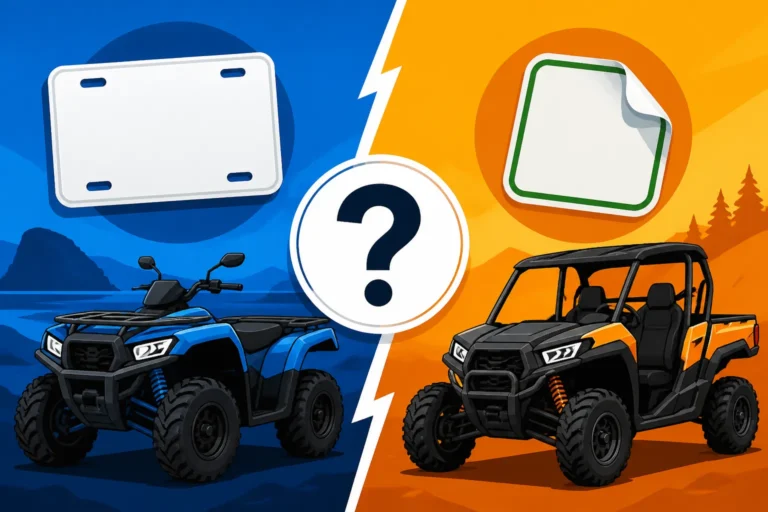
Once your application is processed and approved, whether in person or by mail, you will receive your official Registrar's Permit and a unique identification plate for your ORV. The permit is the legal document proving your machine is registered, and it should always be kept with you when operating the machine. The identification plate, often referred to as a license plate for ORVs, must be securely affixed to the rear of your machine, clearly visible and free from obstruction. While some provinces use decals, [Do You Get a Plate or a Decal?] confirms that in Newfoundland and Labrador, you receive a physical plate.
This plate serves as your machine's unique identifier and is crucial for enforcement and identification purposes. Proper placement is important to avoid issues; it needs to be visible at all times, not hidden by cargo or mud. While you might be eager to hit the trails, ensure you've received and properly affixed your plate and have your permit with you. The processing time can vary, so it's wise to plan ahead and allow for some lead time if you're mailing documents, especially given the geographical distances involved for many Labrador riders. For more on typical processing times, check out [Newfoundland Registration Processing Time].
Special Considerations and Exemptions for Labrador Riders
While the core registration requirements are uniform across Newfoundland and Labrador, there are unique aspects and logistical challenges that specifically impact riders in Labrador. Understanding these can help streamline your process and clarify any ambiguities.
The Labrador Inuit Settlement Area Exemption
One specific point that often comes up for riders in Labrador relates to exemptions within the Labrador Inuit Settlement Area (LISA). It's important to clarify that this specific exemption pertains to the requirement for a trail sticker on managed trails, not the mandatory provincial registration of your off-road vehicle. All ORVs operated in Newfoundland and Labrador, regardless of location or owner, must be registered with the Motor Registration Division and carry an identification plate, unless a very specific, temporary exemption applies (like a short-term visitor exemption). The [Newfoundland Labrador Inuit Trail Exemptions] primarily addresses the need for a managed trail sticker, indicating that individuals or businesses within the LISA may be exempt from needing to purchase and display these stickers when operating within the settlement area.
Therefore, while residents of the Labrador Inuit Settlement Area may not need to purchase a separate trail sticker for riding within certain boundaries, the fundamental requirement to register your ATV or UTV with the province remains. This is a crucial distinction to remember to ensure full compliance. Always confirm the most current rules, especially regarding trail access and sticker requirements, with local authorities or trail operators in your specific region of Labrador, but never assume registration itself is optional. Your ORV must still carry its provincial identification plate.
Distance and Logistics: Mail-In Options
Given the vast distances and often limited access to provincial government offices in Labrador, utilizing mail-in options for registration is a practical necessity for many. This process requires meticulous attention to detail to avoid delays. When preparing your registration package to send by mail, ensure you:
- Use Certified Copies: If original documents are required, and you don't want to part with them permanently, some offices may accept certified true copies. Check with the Motor Registration Division beforehand. Otherwise, be prepared to mail originals, making sure you keep scanned or photocopied backups.
- Include All Necessary Forms: Download and meticulously fill out all required forms from the Motor Registration Division website. Ensure all sections are completed, signed, and dated correctly.
- Correct Payment Method: As mentioned, money orders or certified cheques made out to "Minister of Finance" are typically required for mail-in applications. Do not send cash through the mail.
- Secure Packaging and Tracking: Send your package via registered mail or a courier service that provides tracking. This gives you peace of mind and proof of mailing.
- Contact Information: Ensure all your forms clearly state your current contact information, including a phone number and email address, in case the office needs to reach you for clarification.
While the processing time for mail-in applications might be a bit longer than an in-person visit, being thorough and organized will significantly speed up the process. It's always a good idea to factor in potential mail transit times and processing delays when planning your first ride, especially if you're waiting for your plate and permit to arrive. Being proactive and double-checking every item in your application package before sending it off from Labrador will save you from potential frustrations and help you get your machine legally on the trail faster.
| ORV Type | Initial Registration Fee (Standard) | Initial Registration Fee (Senior) | Transfer Fee (Standard) | Transfer Fee (Senior) |
|---|---|---|---|---|
| ATV | $95 | $55 | $16 | $16 |
| Trail Bike | $5 | $5 | $16 | $16 |
| Side-by-Side (UTV) | $95 | $55 | $16 | $16 |
| Snow Groomer | $10 | $10 | $16 | $16 |
Note: All fees are subject to change by the provincial government. Always confirm current rates with the Motor Registration Division before submitting your application. Provincial sales tax (HST) may also apply to the purchase price of the machine, collected at registration for private sales.
Disclaimer
This article is for general informational purposes only and does not constitute professional advice. Laws, prices and regulations vary by location and change over time. Consult a qualified professional for guidance on your specific situation.