Newfoundland Registration for a Cabin Machine
It's a common scenario here in Newfoundland: you have a beloved ATV or UTV that primarily lives at the cabin, used for those weekend jaunts to the fishing hole, getting firewood, or just exploring the back forty. You might even think, "It never goes on a highway, why bother with full registration?" But the reality is a little more complex, and skipping the proper steps can lead to headaches down the road. This guide will walk you through everything you need to know about registering your off-road vehicle (ORV) that calls your cabin its primary home, ensuring you stay on the right side of the law and avoid any unwelcome surprises.
Understanding the "Cabin Machine" Concept in Newfoundland
Many riders in Newfoundland have a machine that's affectionately known as the "cabin quad" or "cabin side-by-side." This conjures images of an older, perhaps well-worn, but trusty vehicle that's practically part of the cabin furniture. The perception often is that because it's in a remote location, or only used on private land associated with the cabin, it somehow falls outside the normal registration requirements. This is a common misconception that can lead to unexpected fines and complications. The Off-Road Vehicles Act in Newfoundland doesn't really differentiate based on where a machine is kept or primarily used. If it's being operated anywhere other than fully enclosed private property that you own and control, without ever touching so much as a cabin access road shared by others, it needs to be registered.
What Defines a Machine Used at a Cabin?
When we talk about a "cabin machine," we're generally referring to an off-road vehicle that is stored at a cabin, often in a more rural or remote area of Newfoundland, and is used for activities specific to that location. This might include accessing fishing or hunting grounds, hauling supplies from a nearby community, maintaining the cabin property, or simply enjoying recreational rides on nearby trails or Crown land. The key here is "nearby trails or Crown land." If your machine leaves your immediate, fully private property boundaries and enters any shared access road, designated trail, or public land, it's subject to the same rules as any other ORV in the province. Even if your cabin is accessed via a long, winding gravel road that feels completely private, if that road is Crown land or has public access, your machine needs to be registered.
It's tempting to think that since it's "just for the cabin," it's somehow exempt. Perhaps you bought it casually from a neighbour, or it's an old family machine passed down. This casual attitude, while understandable given the context, doesn't exempt it from the legal framework. Whether it's a brand-new side-by-side or a vintage ATV, if it's hitting the ground outside your absolutely private, fenced-off domain, you're looking at registration.
Common Misconceptions About Cabin Machine Registration
There are a few persistent myths about cabin machines that often trip up owners. Let's tackle them head-on.
Firstly, the idea that "I only use it on my own land, so I don't need to register it" is only partially true. If your land is truly private, fully enclosed, and your machine never, ever leaves that boundary, then registration isn't required for that specific use. However, very few cabin owners have such an isolated setup. Most cabins rely on some form of access road that, while it might feel private, is often Crown land, a shared right-of-way, or a public access trail. The moment your tire touches one of these areas, your machine needs to be registered. This is where many people get caught. You might be legally using your machine on your own ten hectares, but the one-kilometre dirt road from the highway to your gate might be public.
Secondly, some believe that older machines, or those purchased in a casual "handshake" deal, are somehow grandfathered in or exempt. This is absolutely not the case. The age of the machine or the informality of its purchase has no bearing on its registration requirement. The law applies to all off-road vehicles operated off fully private land. You might face unique challenges with paperwork for older machines, but the obligation to register remains. This is where resources like [Newfoundland Registration Without a Bill of Sale] can be helpful, as you might need to prove ownership through other means if the original bill of sale is long gone.
Finally, there's the misconception that because a machine is only used "seasonally" or "a few times a year," it doesn't warrant permanent registration. However, [Newfoundland Registrations Never Expire], so once you register it, it's done for the entire time you own it. The frequency of use doesn't change the need for that initial registration. The peace of mind alone is worth it, knowing you're compliant whether you're using it once a year or once a week.
The Nuts and Bolts of Registering Your Cabin Machine
So, you've realized your cabin machine needs to be registered. Don't worry, the process, while requiring a few specific steps, is quite manageable. It primarily involves gathering the right documents, understanding the fees, and knowing where to go. The province has worked to streamline this, but having all your ducks in a row before you head to Motor Registration is key.
Essential Documents You'll Need
The most critical part of registering any ORV, including your cabin machine, is having the correct paperwork. This is where many private sales, especially those informal ones common for cabin machines, can create difficulties if not handled properly at the time of purchase.
- Proof of Ownership: This is paramount.
- New Machine: For a brand-new ORV, you'll need the New Vehicle Information Statement (NVIS) from the dealer. This document confirms the machine's origin and that it hasn't been previously registered.
- Used Machine: For a used ORV, you'll need a [Newfoundland Bills of Sale From Each Owner] in the chain of ownership leading up to you. This proves that you legally acquired the machine. If you bought it from a private seller, a detailed bill of sale with the seller's information (including their tax registrant number if applicable) and the machine's VIN is crucial. If paperwork is missing from a prior owner, or if you've inherited the machine, things can get tricky. In such cases, you might need to explore options like a sworn affidavit of ownership, which can sometimes be drafted using templates from services like LawDepot, or through legal counsel, to bridge any gaps in the ownership chain.
- Identification: You'll need valid government-issued photo identification. This could be your driver's license or a provincial identification card.
- Proof of Address: A recent utility bill or another official document showing your current residential address is required.
- Completed Application Form: You'll fill out a specific application form for ORV registration provided by Motor Registration.
- Newfoundland Insurance Requirements for Riders: While not always submitted directly at registration, you absolutely need to have at least the minimum required third-party liability insurance in place before you operate your machine on any public land or trail. You might be asked to show proof, and it's always wise to have it.
Gathering these documents beforehand will make your visit to Motor Registration much smoother. You can find more detail on what exactly to bring in [Newfoundland Registration Paperwork Explained].
The Registration Process Step-by-Step
Once you have your documents ready, the process generally follows these steps:
- Book an Appointment: Motor Registration offices in Newfoundland operate by appointment for many services. It's highly recommended to book your registration appointment in advance to avoid long waits or being turned away. You can usually do this online or by phone. Planning ahead ensures you have dedicated time with a registry agent. See [Newfoundland Registration by Appointment] for more on this.
- Visit Motor Registration: Attend your scheduled appointment at your local Motor Registration Division office.
- Submit Documents and Application: Present all your collected documents to the registry agent. They will review them to ensure everything is in order. You'll also submit your completed application form.
- Pay Fees: You'll pay the applicable registration fee. For example, [Newfoundland Charges $95 for an ATV] is the standard fee for a quad, but this figure can change, so always check the current rates. There might also be a transfer fee if you're registering a used machine that you've recently acquired.
- Receive Your Registration Permit and Plate/Decal: Once everything is processed and fees are paid, you'll receive your registration permit (a physical document) and an identification plate or decal for your machine. This plate or decal must be displayed on your ORV. More on this can be found in [Newfoundland Permits, Plates and Decals].
The entire process usually doesn't take too long once you're at the counter, provided all your paperwork is complete and accurate.
Costs and Fees Associated
Registering a cabin machine involves a few distinct costs, and it's good to be prepared for them. While I can't give you exact dollar figures (these can change!), I can outline the types of fees you'll encounter. Always check the official provincial government website or contact Motor Registration for the most current rates.
- Initial Registration Fee: This is the primary fee you pay to get your machine registered for the first time in your name. This is a one-time fee here in Newfoundland, which is fantastic – [The Newfoundland Fee You Pay Once and Never Again]. For example, there's a specific, flat fee for ATVs and a different, often lower, fee for dirt bikes.
- Transfer of Ownership Fee: If you've purchased a used cabin machine from a previous owner, you'll pay a fee to transfer the registration into your name. This is separate from the initial registration fee and applies every time ownership changes hands. There might even be reduced rates for seniors transferring a machine.
- Harmonized Sales Tax (HST): When you purchase a used machine from a private seller, you are generally required to pay HST on the purchase price, unless specific exemptions apply. This tax is often collected at the time of registration.
- Duplicate Document Fees: Should you ever lose your registration permit or identification plate, there are separate, smaller fees to obtain duplicates.
It's a good idea to budget for these costs. While the initial registration is a one-time expense, the transfer fees and HST are important considerations when buying a used machine, even if it's "just for the cabin."
Ongoing Responsibilities for Cabin Machine Owners
Getting your cabin machine registered is a big step, but your responsibilities don't end there. Just like with any other vehicle, there are ongoing obligations to ensure you remain compliant with the law and keep yourself and others safe on the trails and access roads around your cabin.
Plate, Decal, and Carrying Your Registration Proof
Once your machine is registered, you'll be issued an identification plate or decal. This isn't just a decorative item; it's legal proof of registration and must be affixed to your ORV in a clearly visible location as specified by the regulations. For most ATVs, this means the rear. Ensure it's kept clean and unobstructed, even if you've been mudding on the barrens. An obscured plate can lead to fines.
Beyond the physical plate or decal, you'll also receive a registration permit document. This document, which details your machine's information and your ownership, must be carried with you whenever you're operating the ORV. It's proof that your machine is legally registered. Many riders keep a laminated copy in a waterproof pouch on their machine, or carry it with their other identification. Don't leave it back at the cabin – if a peace officer stops you, you'll need to produce it.
Transferring Ownership When You Sell Your Cabin Machine
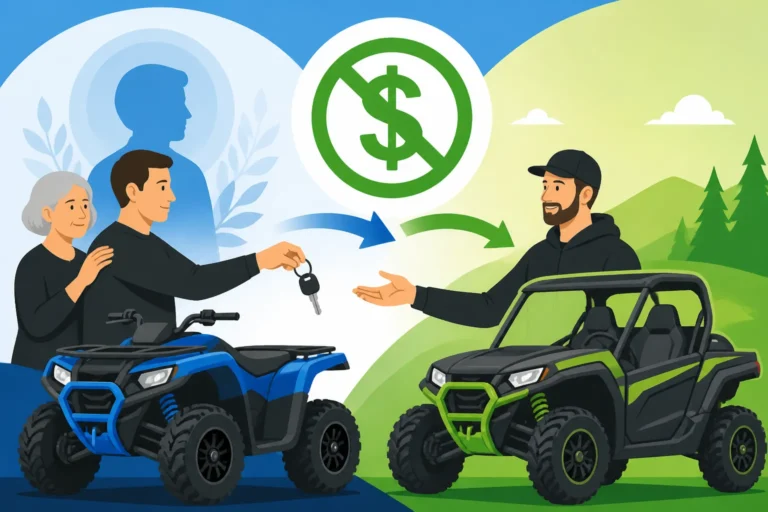
Life changes, and you might decide to sell your cabin machine, or perhaps upgrade to a newer model. When this happens, it's crucial to correctly transfer ownership. This isn't just about handing over the keys; it's about updating the provincial registry to reflect the new owner.
When you sell your registered cabin machine, you, as the seller, have a legal responsibility to notify Motor Registration within a specific timeframe (typically 10 days) that the machine has been sold. This protects you from any liability associated with the machine once it's out of your hands. The buyer, in turn, is responsible for registering the machine in their name and paying any applicable transfer fees and HST. The process for this is detailed in [Newfoundland Transfer of Ownership Explained].
It's vital to have a clear bill of sale for any transaction. If you're selling to a family member or friend, don't let the informal nature of the deal lead to issues with registration later on. A proper bill of sale, even between family, ensures that both parties are protected and the transfer of ownership is legally documented. You can easily find templates for these documents online, for example, through services like LawDepot, to ensure all necessary information is captured. This avoids future headaches for the new owner, especially if they later need to register it officially.
Important Legal Considerations Beyond Registration
Beyond the initial registration, there are several other legal aspects of owning and operating an ORV in Newfoundland, even a cabin machine.
- Insurance: As mentioned, minimum third-party liability insurance is mandatory for any ORV operated off private land. This protects you in case of an accident where you cause damage or injury to others. Don't skimp on this; the financial consequences of an uninsured accident can be devastating. Learn more about [Newfoundland Insurance Requirements for Riders].
- Safety Training: For certain age groups, or for first-time registrants, safety training is a requirement. This ensures riders have a basic understanding of safe operation and trail etiquette. Check [Newfoundland Safety Training Is Mandatory] for specifics on who needs to complete it. Even if not legally required for you, it's always a good idea to take a safety course.
- Road Rules for Crossings: Even a cabin machine will likely encounter public roads, whether for a quick crossing or to access another section of trail. There are strict rules about how and where you can cross highways or ride shoulders, including visibility requirements and speed limits. Know these rules to avoid tickets and ensure safety. For instance, [Crossing a Newfoundland Highway Needs 150 Metres of Visibility].
- Municipal Bylaws: Some municipalities have their own bylaws regarding ORV use within their boundaries. While your cabin might be in an unorganized area, if you venture into a nearby town for supplies, be aware that local rules might apply. Always check with the local town office if you're unsure.
These regulations are in place for the safety of all riders and other users of shared land. Being informed and compliant means you can enjoy your cabin machine without unnecessary stress or legal trouble.
Common Questions and Scenarios for Cabin Machine Owners
The "cabin machine" often brings up unique questions due to the varied nature of cabin properties and access. Let's explore some common scenarios and provide clarity.
What If My Cabin is on Crown Land or Leased Land?
This is a common situation in Newfoundland, where many cabins are built on Crown land under a lease agreement or a permit. The critical distinction here is that Crown land, even if you have a lease or permit for your cabin structure, is not considered private land for the purposes of ORV registration. When you operate your machine on Crown land, including access roads that traverse it to reach your cabin, your ORV must be registered.
Think of it this way: while you have specific rights to your cabin structure and perhaps a small surrounding footprint, the land itself is still public domain. Therefore, the provincial Off-Road Vehicles Act applies in full. The same goes for any leased land that isn't fully private and enclosed. The rule of thumb remains: if your machine leaves your exclusively owned and controlled private property, it needs to be registered. There's no special exemption for machines used on leased Crown land.
Bringing a Cabin Machine from Out-of-Province
Many Newfoundlanders purchase cabins or move here from other provinces, bringing their beloved ORVs with them. If your cabin machine is currently registered in another province, you have a temporary grace period. [Newfoundland's 30-Day Visitor Exemption] allows visitors to operate their out-of-province registered machine in Newfoundland for up to 30 days without re-registering it here. However, this is for visitors.
If you are a new resident, or plan to reside in Newfoundland and keep your cabin machine here permanently, you need to register it in Newfoundland. The 30-day window is a short-term allowance; for long-term residency and use, provincial registration is required. You'll go through a similar process as registering a used machine from within Newfoundland, providing your out-of-province registration as part of the ownership proof. It's critical not to let this deadline pass, as operating an unregistered machine after 30 days as a resident can lead to fines. See [Newfoundland Registration for a New Resident] for more details.
When a Machine Is Shared Among Family Members
It's incredibly common for a cabin machine to be a shared asset among a family – maybe it was passed down, or several family members pitched in to buy it. While this is wonderful for fostering family outdoor time, it can raise questions about whose name the machine should be registered under.
Legally, an ORV can be registered in the name of one primary owner, or it can be registered with multiple owners. If multiple names are on the registration, all owners have an equal claim to the machine. If only one name is on the registration, that person is legally responsible for the machine. For instance, if you want to ensure clear succession or avoid disputes, drawing up a simple co-ownership agreement, perhaps using templates available from services like LawDepot, can be a smart move. This document can outline who is responsible for maintenance, insurance, and storage, ensuring everyone is on the same page.
Regardless of who is listed on the registration, anyone operating the machine off private property must comply with all other provincial rules, including having appropriate insurance, carrying proof of registration, and meeting any training requirements. If a younger family member is operating the machine, they'll need proper supervision and may require safety training depending on their age and the machine's engine size.
By understanding these nuances, you can ensure your cabin machine provides years of enjoyment without any unexpected legal hiccups.
| Aspect of Use | Needs Registration? | Key Consideration |
|---|---|---|
| Only on Private, Fenced Land | No | Land must be exclusively owned, fully enclosed, and the machine never leaves its boundaries. Very rare for a typical cabin. |
| Cabin Access Roads (Shared) | Yes | If the access road to your cabin is Crown land, a shared easement, or publicly accessible, your machine needs registration the moment it touches this road. |
| Crown Land/Leased Land | Yes | Operating on any Crown land (even if your cabin is leased there) or non-private leased land requires registration. |
| Visiting Neighbor's Property | Yes | Even if your neighbour's land is private, if you cross any shared access points or public trails to get there, your machine needs to be registered. |
| Used Only Seasonally | Yes | The frequency of use does not negate the registration requirement if the machine leaves private land. Newfoundland registrations do not expire, so it's a one-time process. |
| New Resident with Out-of-Province Machine | Yes (after 30 days) | Visitors have a 30-day exemption. If you become a resident, you must re-register the machine in Newfoundland after 30 days. |
Disclaimer
This article is for general informational purposes only and does not constitute professional advice. Laws, prices and regulations vary by location and change over time. Consult a qualified professional for guidance on your specific situation.