Newfoundland Permits, Plates and Decals
Navigating the world of ATV and UTV ownership in Newfoundland and Labrador can sometimes feel like trying to solve a complicated puzzle, especially when it comes to understanding all the bits and pieces of official paperwork and physical identifiers for your machine. Riders often find themselves scratching their heads, wondering about the difference between a registration permit, an identification plate, and all the various decals out there. This comprehensive guide is here to clear up that confusion, walking you through everything you need to know about Newfoundland's permits, plates, and decals, ensuring you're fully prepared and compliant before hitting the trails.
The Heart of It All: Understanding Your Newfoundland Registration Permit
Your off-road vehicle (ORV) registration permit in Newfoundland and Labrador isn't just a piece of paper; it's the fundamental proof of your machine's legal existence in the province's eyes. It’s what connects you, the owner, to your ATV, UTV, or snowmobile, detailing everything from your machine's unique vehicle identification number (VIN) to its make, model, and year. Think of it as your machine's birth certificate and official ID rolled into one. Without it, you really don't have a legally recognized machine on the island or in Labrador.
What Your Registrar's Permit Actually Means
When you complete the registration process with Motor Registration, you're issued a document officially known as the "Registrar's Permit" or sometimes just referred to as your registration document. This isn't just a receipt; it's a formal declaration by the provincial government that your machine has met all the necessary requirements to be operated in Newfoundland and Labrador. It records the details of your machine, the date of registration, and importantly, the identity of the registered owner. This permit is absolutely essential because it proves that you've paid the required fees and that your machine's information is on file with the province. It's the primary document an officer will ask for if you're stopped on a trail or road and acts as your machine's official identity. It also forms the basis for any future transactions, like selling your machine or reporting it stolen.
The permit will list key details like the ORV class (e.g., ATV, snowmobile, side-by-side), the manufacturer's name, the model, and the year of manufacture. Crucially, it includes the VIN, which is a unique identifier for your specific machine, much like a fingerprint. You'll also find the gross vehicle weight and the engine size. For anyone planning to sell their machine, the information on this permit is exactly what a buyer will want to see to ensure they're getting a legitimate machine. It also helps confirm that the machine hasn't been reported stolen. [What the Registrar's Permit Says About Your Machine] delves deeper into these details.
Why This Document Is So Crucial
Imagine buying a house without a deed or driving a car without a title—that's essentially what operating an ORV without its registration permit feels like. This document is your undeniable proof of ownership and registration. It's what allows you to legally operate your machine on approved trails, Crown land, and where municipal bylaws permit. Without it, you could face significant penalties, including fines and even the seizure of your machine. It’s not just about avoiding trouble; it’s about having the peace of mind that comes with knowing you’re a responsible and compliant ORV owner.
Furthermore, this permit is vital for insurance purposes. When you go to insure your ATV or UTV, the insurance provider will ask for information directly from this document to verify the machine's details. In the unfortunate event of an accident or theft, your registration permit will be one of the first documents your insurance company will require. It verifies that the machine is indeed yours and is legally registered, which is a foundational requirement for any claim. For anyone who has ever tried to claim against insurance without all their ducks in a row, the frustration is real, and this permit is a major duck.
Keeping Your Permit Safe and Accessible
So, you've got this crucial permit – now what? While you don't necessarily need to carry the original paper permit on your person every single time you ride (digital copies or clear photos on your phone can often suffice, but check with local authorities for their preferred method), it's absolutely vital to have it readily accessible. This means knowing exactly where it is in your home office, keeping a digital copy on your phone or in cloud storage, and being prepared to produce it if asked by a peace officer. The last thing you want is to be asked for proof of registration and be unable to provide it.
It's a good practice to laminate a copy of your permit if you intend to carry it on the trail, protecting it from the elements. For the original document, store it in a secure, dry place, like a filing cabinet or a waterproof safe, alongside other important documents. Should your original permit ever be lost or damaged, don't panic! You can obtain a duplicate registration document for a fee, which is a small price to pay for compliance and peace of mind. [Newfoundland Duplicate Registrations at $25] covers this process. Remember, the goal is to always be able to prove your machine's legal standing quickly and efficiently.
The Visible Proof: Newfoundland Identification Plates
Beyond the paper permit, your off-road vehicle also needs a physical identifier—an identification plate. This plate is a unique marker issued by the province, displaying a combination of letters and numbers that links directly back to your machine's registration. It's the most immediate and visible sign to law enforcement and other riders that your ORV is properly registered and ready for the trails. Without this plate, or if it's not properly displayed, you're essentially riding an invisible machine in the eyes of the law, which can lead to unwelcome attention and penalties.
Do You Get a Plate or a Decal for Your Machine?
For most ATVs, UTVs (including side-by-sides), and snowmobiles in Newfoundland and Labrador, you will be issued a physical identification plate. This isn't just a small sticker; it's a sturdy, typically metal, plate designed to withstand the rigors of off-road use and weather. The decision to issue a plate versus a decal depends on the class of vehicle and the specific regulations under [Newfoundland's Off-Road Vehicles Act]. While some jurisdictions might opt for decals, Newfoundland and Labrador generally uses plates for its motorized ORVs. It's important to differentiate this from a managed trail sticker, which is a supplemental decal from a trail operator, not a replacement for your provincial registration plate.
Historically, various methods have been used to identify registered vehicles, but the identification plate has proven to be a durable and effective solution for ORVs in the province. When you complete your initial registration for a machine like a quad, you'll receive your registration permit and a corresponding plate. This plate is specifically designed for ORV use, often smaller than a standard vehicle license plate, but just as critical. It's not something you can just print out yourself; it comes directly from Motor Registration and is assigned uniquely to your machine. [Do You Get a Plate or a Decal?] provides further details.
Where Your Plate Needs to Be Placed
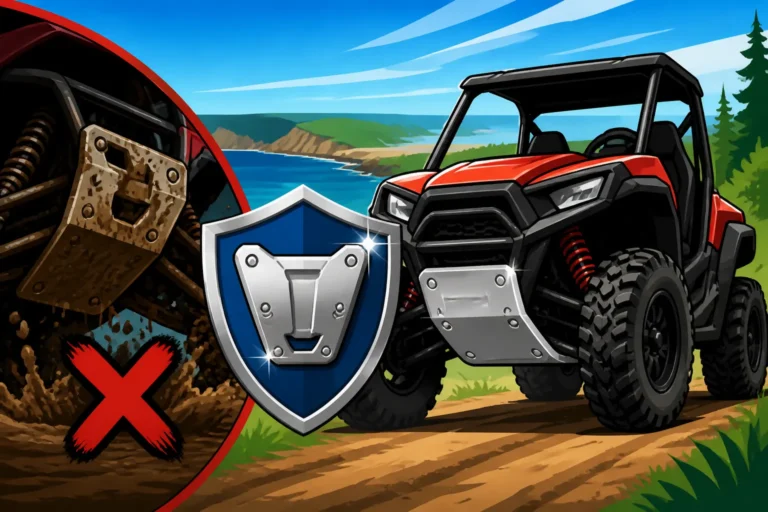
Proper placement of your identification plate isn't just a suggestion; it's a legal requirement. The Off-Road Vehicles Act stipulates that the plate must be securely attached to the rear of your machine, clearly visible, and unobstructed by any cargo, accessories, or mud. For an ATV, this usually means mounting it to the rear rack or a designated plate bracket. For a snowmobile, it's typically on the tunnel or rear bumper. Side-by-sides often have a specific location on the rear of the vehicle. The intent is clear: anyone approaching your machine from behind should be able to easily read the plate number.
Failing to properly display your plate, or having it obscured, can lead to a fine. Peace officers conduct regular checks, and an improperly displayed plate is an immediate red flag. Imagine pulling a hunting trailer or extra fuel cans on your rear rack, and those items completely cover your plate. That's a ticket waiting to happen. Before every ride, especially if you're carrying gear, take a moment to ensure your plate is fully visible. It takes only a few seconds and can save you a significant headache and fine down the trail. [Newfoundland Plate Placement on a Quad] offers specific guidance.
Keeping Your Plate Clean and Legible
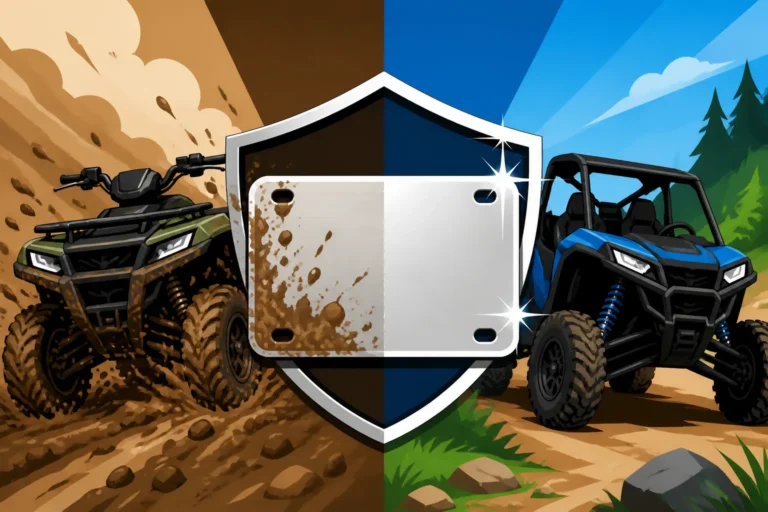
Newfoundland and Labrador's trails are beautiful, but they're also known for their mud, bog, and snow. It's incredibly easy for an ORV plate to become caked in grime, making it unreadable. However, keeping your plate clean and legible is your responsibility as the operator. An officer can still issue a ticket for an unreadable plate, even if it's due to natural trail conditions. This means you need to carry a small rag or brush with you to quickly wipe down your plate if it becomes obscured during a ride.
Consider a scenario where you've just blasted through a particularly muddy section of trail, and your plate is now completely covered in brown muck. You might think, "It's just mud, it'll come off later." But if a peace officer pulls you over, they won't differentiate between deliberate obstruction and accidental mud. The fact that the plate isn't legible is the issue. Similarly, in winter, snow and ice can accumulate. Regular checks throughout your ride, especially after challenging sections, are a wise habit to adopt. It’s a small effort that demonstrates your commitment to being a responsible rider. [Newfoundland Plates Kept Free of Mud] and [Newfoundland Plates Unobstructed by Cargo] highlight these responsibilities. Should you lose your plate, replacements are available for a fee. [Newfoundland Replacement Plates at $30] ensures you can quickly get back in compliance.
Beyond the Basics: Special Decals and Stickers
While the provincial registration permit and identification plate are mandatory for nearly all ORV owners, there are other decals and stickers that might come into play depending on where and how you ride. These additional markers serve various purposes, from indicating trail access to signifying specific exemptions. Understanding these extra requirements is crucial for a hassle-round riding experience, especially if you venture onto managed trails or have unique circumstances.
Managed Trail Stickers: Your Ticket to Approved Trails
Many of the province's fantastic multi-use trails, including significant portions of the [The T'Railway's 883 Kilometres in Newfoundland], are managed by various organizations, often volunteer-run, such as the Newfoundland and Labrador Snowmobile Federation (NLSF). To help fund the maintenance, grooming, and development of these trails, these operators often require riders to purchase and display a "managed trail sticker" or "trail pass." This sticker signifies that you've contributed to the upkeep of the trail system and are authorized to use it.
These stickers are typically an annual purchase and must be visibly affixed to your machine, usually on the front or side, as per the trail operator's instructions. Riders caught on a managed trail without the required sticker can face fines from provincial enforcement officers or trail wardens. It's a small fee to pay for access to well-maintained and regulated trails, and it directly supports the riding community. Before planning a trip to a specific trail network, always check with the local trail operator or their website to confirm their sticker requirements. [Managed Trail Stickers Come From the Trail Operator] and [Newfoundland Managed Trail Rules] offer more insight into these requirements.
Exemptions to the Trail Sticker Rule
While managed trail stickers are widely required for general access, there are some specific exemptions that riders in Newfoundland and Labrador should be aware of. These exemptions are usually in place for particular scenarios, such as riding on land you or your immediate family own, or for specific Indigenous communities. It's critical to understand the precise conditions of any exemption, as misunderstanding them can still lead to fines.
For example, if you're riding solely on private land owned by you or your immediate family, you might be exempt from needing a managed trail sticker, even if that land abuts a managed trail. Similarly, there are specific exemptions for riders within the Labrador Inuit Settlement Area. However, these exemptions typically do not extend to the provincial registration permit and plate requirements. You still need to have your machine properly registered with the province. Always verify the specifics of any exemption with the relevant authorities before assuming you are exempt. Relying on hearsay can be costly. [Newfoundland Family Land Sticker Exemptions] and [Newfoundland Labrador Inuit Trail Exemptions] delve into these specific cases.
Other Potential Decals to Be Aware Of
Beyond registration plates and managed trail stickers, you might encounter other decals or markers depending on your ORV's use or modifications. While less common, these could include specialized permits for certain activities or areas, or even informational stickers from manufacturers. For example, some jurisdictions might have specific permits for commercial guiding operations, or for accessing particularly sensitive ecological areas (though specific ORV permits for sensitive ecological areas are rare, restrictions on where you can ride certainly exist).
While Newfoundland and Labrador does not currently have a mandatory spark arrestor rule (which in some places requires a specific sticker), it's important to keep your exhaust system in good working order to avoid noise complaints and environmental damage. [Newfoundland Has No Spark Arrestor Rule] discusses this. Riders should also be aware of any temporary placards or permits related to specific events, such as poker runs or organized rides, which may have their own temporary identification requirements. Always be vigilant about reading signs posted at trailheads or designated riding areas, as these can provide critical information about required decals or restrictions.
The Paperwork Puzzle: What You Need to Get Your Permit and Plate
Getting your ORV legally registered and obtaining your permit and plate involves a specific set of paperwork and a clear process with Motor Registration. This can sometimes feel like a daunting task, especially for first-time owners or those dealing with unique situations like a machine with a complicated history. Understanding the required documents upfront is key to a smooth and efficient registration experience, saving you valuable time and avoiding frustrating repeat visits to the registry office.
Essential Documents for New Registrations
Whether you've just purchased a brand-new ATV from a dealer or a used side-by-side from a private seller, certain core documents are universally required for initial registration. For a brand new machine, the dealer will typically provide you with a [Bringing the New Vehicle Information Statement to the Counter] (NVIS) and a bill of sale. The NVIS is crucial as it proves the machine is new and has never been registered before. For a used machine, you'll absolutely need a proper [Newfoundland Bills of Sale From Each Owner] from the seller. This bill of sale must clearly identify the machine (make, model, VIN), the seller, the buyer, the sale price, and the date of sale.
In addition to the bill of sale, you'll need personal identification for yourself (a valid driver's license or other government-issued ID), and proof of your Newfoundland and Labrador residency. If the machine is being financed, you might also need documentation from your lender. It’s always a good idea to call Motor Registration or check their official website before your appointment to confirm the exact documents required, as specific situations can sometimes necessitate additional paperwork. Having everything organized in a folder will make your appointment quick and stress-free. [Newfoundland Registration Paperwork Explained] offers a comprehensive breakdown. For preparing a bill of sale, especially in private sales, resources like LawDepot can be helpful for generating legally sound documents.
Transferring Ownership: The Permit and Plate Process
When you buy a used machine, you're not just registering it; you're transferring ownership of an already registered ORV. This process is slightly different from a new registration and has its own specific requirements. The most critical document here is the original registration permit from the previous owner. This permit needs to be signed over by the seller, indicating the transfer of ownership to you, the buyer. Without the seller's signature on their permit, the transfer cannot be completed.
Along with the signed-over permit, you'll still need a detailed bill of sale and your personal identification. If the previous owner has misplaced their permit, they would need to obtain a duplicate first before the transfer can proceed. This is where things can sometimes get complicated, especially with older machines or if the seller is difficult to contact. In scenarios where a clear chain of ownership or original paperwork is missing, you might need to provide a [Newfoundland Sworn Affidavits and Indemnity Forms] to Motor Registration, declaring your ownership and indemnifying the province against any future claims. Services like LawDepot can provide templates for such affidavits. [Newfoundland Transfer of Ownership Explained] and [Newfoundland Transfer of Ownership Steps] lay out the process in detail.
Dealing with Lost or Damaged Paperwork and Plates
It happens. Papers get misplaced, plates get bent or fall off on a rough trail. Don't let a lost document or damaged plate keep you from riding legally. The provincial Motor Registration Division has processes in place to help you replace these items, but there are associated fees. If your registration permit is lost or destroyed, you can apply for a duplicate. As mentioned, [Newfoundland Duplicate Registrations at $25] covers the cost of getting a new copy of your permit.
For a lost or damaged identification plate, you'll need to apply for a replacement plate. This process involves filling out a specific form and paying a fee. [Newfoundland Replacement Plates at $30] is the current cost. It's important to report a lost plate promptly, as an unregistered machine or a machine with a missing plate can attract unwanted attention from law enforcement. Waiting to replace these items only increases your risk of fines. Always prioritize replacing lost or damaged registration components to maintain your legal status and peace of mind on the trails.
| Document/Item | What it is | Purpose | Where it goes / How it's used | Cost (approx.) for Replacement/Duplicate |
|---|---|---|---|---|
| Registrar's Permit | Official provincial document | Proof of legal registration & ownership | Stored safely; copy carried on machine (or digital) | $25 |
| Identification Plate | Physical metal plate with numbers/letters | Visible identification of registered machine | Securely attached to rear of ORV, clearly visible | $30 |
| Managed Trail Sticker | Decal from trail operator (e.g., NLSF) | Proof of payment for access to managed trails | Visibly affixed to front/side of machine | Varies by operator (annual fee) |
| Bill of Sale | Legal document for purchase/sale | Proves change of ownership for registration transfer | Required for transfer, kept for personal records | (N/A – created at sale) |
| NVIS | New Vehicle Information Statement | Required for first-time registration of new machine | Submitted at initial registration | (N/A – supplied by dealer) |
| Sworn Affidavit | Legal declaration of ownership (if no bill of sale) | Used for registration when chain of ownership is unclear | Submitted at registration, may require LawDepot template | (N/A – legal document preparation) |
Visitor Rules: What Out-of-Province Riders Need to Know
Newfoundland and Labrador is a prime destination for ORV enthusiasts, and many visitors bring their machines from other provinces or even further afield. While the province is welcoming, there are specific rules regarding permits, plates, and registration for out-of-province riders that you absolutely need to understand. Assuming your home province's rules apply here could lead to an unexpected ticket and ruin your vacation.
The 30-Day Exemption: How It Works
If you're visiting Newfoundland and Labrador and have an ORV already registered in another Canadian province or territory, you're granted a 30-day exemption from having to register your machine in Newfoundland. This means for your first 30 days in the province, your home province's registration and plate are recognized. This grace period is designed to accommodate tourists and short-term visitors, allowing them to enjoy the trails without immediate bureaucratic hurdles. It’s a huge convenience for those planning a quick trip to explore the T'Railway or the barrens for a few weeks. [Newfoundland's 30-Day Visitor Exemption] explains this in detail.
However, this exemption comes with conditions. You must be able to produce valid proof of registration from your home province if requested by a peace officer. This includes your home province's equivalent of a registration permit and your identification plate properly displayed on your machine. You also need to ensure you comply with all other Newfoundland and Labrador ORV regulations, such as helmet laws, age restrictions, and insurance requirements, regardless of your home province's rules. This 30-day window is about registration, not about exempting you from safety or operational laws.
What Happens After Thirty Days
The 30-day exemption is a hard limit. If you plan to stay in Newfoundland and Labrador with your ORV for longer than 30 days, your machine must be registered in this province. There's no automatic extension, and continuing to operate your machine on your out-of-province registration after the 30-day period can result in fines and penalties for operating an unregistered vehicle. This rule is particularly relevant for those moving to the province or undertaking extended work contracts. [Newfoundland's 90-Day New Resident Rule] talks about a longer period for residents, but visitors still fall under the 30-day rule for registration.
If you find yourself staying beyond the 30-day mark, you'll need to go through the full Newfoundland and Labrador registration process. This means obtaining a provincial registration permit and plate, just like any resident owner. You'll need to bring your home province's registration documents, a bill of sale, and your personal identification to a Motor Registration office. It's a good idea to initiate this process well before the 30 days are up, as processing times can vary, and you don't want to be caught in a limbo period where you can't legally ride.
Insurance and Documentation for Visitors
While the 30-day exemption covers provincial registration, it absolutely does not exempt you from carrying adequate insurance. Every ORV operated in Newfoundland and Labrador, even by visitors, must have a minimum amount of third-party liability insurance. The provincial requirement is generally a minimum of $200,000. It's crucial that your home province's ORV insurance policy provides this minimum coverage while you're riding in Newfoundland and Labrador.
You must carry proof of this insurance with you at all times while operating your machine, whether it's the original document or a clear digital copy. An officer can ask you to produce this proof, and failing to do so can result in a fine. Even if you're just visiting for a weekend, it's not worth the risk to ride uninsured. Always confirm your insurance coverage before you travel, and make sure your documentation is easily accessible. [Newfoundland Insurance Requirements for Riders] provides more details on what's expected.
The Legal Side: Consequences of Non-Compliance
Ignoring the requirements for permits, plates, and decals in Newfoundland and Labrador isn't just a minor oversight; it's a legal infraction with tangible and often costly consequences. The province's Off-Road Vehicles Act is designed to ensure safety, accountability, and proper management of ORV use, and enforcement officers take these regulations seriously. Understanding the potential penalties is a strong motivator to ensure you're always riding legally.
Fines for Missing or Improper Documentation
The most immediate consequence of not having your ORV properly permitted, plated, or carrying the necessary decals (like a managed trail sticker) is a fine. Fines can vary depending on the specific infraction, but they are generally significant enough to make you wish you had taken the time to comply. For example, operating an unregistered ORV is a serious offense that can incur substantial penalties. Similarly, having an identification plate that is obscured by mud or cargo, or simply not having it attached, can also result in a ticket.
Imagine being pulled over after a fantastic day of riding, only to realize your plate fell off somewhere on a bumpy trail. Or perhaps you forgot to transfer the registration after buying a used machine last month. These scenarios, though seemingly minor, can quickly escalate into a several-hundred-dollar fine. Enforcement officers have the authority to pull you over and demand proof of registration and insurance at any time on or near a trail or public land. It's far better to proactively ensure compliance than to face these unexpected costs. [Newfoundland Penalties for Riding Illegally] outlines a range of fines.
Machine Seizure: A Serious Consequence
Beyond fines, there's a more severe consequence for certain serious infractions: the seizure of your off-road vehicle. Operating an unregistered ORV, particularly in repeat offenses or in conjunction with other major violations (like impaired operation), can lead to your machine being impounded. This means your ATV or UTV is taken away by authorities, and you'll incur towing and storage fees on top of any fines. Getting your machine back from seizure is not a simple or cheap process.
The hassle and expense involved in recovering a seized machine are considerable. You'll likely need to pay all outstanding fines, plus the impoundment fees, before your machine is released. This can quickly add up to thousands of dollars, far exceeding the initial cost of registration or a replacement plate. It's a stark reminder that the province takes ORV regulations seriously, aiming to deter illegal and irresponsible riding. The fear of having your beloved machine hauled away is a very real frustration for riders who value their vehicles and their freedom to ride.
Ensuring You're Always Compliant
The best way to avoid fines, seizures, and the general headaches that come with non-compliance is to proactively ensure your ORV is always registered, plated, and documented correctly. This means:
- Registering your machine promptly: Do not delay after purchasing a new or used ORV.
- Maintaining your registration permit: Keep it safe, carry a copy, and apply for duplicates if lost.
- Properly displaying and maintaining your plate: Ensure it's securely attached, visible, and clean before and during every ride.
- Purchasing managed trail stickers: If you plan to use designated managed trails, get your sticker.
- Understanding visitor rules: If you're from out of province, respect the 30-day limit.
- Carrying proof of insurance: Always have your insurance documents accessible.
Taking these steps ensures you're a responsible rider and allows you to fully enjoy the incredible riding opportunities Newfoundland and Labrador has to offer, free from the worry of legal repercussions. [Newfoundland Registration Questions Riders Ask] often revolve around avoiding these penalties, highlighting the common concerns of the riding community.
Practical Tips for Managing Your ORV Documents
Let's face it, keeping track of paperwork can be a pain, especially when you'd rather be out riding. But good organization of your ORV documents, permits, and plates can save you a world of trouble and ensure you're always ready for your next adventure. A little effort upfront can prevent a lot of stress down the line.
Digital Copies vs. Physical Copies
In today's digital age, the question often arises: can I just carry a picture of my registration permit on my phone? While a physical copy is often preferred by enforcement officers and is generally considered the safest bet, a clear, legible digital photo or scanned copy of your registration permit and insurance card on your smartphone can often be accepted. However, this isn't a guaranteed pass everywhere, and it's always best practice to check with local authorities or trail operators for their specific preferences.
If you rely on digital copies, ensure your phone is charged and protected from the elements. A dead phone battery means no access to your documents. Also, keep these digital copies in an easily accessible folder on your phone, not buried among hundreds of photos. For physical documents, consider laminating a copy of your permit to carry with you, keeping it waterproof and durable. The original, as always, should be stored in a safe, secure place at home.
Organizing Your Machine's Important Papers
Developing a simple system for organizing your ORV's documents will make your life much easier. Here’s a basic approach:
- Home Folder: Create a dedicated physical folder or binder at home for all your original ORV documents. This includes the original Registrar's Permit, original bills of sale, insurance policy documents, service records, and any financing agreements.
- Trail Pack: Assemble a small, waterproof pouch to keep on your machine (or in your riding gear). This pouch should contain:
- A laminated copy of your registration permit.
- Your insurance card or a laminated copy.
- Your driver's license (if required for highway crossings or certain operations).
- Your managed trail sticker (if not affixed to the machine, though affixing is preferred).
- Emergency contact information.
- Digital Backup: Scan all essential documents and save them to a cloud service (like Google Drive, Dropbox, or iCloud) and on your phone. This provides an extra layer of security and accessibility.
This layered approach ensures you have immediate access to necessary documents on the trail, while protecting your valuable originals at home.
Staying Updated on Changes to Regulations
ORV laws and regulations aren't static; they can change. The [Newfoundland's 2022 Statute Replaced an Older Act] is a prime example of how the province adapts its rules. Staying informed about any updates to the Off-Road Vehicles Act, registration requirements, or trail access rules is a crucial part of responsible ORV ownership.
How can you stay updated?
- Provincial Government Websites: Regularly check the official websites of Service NL and Motor Registration Division.
- ORV Clubs and Federations: Join local ORV clubs or the provincial snowmobile/ATV federations. These organizations often disseminate information about rule changes and trail updates.
- Local News: Pay attention to local news, especially if new municipal bylaws are being considered.
- Social Media Groups: Follow reputable ORV groups and pages that share news and updates relevant to Newfoundland and Labrador riders.
Being proactive about staying informed will prevent you from inadvertently violating a new rule and ensures your permits, plates, and decals are always in line with the latest requirements. Ignorance of the law is, unfortunately, no excuse.
Disclaimer
This article is for general informational purposes only and does not constitute professional advice. Laws, prices and regulations vary by location and change over time. Consult a qualified professional for guidance on your specific situation.