Newfoundland Tire Requirements for an ATV
If you're an ATV or UTV rider here on the Rock, navigating the rules and regulations can sometimes feel as tricky as a muddy bog on a spring day. One area that often leaves riders scratching their heads is what kind of tires are actually allowed on your machine. It’s not just about what gives you the best grip on the barrens; it’s about what keeps you legal and safe, especially with Newfoundland's unique terrain and specific provincial laws. This guide aims to clear up all that confusion, giving you a solid understanding of Newfoundland's tire requirements for your ATV or side-by-side.
Understanding Newfoundland's Approach to ORV Tires
When you’re gearing up for a ride across Newfoundland, your tires are arguably one of the most critical components of your off-road vehicle (ORV). They’re your direct connection to the varied terrain, from the rocky outcrops to the soft, squishy bogs. The province understands this, and the Off-Road Vehicles Act has specific, albeit sometimes broadly worded, regulations regarding what's acceptable. It’s less about prescribing a specific brand or tread pattern, and more about ensuring your tires are appropriate for off-road use and don’t pose undue risks.
Why Tire Regulations Matter on the Rock
Newfoundland's landscape is stunningly beautiful, but it can be unforgiving. We have everything from ancient railbeds to vast, open barrens, dense wooded trails, and stretches of bog that seem to go on forever. The type of tires you have dramatically impacts not only your safety but also the impact your machine has on the environment. Improper tires can lead to loss of control, especially on steep, loose, or wet terrain, increasing the risk of accidents for you and your passengers.
Beyond personal safety, the right tires help protect our delicate ecosystem. Aggressive, high-pressure tires designed for highway use, for example, could tear up sensitive bogland or erode trails far more quickly than appropriate low-pressure off-road tires. The regulations, therefore, serve to strike a balance between allowing us to enjoy our incredible outdoor spaces and preserving them for future generations. Ignoring these rules can lead to significant headaches, including fines for non-compliance. It's always a good idea to ensure your machine is in proper order, just as you'd ensure you understand [Newfoundland Helmet Law for Every Rider] before heading out.
The "Low-Pressure Tire" Rule Explained
At the heart of Newfoundland's tire regulations for ATVs and UTVs is the concept of a "low-pressure tire." This might sound a bit vague, but it's actually quite specific to the design and intended use of off-road vehicles. Unlike cars or trucks that operate with tires inflated to 30 PSI or higher, ATVs and UTVs are designed to run on much lower pressures, often in the range of 4 to 10 PSI. This low pressure allows the tire to flex and conform to uneven terrain, providing superior traction and a more comfortable ride by acting as part of the suspension.
The Off-Road Vehicles Act states that wheeled vehicles must be equipped with "low-pressure tires." What this essentially means is that your machine should be fitted with tires specifically manufactured for ATVs or UTVs, not repurposed car or truck tires. These tires are characterized by their larger volume, softer sidewalls, and specific tread patterns designed for grip on loose surfaces rather than high-speed road friction. When purchasing a new machine, these will almost certainly come standard, but if you're buying used or looking to upgrade, it's a critical factor. Don't confuse "low-pressure" with under-inflated; always refer to your machine's manual for recommended operating pressures, as too little air can be just as dangerous as too much.
Specific Tire Considerations for Different Riding Conditions
Newfoundland offers an incredibly diverse range of riding environments, and what works perfectly on a smooth gravel railbed might leave you spinning your wheels in the middle of a deep bog. While the province mandates "low-pressure tires," within that broad category, there's a whole world of specialized options. Choosing the right tire for your typical riding conditions not only enhances performance and safety but also prolongs the life of your tires and your machine.
Tires for the Barrens and Bogs
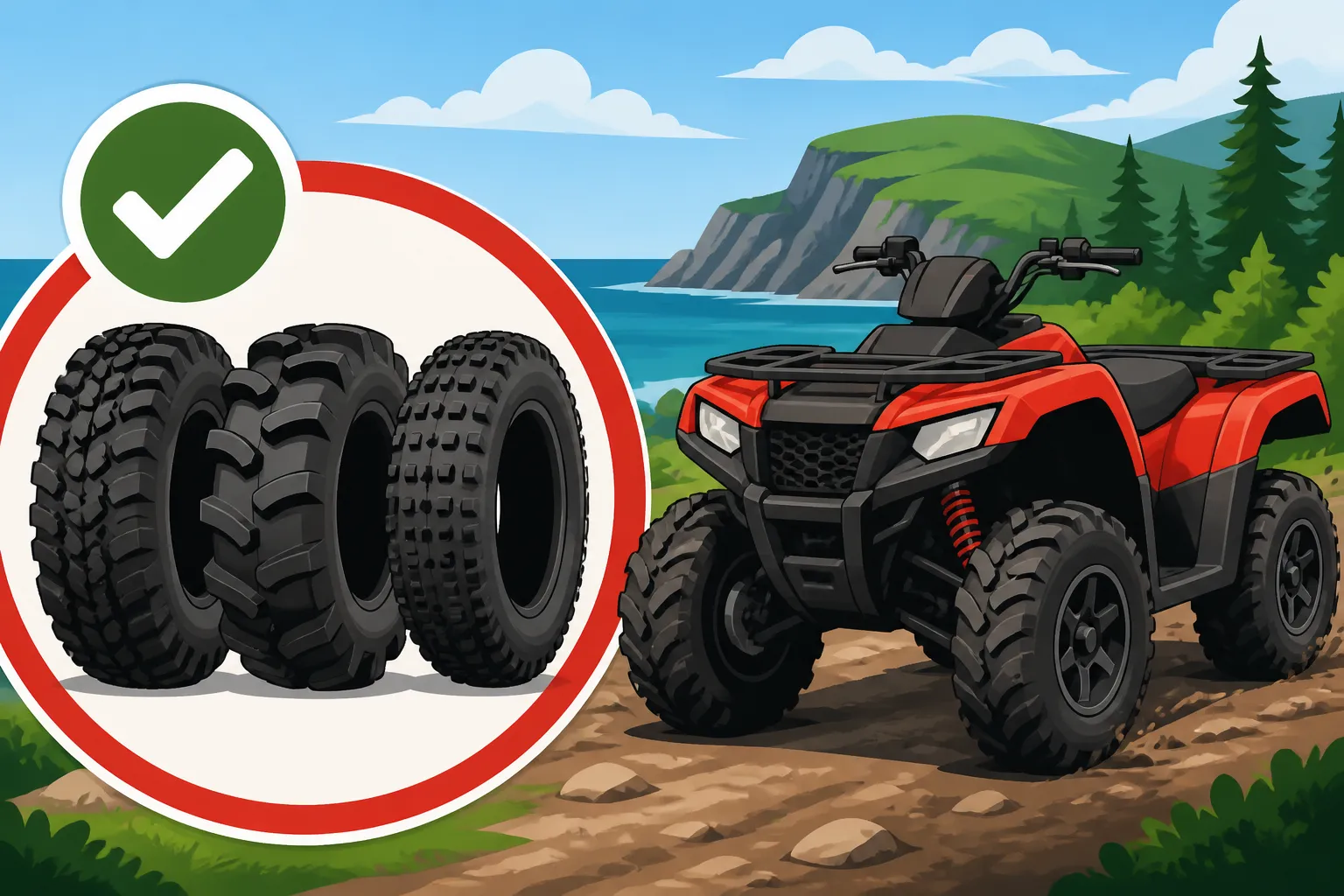
Riding across Newfoundland's barrens or through its infamous bogs presents some of the most challenging conditions. Here, flotation and aggressive traction are paramount. For these environments, you'll want tires with a very open, aggressive tread pattern and deep lugs. These deep lugs dig into the soft, loose soil and mud, providing the necessary bite to propel your machine forward. The wider the tire, the more surface area it covers, which helps the machine "float" over soft terrain rather than sinking in. This is why many bog riders opt for oversized or specialized mud tires.
Some riders even choose tires with paddle-like designs on the outer edges to further enhance grip in extremely muddy or swampy conditions. When you're out there, miles from anywhere, getting stuck isn't just an inconvenience; it can be a serious safety issue. Investing in a good set of mud-specific tires, sometimes referred to as 'boggers,' can make all the difference in conquering these parts of the province. Companies like SuperATV offer a wide range of specialty tires designed to tackle the gnarliest mud and provide exceptional flotation for those deep bog crossings. It's an investment that pays off in confidence and capability when you're far out in the wilderness.
Tires for Railbeds and Hard-Packed Trails
While the allure of the bog is strong for many, a significant portion of riding in Newfoundland happens on more defined paths, such as the Trans Canada Trail system (The T'Railway) or other hard-packed woods roads. For these surfaces, the requirements shift. You still need durable, low-pressure off-road tires, but excessive lug depth can become a detriment. Aggressive mud tires will wear out much faster on hard-packed surfaces, create a rougher ride, and may not provide optimal grip on gravel or loose rock at higher speeds.
For railbeds and hard-packed trails, a more versatile, all-terrain (AT) tire is often the best choice. These tires feature a denser, more interlocking tread pattern that provides excellent traction on gravel, dirt, and even light mud, while still offering a relatively smooth ride. They are designed for durability and resistance to punctures from sharp rocks and debris often found on these trails. Look for tires with strong, multi-ply construction. A good set of AT tires will serve you well for general recreational riding, making your journey on a long stretch of the [The T'Railway's 883 Kilometres in Newfoundland] much more enjoyable and efficient. SuperATV, for instance, has several excellent all-terrain options that balance durability, performance, and compliance for general trail riding.
The New Rule: Tire Chains Are Now Allowed
For years, the use of tire chains on off-road vehicles was a bit of a grey area, and often prohibited on trails due to concerns about damage. However, the updated Off-Road Vehicles Act, specifically Regulation 30/22, brought an important change that many winter riders welcomed: "tire chains are now allowed." This is fantastic news for anyone who uses their ATV or UTV for ice fishing, trapping, or just enjoying winter riding when conditions are particularly slippery and snow-covered.
The allowance of tire chains gives riders a much-needed boost in traction on icy surfaces, significantly improving safety and capability during winter months. Before this change, riders had to rely solely on aggressive snow tires, which might not always be enough on sheer ice. Now, whether you're breaking trail after a fresh snowfall or navigating frozen pond crossings, you can equip your machine with chains for extra grip. Of course, common sense still applies: chains are for specific slippery conditions, and their use on bare pavement or sensitive trails should still be avoided to prevent damage. This change reflects an understanding of the practical needs of riders in Newfoundland's often harsh winter environment.
Legal Ramifications and Practical Advice for ATV Tires
Understanding the specifics of Newfoundland's ORV tire regulations isn't just academic; it has real-world consequences, from roadside checks by enforcement officers to ensuring your own safety and the longevity of your machine. It’s about being a responsible rider who contributes to the positive reputation of the sport on the island.
What an Officer Looks For: Compliance on the Trail
When a peace officer stops you on a trail or road, they're not just checking for registration or insurance; they're also ensuring your machine meets all equipment requirements, and that includes your tires. While they might not carry a tire pressure gauge, they will be looking for obvious signs of non-compliance. The primary concern is usually whether your tires are indeed "low-pressure tires" as defined by the Act, meaning they are purpose-built for off-road vehicles. Using car or truck tires, even if they fit, would be a clear violation.
Officers will also likely be looking for tires that are in safe operating condition. This means checking for excessive wear, obvious damage like deep cuts or sidewall bulging, and proper inflation (within reasonable visual inspection). If your tires are clearly not designed for off-road use or are in a state of disrepair that poses a safety hazard, you could face a fine. The Off-Road Vehicles Act is designed to ensure safety, and [Newfoundland Fines for the Wrong Tires] can be substantial, so it pays to be prepared and compliant. It’s always best to have your machine in top working order to avoid unnecessary complications.
Maintaining Your Tires for Safety and Longevity
Proper tire maintenance is crucial for both safety and getting the most out of your investment. Here are a few key tips:
- Check Pressure Regularly: Even low-pressure ATV tires need their pressure checked often, ideally before every ride. A few PSI can make a huge difference in handling, traction, and ride comfort. Your owner's manual will have the recommended PSI, usually a range. Under-inflated tires can lead to bead leaks and punctures, while over-inflated tires can reduce traction and cause a harsh ride.
- Inspect for Damage: Before and after each ride, do a visual inspection. Look for cuts, punctures, cracks in the sidewalls, or unusual bulging. Riding on damaged tires is incredibly risky, especially far from help.
- Rotate Your Tires: While not as critical as on a car, rotating your ATV tires (especially if they are directional) can help ensure more even wear and extend their lifespan. Consult your machine’s manual or a tire specialist.
- Clean and Store Properly: After a muddy ride, clean your tires. Mud and debris can hide damage and degrade rubber over time. When storing your ATV for an extended period, especially over our long coastal winters, try to keep the tires off the ground or periodically move the machine to prevent flat spots. For more on preparing for the colder months, check out [Newfoundland Machines Stored Over Winter].
Making Smart Choices: Balancing Performance and Compliance
Ultimately, selecting the right tires for your ATV or UTV in Newfoundland is about finding a balance. You need tires that meet the provincial requirements of being "low-pressure off-road tires," but you also want them to perform optimally for the specific conditions you ride in most often. Don't cheap out on tires; they are a direct link to your safety and enjoyment. Research different brands and types, read reviews from other Newfoundland riders, and consider visiting a reputable ATV dealer for advice. They can often guide you towards tires that are popular and proven for the challenging conditions we face here.
Remember, the goal is to ride safely and legally, exploring the incredible beauty of our province without unnecessary risks or fines. A well-maintained machine with the correct tires is the foundation for countless memorable adventures on the Rock.
| Tire Type | Best For | Key Characteristics | Compliance Notes |
|---|---|---|---|
| All-Terrain (AT) | General trail riding, gravel roads, mixed terrain | Balanced tread pattern, durable construction, good on various surfaces | Generally fully compliant |
| Mud-Specific | Deep mud, bogs, soft terrain | Aggressive, open tread pattern, deep lugs, often wider for flotation | Fully compliant, excellent for specific conditions |
| Snow/Winter | Snow-covered trails, icy conditions | Softer rubber compound for grip in cold, specific tread patterns for snow traction | Fully compliant, ideal for winter riding |
| Sport/Performance | Fast-paced riding, racing, specific hardpack | Lighter weight, often more specialized tread, designed for precise handling | Generally fully compliant |
| Tire Chains | Extreme ice, deep snow (as an add-on) | Metal chains wrapped around tires for maximum traction on slippery surfaces | Now allowed under the Off-Road Vehicles Act |
| Car/Truck Tires | NOT for ATVs/UTVs | High-pressure, stiff sidewalls, highway-oriented tread | Non-compliant, illegal for ORVs on trails/roads |
Disclaimer
This article is for general informational purposes only and does not constitute professional advice. Laws, prices and regulations vary by location and change over time. Consult a qualified professional for guidance on your specific situation.