How a Non-Profit Keeps the T’Railway Open
The T’Railway is a long, shared corridor, and keeping it rideable takes more than clearing a path after a storm. Volunteers, clubs, a non-profit organization and public agencies all have roles to play. Here’s how that stewardship works, what it means for ATV and UTV riders, and how you can help protect access along the trail.
Who helps keep the T’Railway open
A shared trail needs shared stewardship
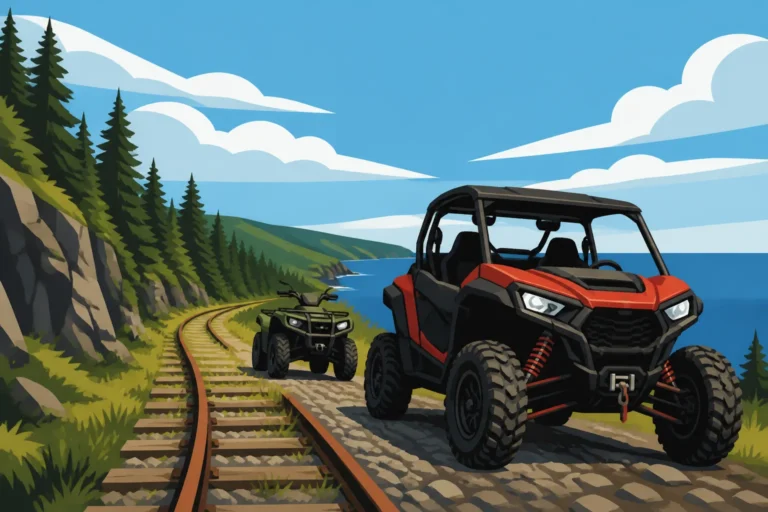
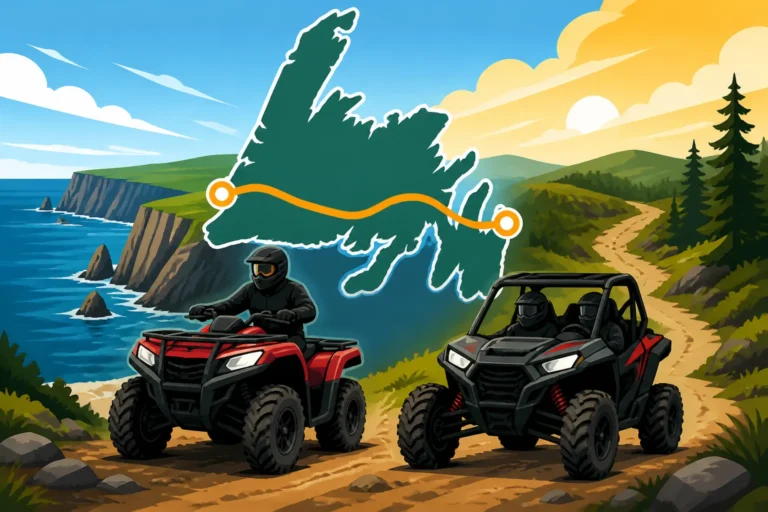
The T’Railway follows a former railway corridor across Newfoundland, connecting communities and landscapes from St. John’s toward Port aux Basques. Its length and variety make it a remarkable riding route, but they also make upkeep a substantial job. The corridor includes stretches with different surfaces, drainage challenges, structures and access points, so caring for it is not one simple, province-wide maintenance task.
A non-profit trail organization can help coordinate the work that keeps a route usable, often alongside local clubs, volunteers and government partners. On the T’Railway, the Newfoundland and Labrador Snowmobile Federation is an important part of the trail stewardship picture. Its role is relevant to ATV and UTV riders too: maintaining a shared corridor benefits everyone who uses it, not just snowmobilers. The trail’s history and overall reach are covered in [The T'Railway's 883 Kilometres in Newfoundland].
The arrangement does not mean a non-profit owns the corridor or can make every decision about it. Land management, permissions, major infrastructure and trail access can involve public authorities and other organizations. Responsibilities may also differ by location. It’s useful to think of the non-profit as a coordinator and steward within a larger network—not as the sole owner, operator or authority over every kilometre.
That shared structure explains why a report about a washed-out section or fallen tree may need to reach more than one group before anything happens. The organization that hears about the problem may not be the one with the equipment, authority or funding to address it. For a closer look at those roles, see [Who Manages the T'Railway and How It Is Funded] and [What the Snowmobile Federation Has to Do With ATVs].
What “keeping it open” actually involves
Trail upkeep is easy to notice when it is missing: a blocked route, a damaged surface or a confusing junction can turn a planned ride into a frustrating detour. But regular stewardship includes less visible work too. It can involve checking sections after severe weather, keeping signs and access points legible, communicating issues to the right people and helping coordinate volunteer efforts.
Different repairs call for different responses. A small obstruction may be manageable for a local volunteer group, while damage to a bridge or a major drainage problem may require professional assessment or government involvement. A trail can be passable in one area and temporarily difficult or unsafe in another. That’s one reason it’s wise to check [Newfoundland Trail Conditions Before You Ride] instead of assuming the route is uniform from end to end.
Maintenance also has to account for the T’Railway’s shared use. ATVs and UTVs may meet hikers, cyclists, snowmobilers, local residents or other riders. Clear signs, sensible speed and courteous passing are part of making the corridor workable for all of them. A trail can be physically open yet still feel unsafe or unpleasant if people ignore other users or leave damage behind.
Why the non-profit model matters
A long corridor needs local knowledge. People who ride or work near a particular section may notice a problem before it appears in a general update: a culvert beginning to wash out, a sign knocked down, or a route becoming difficult after a storm. Local clubs and volunteers can help surface that information and connect it with the groups responsible for next steps.
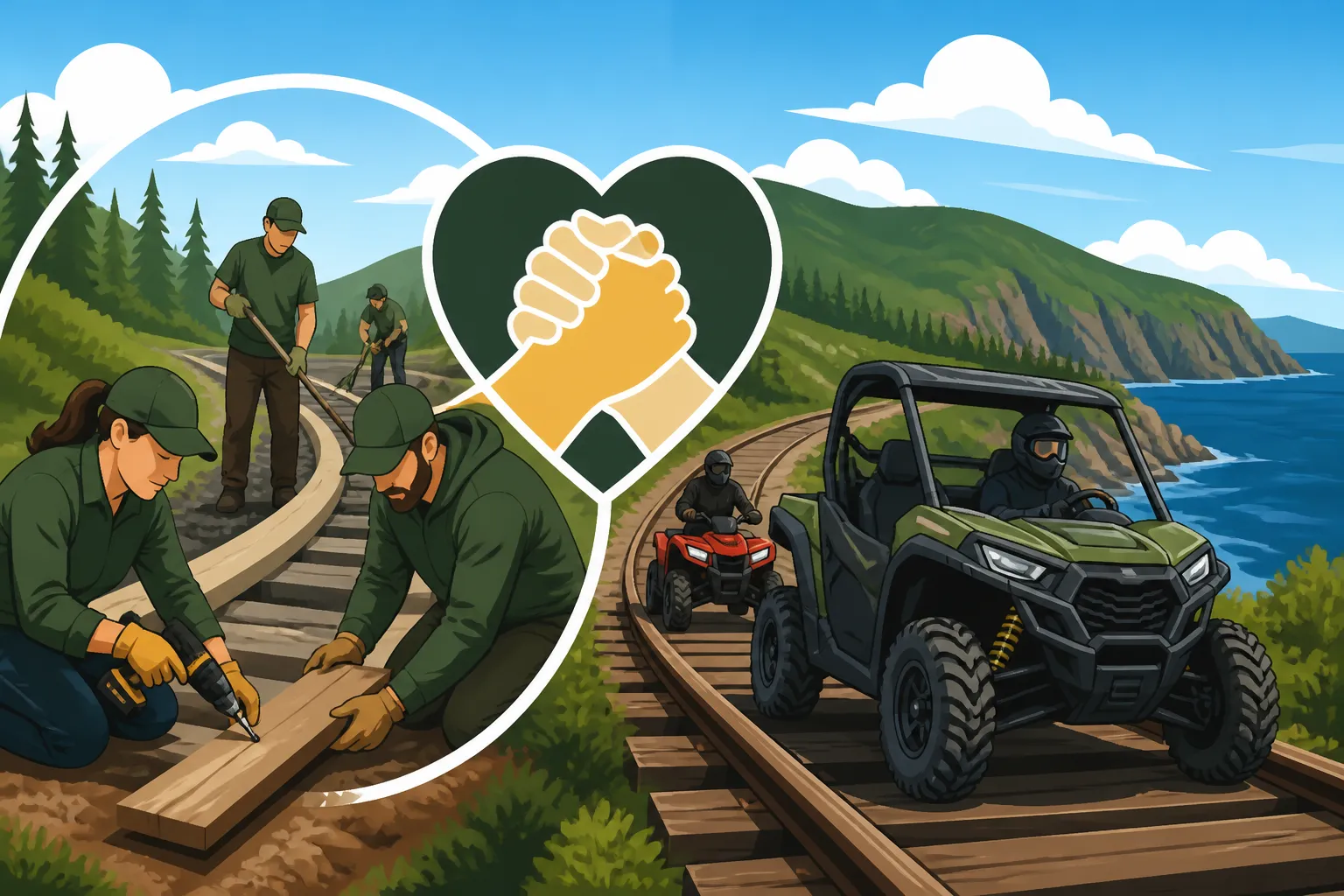
A non-profit structure can also help organize volunteers around shared goals rather than leaving every community to solve trail issues alone. That coordination matters on a route stretching across many communities, where the condition of one small section can affect a longer trip. To find ways riders can contribute locally, look for [Newfoundland Trail Volunteer Days] and contact the relevant club or trail organization before showing up with tools or equipment.
Volunteer support is valuable, but it is not a replacement for trained work where safety, structures or land permissions are involved. Don’t attempt repairs on a bridge, drainage structure or other potentially hazardous feature just because you have good intentions. Report the problem and let the responsible organization decide how it should be handled.
How the trail stays usable for riders
Maintenance is more than smoothing the surface
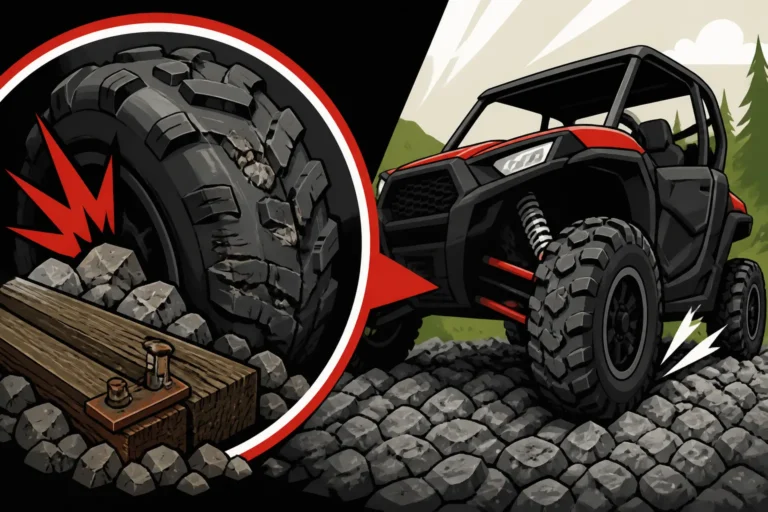
Riders often picture trail maintenance as grading or clearing brush. Those tasks can matter, but a usable route also depends on drainage, signs, safe access and timely information. Water is especially tough on trail surfaces: heavy rain can create ruts, soften sections or move material around. Repeated traffic through a wet area can make the damage worse, even when each individual rider is just trying to get through.
Signs and markers matter just as much. A rider who reaches an unclear junction may take a wrong turn onto a route that is closed, unsuitable or not permitted for their machine. If you come across a damaged or missing sign, note the nearest access point or recognizable landmark and report it to an appropriate local club or trail contact. A clear location is much more useful than “somewhere past the old bridge.”
Shared trails also rely on everyday choices. Slow down when visibility is limited, give other users room and avoid spinning tires or creating fresh ruts to get through a soft patch. The habits in [Newfoundland Trail Etiquette Locals Expect] are practical stewardship too: considerate riding helps reduce wear and keeps other trail users comfortable sharing the route.
What riders can do when a section is damaged
If you encounter a hazard, first decide whether you can stop safely without blocking the trail. Don’t assume another rider has already reported it. If it’s safe, record the location using a nearby access point, road crossing, kilometre marker or recognizable feature. A photograph can help communicate what you saw, but don’t put yourself at risk or ride closer to unstable ground just to get one.
Then share the information through the appropriate trail organization, club or public contact for that area. Keep the report factual: describe the obstruction or damage, when you saw it and whether the full route appeared blocked. Avoid presenting a guess as a confirmed closure. If a section looks dangerous, turn around rather than testing whether your machine can make it through.
Navigation tools can help you describe where you are. Some riders use onX Offroad to plan routes and keep navigation information available when mobile service is weak. Treat it as a planning aid, not an official noticeboard: a mapped line does not confirm that a section is currently open or suitable for your machine. For remote stretches, pair digital tools with the practical preparation in [Cell Dead Zones Along the Railbed] and [Carrying a Paper Map Where There Is No Signal].
| Trail issue | What a rider can do | What to avoid |
|---|---|---|
| Fallen tree or debris | Note the location and report the obstruction | Moving a heavy or unstable object alone |
| Deep rut or washout | Stop at a safe distance and describe the damage | Riding through repeatedly and widening it |
| Missing or unclear sign | Record the junction or nearby landmark | Guessing that an unmarked route is open |
| Temporary closure notice | Follow the posted direction and check for updates | Going around a barrier or creating a new bypass |
| Unsafe bridge or structure | Keep off it and report the concern | Testing it with a machine or passenger aboard |
Trail access depends on following the rules
Maintenance alone cannot keep a trail open if riders use it in ways that create conflict or damage. Access can depend on the rules that apply to a particular managed trail, local restrictions, land permissions and temporary closures. Before heading out, check [Newfoundland Managed Trail Rules] and confirm what applies to your route and vehicle.
Some managed trails require a trail sticker. Make sure you understand the requirement for the route you plan to ride, including whether a sticker must be attached to your machine or carried with you. The details are explained in [Managed Trails Require a Sticker on Your Machine]. A sticker requirement is one part of access; it does not make every trail, road or adjoining parcel open to riding.
Stay on the established route, respect barriers and posted closures, and don’t create a bypass around a wet or damaged section. A short detour through brush can disturb vegetation, create confusing tracks and make a vulnerable area harder to repair. If a route is blocked, turn back or use a confirmed alternative rather than treating a closure as a suggestion.
How riders can support long-term access
Be a responsible user, not just a visitor
The most direct way to support the T’Railway is to ride in a way that leaves the corridor ready for the next person. Keep to the appropriate route, ride at a speed that lets you respond to other users, and avoid aggressive throttle or repeated wheelspin. When conditions are soft, consider whether continuing will cause more damage than waiting for a firmer day.
Carry out everything you bring in, including food wrappers and broken tie-downs. Be especially careful at trailheads and popular stopping points, where litter and careless parking can affect nearby residents and other users. If you travel in a group, agree on a pace and meeting points before setting off so that riders aren’t tempted to rush or leave the established route to catch up.
A navigation app such as onX Offroad may help you plan a route and keep track of your position, but it can’t make decisions for you about access or trail conditions. Check official and local information before departure, and be willing to change plans if a section is closed, damaged or beyond your group’s comfort level. That flexibility is part of responsible riding, not a failed trip.
Volunteer and report problems thoughtfully
If you want to help with trail work, start by asking a local club or the relevant organization what support is needed. A volunteer day may focus on a specific task, location or safety procedure. Arriving without checking first can create extra coordination work or put you in a situation where you don’t have permission or suitable equipment.
You can also help without taking on physical maintenance. Share accurate condition reports, pass along closure information to riding partners and encourage new riders to stay on the marked route. When you post about a trail online, avoid presenting old information as current. A photograph from a previous season can give people the wrong impression if the route has changed since then.
For trip planning, onX Offroad can be useful for keeping your route information organized, especially when you’re preparing for a remote ride. Still, don’t treat any consumer map as a substitute for local notices, posted signs or land-use rules. A little preparation can prevent a much bigger problem once you’re far from a community or cell service.
Make room for other trail users
The T’Railway is not an ATV-only corridor. Riders may share sections with people travelling at very different speeds, including walkers and cyclists. Approach blind corners cautiously, keep noise and dust in mind near homes and public access points, and give others time and space to move aside. If you meet a group, slow down early rather than waiting until you are right beside them.
The same courtesy applies to snowmobile users and other motorized riders. Different seasons bring different conditions, and a route that feels straightforward on a dry day may be more fragile after rain or thaw. Avoid assuming that another vehicle has the same capabilities as yours, and don’t pressure a less experienced rider to continue through a difficult stretch.
These small decisions support the broader work of trail organizations and volunteers. A well-kept route still needs considerate users. When riders respect closures, report hazards and leave the corridor in good condition, they make it easier for the people responsible for stewardship to focus on actual repairs and continued access.
Planning a ride with stewardship in mind
Before leaving, check the intended route, local conditions and any applicable managed-trail requirements. Tell someone where you expect to ride, carry the essentials for your group and plan for areas where phone service may be unavailable. If you are unsure about access on a particular section, ask a local club or trail contact rather than relying on an old map or an online comment.
During the ride, stay on the established route and be ready to turn around. Stop safely to report hazards, and don’t attempt repairs that could put you or others at risk. After the ride, share useful condition information with the appropriate organization and make sure your group leaves no litter or new damage behind.
A non-profit cannot keep a corridor open by itself. The work depends on cooperation among organizations, public partners, clubs, volunteers and trail users. Riders contribute whenever they follow the rules, treat shared sections with care and help pass along clear, useful information. That steady support is what helps make a long route like the T’Railway usable for the next group coming through.
Disclaimer
This article is for general informational purposes only and does not constitute professional advice. Laws, prices and regulations vary by location and change over time. Consult a qualified professional for guidance on your specific situation.