Sharing the Railbed With Walkers and Cyclists
Sharing a Newfoundland railbed with walkers and cyclists can feel awkward when the trail narrows, dust hangs in the air, or you come around a bend with little warning. A considerate ATV or UTV ride helps everyone use the corridor safely. This guide covers how to prepare, pass, manage speed and visibility, and respond when trail conditions change.
Understand the shared railbed before you ride
Expect a mixed-use trail, not an ATV-only route
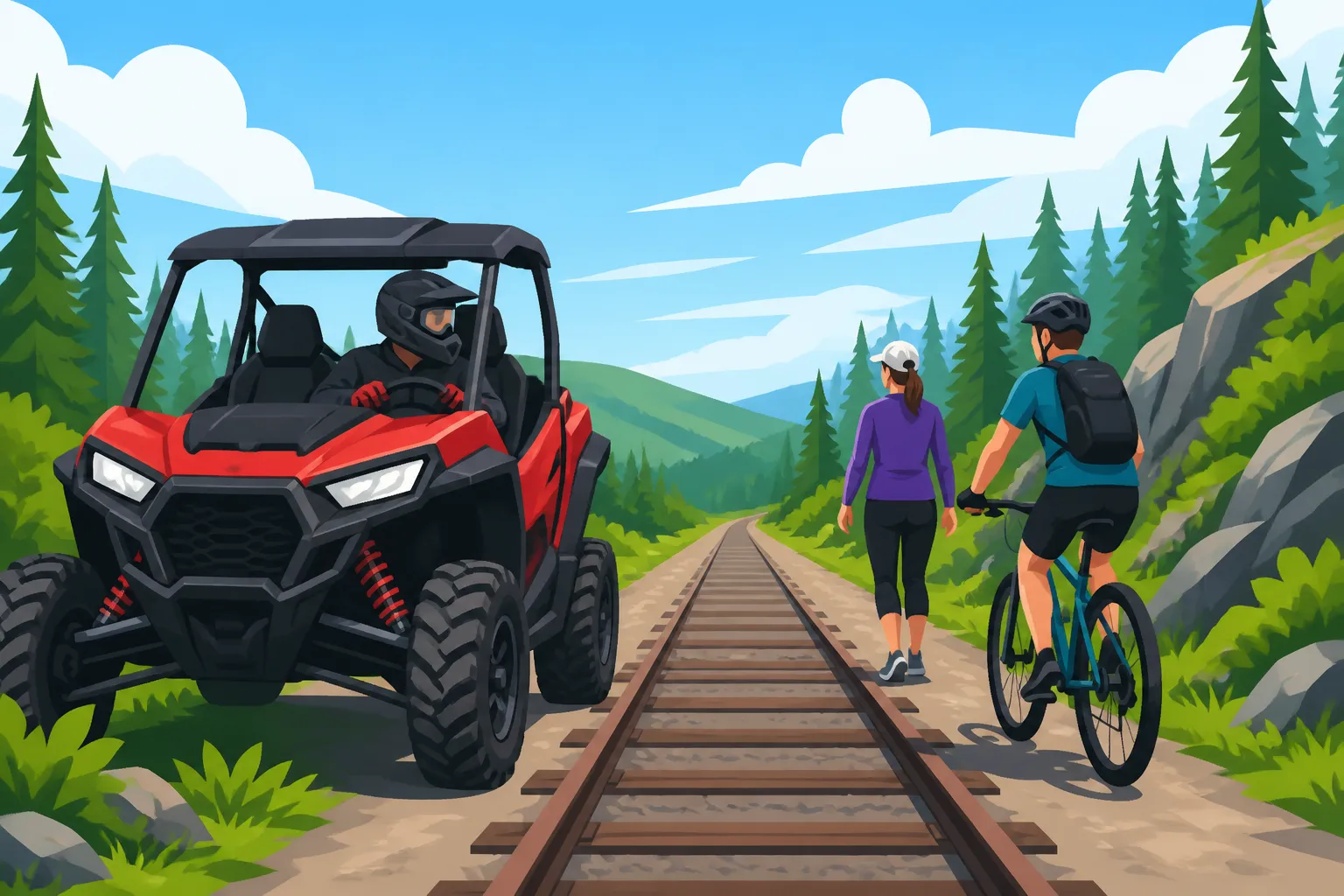
The T’Railway is a long recreational corridor used by people travelling at very different speeds and in different ways. ATV and UTV riders may meet walkers, cyclists, runners, families, and other motorized users. Some people are moving steadily; others may stop to take a photo, adjust a bike, or help a child. A quiet stretch can become busy quickly, especially near trailheads, communities, scenic points, and access roads.
That mix matters because a railbed can feel wide and predictable from the seat of a machine, but a walker may hear you late, and a cyclist may need room to balance or avoid loose stones. Treat every person ahead as someone who may not know you are coming. Slow down early enough that your approach is calm rather than startling.
The T’Railway’s long distance can make it tempting to think of the corridor as a continuous riding route, but conditions and access can vary. Before setting out, check local signs and trail information for the section you plan to use. Newfoundland ATV Trails: The T’Railway and Beyond and The T’Railway’s 883 Kilometres in Newfoundland offer helpful background on the wider corridor, while Newfoundland Trail Conditions Before You Ride is a useful reminder to check what may have changed locally.
Plan for bottlenecks, blind spots, and changing surfaces
Former rail corridors often have long, open stretches, but not every part gives you a clear view far ahead. Trees, cuts, bends, bridges, buildings, parked vehicles, and trail entrances can block sightlines. A group of walkers may also be spread across the trail, or a cyclist may swerve to avoid a rut or loose rock. Keep enough distance from the machine in front of you to stop without relying on the rider ahead to react first.
The surface also affects how safely you can pass. Gravel, dust, puddles, washouts, and uneven ballast can make steering and braking less predictable. If your tires are throwing dust or stones, backing off protects the people behind you as well as those you are approaching. Near a narrow bridge or a stretch with a steep edge, wait for a genuinely clear place to pass rather than trying to squeeze through.
A route-planning app such as onX Offroad can help you think ahead about the general route and nearby access points. Use it as a planning aid, not as proof that a specific section is open or suitable for your machine. Check posted signs and local trail information before you ride, and keep an offline map or paper backup where mobile coverage may be unreliable. For more on navigating gaps in service, see Cell Dead Zones Along the Railbed and Carrying a Paper Map Where There Is No Signal.
Pass people calmly and give them room
Slow down before you reach anyone
A courteous pass starts well before you are beside someone. Ease off the throttle when you first see people ahead, then give them time to notice you. Avoid charging up behind a cyclist or group of walkers and braking at the last second. Sudden noise and a fast approach can make people jump, lose balance, or step into your path.
If there is enough space, pass at a controlled speed with a wide buffer. Leave room for a walker to shift sideways or a cyclist to wobble while looking back. On a narrow section, wait until there is a safe, level place where the other person can see you and neither party has to edge toward a ditch, soft shoulder, or drop-off. If the trail is too tight, stop and let the situation settle rather than forcing a pass.
A simple, friendly signal can prevent confusion. Make your presence known without startling anyone: reduce speed, use a calm voice if appropriate, and allow the other person to choose where they feel comfortable. Do not assume that a cyclist has heard your engine or that a walker knows which way you plan to go. If they seem uncertain, stop and give them time to respond.
| Situation | A considerate response | Avoid |
|---|---|---|
| Walkers ahead on a wide, clear stretch | Slow early, pass with ample space, and keep your speed controlled | Accelerating close behind them |
| Cyclist approaching from the opposite direction | Reduce speed and leave room for a steady, predictable crossing | Holding your line at speed and expecting them to move |
| Narrow bridge or blind bend | Stop or wait for a clear view and a safe passing area | Squeezing past or entering without knowing who is ahead |
| Dusty surface with people nearby | Back off and let dust settle before continuing | Following closely and clouding the trail |
| Group spread across the railbed | Slow down and wait for the group to gather or make room | Threading between people |
| Someone appears startled or unsure | Pause, give space, and communicate calmly | Revving, gesturing impatiently, or arguing |
Make your machine predictable
Predictability is often more helpful than speed alone. Hold a steady line, avoid sudden swerves, and do not weave around people or obstacles at the last moment. If you are riding with others, make sure the group knows to slow down together. A lead rider who brakes while the rest of the group continues closing the gap can create a stressful situation for everyone.
Keep enough following distance within your own group that a rider can stop without being pushed by the machines behind. This is especially important where walkers or cyclists may be close to the trail edge. If the lead rider stops to let someone pass, the rest of the group should stop in a controlled way and leave room rather than bunching up behind the lead machine.
Good trail manners also include being patient when someone does not react the way you expected. They may not hear you, may be nervous around a large machine, or may be unsure which side you intend to use. Give them time and space. The practical guidance in Riding Etiquette on a Shared Railbed and Newfoundland Trail Etiquette Locals Expect can help you build habits that work across mixed-use routes.
Prepare for a safer, less stressful ride
Set up your route and group before leaving
Before you unload, agree on the route, regrouping points, and what the group will do if someone gets separated. Choose stopping spots that do not block the trail or force other users around parked machines. At a busy trailhead, load and unload neatly, keep children close, and avoid leaving vehicles or trailers where they obstruct access.
An app such as onX Offroad can help you review a planned route and think about where you may want to turn around or regroup. But route information should be cross-checked with local signs, trail operators, and current access guidance. A line shown on a map does not necessarily tell you whether a trail is open, whether a particular vehicle is allowed, or whether conditions are safe that day. If you use onX Offroad, consider saving what you need before you leave an area with service, and carry a backup map for sections where your phone may not be dependable.
Make sure riders know the basics before the group starts moving: keep a safe gap, stop when the lead rider stops, and do not pass another member of the group unless the group has agreed it is safe. If a rider is new to the route or inexperienced on a machine, place them where they can follow a steady pace and get help without feeling rushed.
Adjust for weather, visibility, and trail traffic
Newfoundland weather can change the feel of a ride quickly. Rain may soften shoulders and make footing slippery; fog can shorten sightlines; and bright sun can make it harder to see details ahead. Choose a pace that matches what you can actually see and stop safely within. If fog or heavy rain makes it difficult to spot other users, pause somewhere safe or reconsider continuing.
Dust deserves special attention on dry days. Leave extra distance between machines, particularly when walkers and cyclists are nearby. If you cannot see clearly through the dust raised by the machine in front, slow down until visibility improves. Riding close together may feel efficient, but it can leave the last riders with the worst view and the least time to react.
Also be thoughtful about where you stop. Pull fully out of the travelled part of the railbed when it is safe to do so, and avoid stopping around a bend, at a narrow crossing, or where other users cannot see your group in time. If the trail is busy, keep breaks short and move to a place with room for people to pass. For more general route and surface considerations, see Which T’Railway Sections Slow You to a Crawl and Newfoundland Trail Conditions Before You Ride.
Keep the interaction respectful when something goes wrong
Even careful riders can have an uncomfortable encounter. A cyclist may be upset about dust, a walker may feel there was not enough space, or a group may disagree about who should move aside. The safest response is to stop at a reasonable distance, keep your voice calm, and listen rather than escalating the moment. A brief apology and a little extra room can resolve a situation that might otherwise spoil the ride for everyone.
If the trail is blocked, do not try to push through. Wait until there is a clear route or turn around if necessary. If someone falls or appears hurt, stop where you can do so safely, check whether help is needed, and avoid crowding the person or blocking the corridor. When a machine or trailer is disabled, make the area visible and ask for assistance without leaving other trail users to guess how to get by.
Shared trails work best when people expect to meet one another and ride accordingly. Slow approaches, wide passing space, patient communication, and sensible planning make a noticeable difference—especially on narrow or busy sections. A good ride is not only about covering distance; it is also about leaving walkers and cyclists feeling that they can use the railbed safely too.
Disclaimer
This article is for general informational purposes only and does not constitute professional advice. Laws, prices and regulations vary by location and change over time. Consult a qualified professional for guidance on your specific situation.