Riding Etiquette on a Shared Railbed
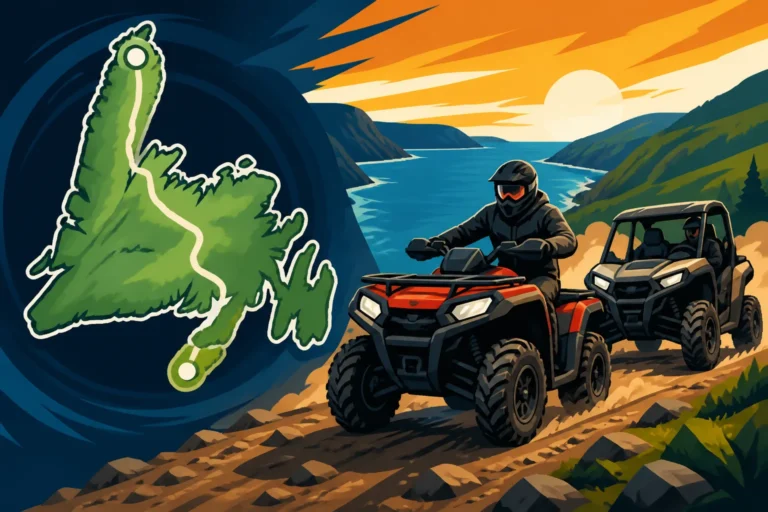
A shared railbed can feel wide open until you meet a family walking, a cyclist climbing a loose stretch, or another rider coming around a bend. On Newfoundland’s T’Railway and other multi-use routes, good etiquette keeps those encounters calm and helps protect access for everyone. This guide covers how to prepare, pass safely, manage noise and dust, and respond when trail conditions change.
Before You Ride a Shared Railbed
Confirm the route is open and suitable for your machine
A railbed is not automatically an ATV route simply because it looks rideable. Access can vary by location, season, trail operator, land status, and local rules. Before unloading, check that the specific section allows your type of machine and that no temporary closure or restriction is in effect. Start with Newfoundland ATV Trails: The T’Railway and Beyond and confirm details with the relevant trail operator or local authority.
This matters on long corridors, where access rules and conditions can change from one community or section to the next. A route that was open on a previous visit may now have a closure, a damaged crossing, or a different permitted-use arrangement. For broader context about the trail system, Who Manages the T’Railway and How It Is Funded can help you understand why checking with the people responsible for a section is worthwhile.
Plan your route with more than one source. A mapping app such as onX Offroad can help you review a route and keep track of your position, but treat digital mapping as a planning aid—not proof that a trail is open to ATVs. Check current access information separately, and make sure the route you intend to ride is appropriate for your machine.
Prepare for rough surfaces and limited service
Railbed riding can be tiring even when the route appears straightforward. Loose stone, uneven ballast, washouts, standing water, and rough crossings may slow you down or make a section less comfortable than it looks on a screen. Match your pace to what you can see ahead, leave room to steer around hazards, and avoid riding so close to the edge that a small correction sends a wheel into soft or damaged ground.
Cell service can be inconsistent in remote stretches. Before leaving a community or trailhead, tell someone where you plan to ride and when you expect to return. Save route information for offline use if your navigation app supports it, and carry a paper map or written route notes as a backup. Cell Dead Zones Along the Railbed and Carrying a Paper Map Where There Is No Signal are useful reminders that a phone may not be able to help when you need it most.
| Before setting out | Why it helps |
|---|---|
| Confirm the exact section is open to your machine | Access can vary along a route and may change |
| Check recent trail and weather conditions | Rain, erosion, or maintenance can affect safe passage |
| Share your route and return plan | Someone can follow up if you are overdue |
| Save maps for offline use and pack a backup | Phone reception may disappear |
| Inspect your machine and secure loose cargo | A breakdown or shifting load can create a hazard |
| Carry required documents and safety gear | You may need them during the ride |
How to Share the Railbed With Other Users
Slow down early and make your approach obvious
The safest time to adjust your speed is before you reach another trail user. If you spot walkers, cyclists, snowmobilers, or a group ahead, ease off well in advance rather than braking sharply at the last moment. A sudden approach can startle people, and a burst of throttle can throw dust or gravel toward them.
Give others enough space to react. On a narrow or blind section, slow to a pace that lets you stop within the distance you can see clearly. If visibility is limited by a curve, vegetation, a rise, or dust, assume someone may be just beyond it. Avoid cutting across the inside of a bend, where an approaching person may have little room to move aside.
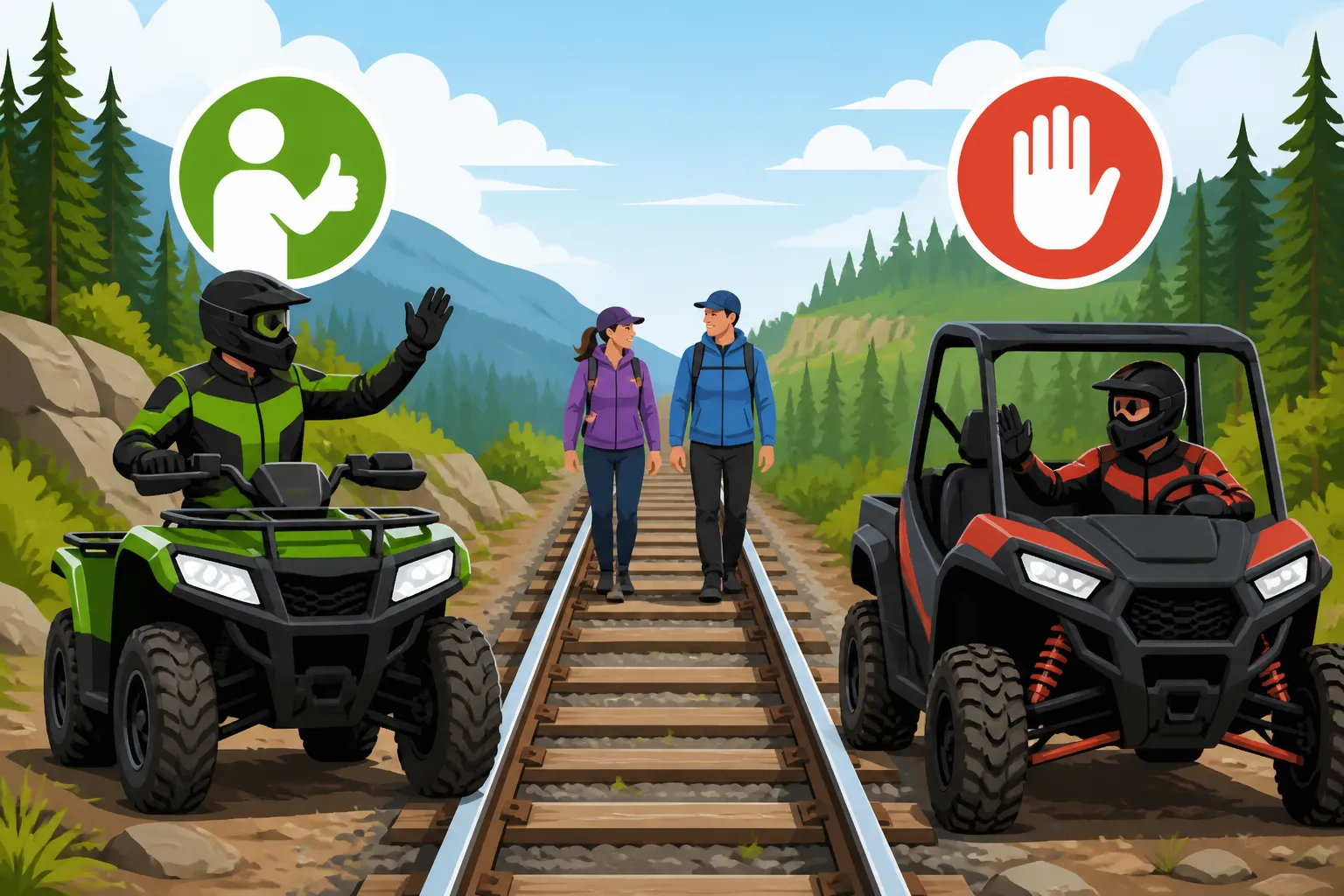
Make your presence clear without turning the encounter into a commotion. A calm verbal greeting or a brief, appropriate signal can help, but loud revving is not a courteous warning. When passing, wait until the other person knows you are there and has room to continue safely. Sharing the Railbed With Walkers and Cyclists offers more on the small choices that make a shared corridor feel comfortable for everyone.
Give pedestrians and cyclists room
Walkers and cyclists are more exposed than people in a vehicle, and cyclists may need extra space to balance on loose stone. Pass slowly and leave a generous gap. If the railbed is narrow, the surface is unstable, or a person appears uncertain, stop and wait until there is a safe place to go by. A few seconds of patience is better than squeezing past someone who has nowhere to move.
Do not assume a pedestrian has heard you. Wind, a hood, headphones, or the sound of a stream can mask an approaching machine. Reduce speed well before you reach them, avoid crowding from behind, and give them time to choose a safe position. If someone is walking with a dog, allow extra room: the dog may move unpredictably, and a leash can cross the trail.
The same consideration applies when you meet snowmobilers or other riders. Slow down, keep to a predictable line, and avoid forcing anyone onto loose shoulders or damaged edges. For more on mixed-use conditions, see Newfoundland Trails Shared With Hikers and Newfoundland Trails Shared With Snowmobiles. Respectful passing is not just about avoiding a collision; it helps keep the corridor welcoming to people who use it differently.
Dust, Noise, and Trail Conditions
Reduce dust and keep noise down
Dust is more than an annoyance. It can make it difficult for another person to see, irritate eyes and lungs, and leave a gritty coating on clothing and equipment. When the surface is dry, slow down before reaching other users and avoid accelerating hard as you pass. If you are riding in a group, leave enough space between machines so the last person is not following directly into a cloud raised by the first.
Noise carries across open stretches and can travel toward homes, camps, and cabins. Keep your machine in good working order, use a reasonable throttle, and avoid repeated high-revving when stopped or waiting. If you pause near a trailhead or community, be considerate about where you idle and how long you remain there. A quiet, unhurried approach often makes a better impression than any explanation after the fact.
Navigation can help with planning, but it cannot replace situational awareness. onX Offroad may help you review your route before departure; once you are riding, watch the surface, listen for other users, and keep your attention on the trail rather than your phone. If map coverage or access information is uncertain, verify it with the appropriate local source before setting out.
Adjust your riding to the surface and the weather
Loose ballast can shift under tires, while water and soft ground can hide ruts or damaged sections. Choose a speed that gives you time to respond without making abrupt movements. Avoid spraying gravel or cutting around wet patches in a way that widens the trail. Riding around a puddle can turn a narrow path into a broader, damaged corridor, especially if several people repeat the same maneuver.
After heavy rain, a thaw, or a storm, conditions may be very different from your last visit. Watch for washouts, fallen branches, soft shoulders, or a blocked crossing. If a section looks unsafe, do not assume another rider’s tracks mean it is safe for your machine. Turn around or find a confirmed alternative rather than risking damage or creating a new track through vulnerable ground. Check Newfoundland Trail Conditions Before You Ride when planning a trip.
If you use onX Offroad or another navigation tool, treat route lines and saved tracks as aids rather than a guarantee of current conditions. A map can show where a route runs, but it may not reveal fresh erosion, a temporary closure, or a busy stretch with many other users. Keep the screen use brief and stopped, and give the trail your full attention while moving.
What to Do During an Encounter or Disagreement
Stay calm when the trail feels crowded
Shared routes can get busy near trailheads, community access points, and popular sections. If you meet a group, slow down and make eye contact where practical. Wait for a clear opportunity to pass rather than weaving between people or riding close behind them. If several machines are travelling together, keep the group organized and avoid blocking the full width of the trail while stopping.
If someone asks you to slow down or move aside, respond politely. You may not agree about who should yield in that moment, but a tense argument on a narrow trail rarely improves safety. Find a safe place to stop out of the way, speak calmly, and let the other person continue. If the route is crowded or conditions are deteriorating, consider taking a break or turning back.
Etiquette also includes how you behave when no one is watching. Stay on the established route, do not bypass barriers, and do not create new tracks to get around a muddy or damaged section. The choices of individual riders affect the experience of people who live nearby and those who use the trail on foot or by bicycle. Newfoundland Trail Etiquette Locals Expect explores the habits that help preserve good relationships on the trail.
Know when to stop, turn around, or report a problem
Stop when you cannot see far enough to ride safely, when another user needs the trail, or when a hazard makes continuing uncertain. Choose a stopping place where your machine is visible and does not block the route. If you are stopping with a group, pull in together only where there is enough room; avoid leaving machines across a narrow passage.
Turn around if a bridge, washout, closure sign, or damaged section makes the route unsafe or unauthorized for your machine. Do not move signs or barriers to make a path through. If you encounter a serious hazard or apparent damage, note the location as accurately as you can and contact the responsible trail operator or authority when practical. A saved map point from onX Offroad may help you describe where the issue is, but confirm the correct reporting contact through local trail information.
Good shared-railbed etiquette is mostly a series of small decisions: check access before leaving, ride at a speed that lets you stop, pass with space, keep dust and noise down, and leave the route as you found it. Those habits make a trip safer and more pleasant—and help ensure that the railbed remains a place where different kinds of trail users can coexist.
Disclaimer
This article is for general informational purposes only and does not constitute professional advice. Laws, prices and regulations vary by location and change over time. Consult a qualified professional for guidance on your specific situation.