Black Flies and Bug Spray on the Barrens
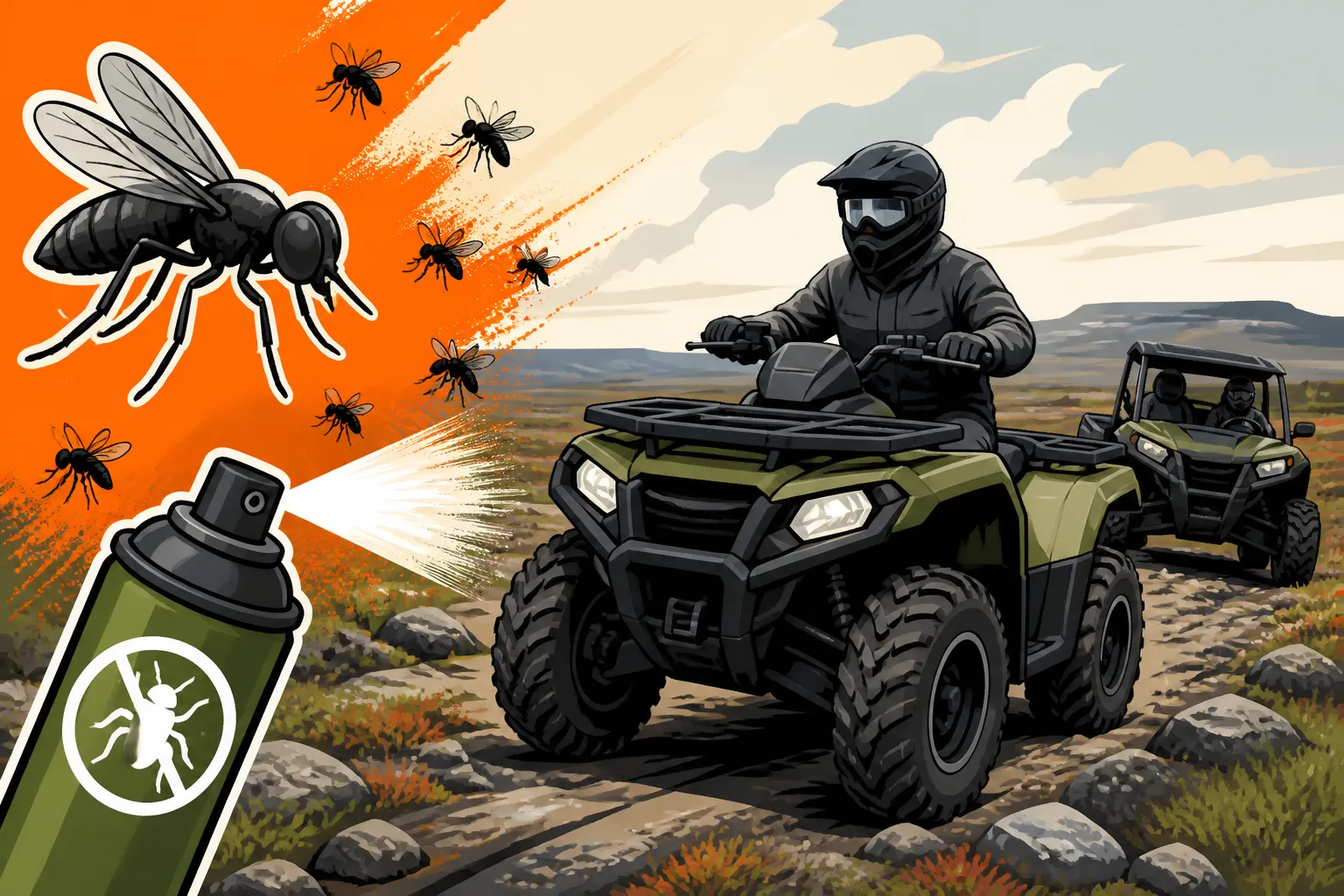
Black flies can turn a beautiful Newfoundland barrens ride into a day of swatting, itching, and wishing you had packed differently. The open ground may feel breezy and bug-free, while a sheltered trail, bog edge, or stop near the trees can bring them back fast. This guide covers what to wear, how to use bug spray safely, and how to plan ATV and UTV stops around the insects.
Why black flies can be a problem on a barrens ride
Open ground does not mean no insects
Newfoundland’s barrens can feel exposed, windy, and wonderfully clear of bugs while you’re moving. That can change as soon as you stop. A dip in the terrain, a stand of trees, a damp trail edge, or a sheltered pullout may offer the calmer conditions where black flies become much more noticeable.
The ride itself can hide the problem, too. Airflow while you’re moving may make insects less obvious, but a snack stop, a trail-side repair, or a slow crawl through rough ground gives them a chance to find you. Riders often notice the difference most around the face, neck, wrists, and any gap between a jacket and gloves.
Conditions vary from one outing to the next and from one stretch of trail to another. A breezy section near an exposed ridge may be comfortable, while a sheltered area later in the day can feel very different. It’s sensible to plan for insects even if you have checked the forecast or heard that a route is usually windy.
Stops can be harder than the ride
The moments when you need both hands free are often when bugs become most frustrating. You may be checking a tire, helping a passenger adjust a helmet, reading a map, or setting up lunch. If your repellent is buried under cargo, or your face covering is packed away, that quick stop can become an uncomfortable one.
Think about stops before you set out. Choose a spot with room to park safely, and, where practical, avoid lingering beside still water or in a sheltered patch of brush. Don’t stop on a narrow trail or blind corner just to get away from insects; other riders and trail users still need a clear path.
Route conditions and weather influence where you may want to pause, so check more than the destination. A trail report and a planned route can help you identify likely stopping points before you’re tired and ready to pull over anywhere. For broader seasonal planning, see Newfoundland Riding Season Month by Month and Newfoundland Trail Conditions Before You Ride.
What to wear to keep bugs off
Cover skin without making the ride unsafe
Lightweight, long-sleeved clothing can reduce exposed skin, but it should still work with your helmet, gloves, seat belt, and the machine’s controls. A snug cuff or glove overlap helps cover the wrist gap. A neck gaiter or similar face covering may help at a stop, provided it doesn’t interfere with your helmet fit, breathing, vision, or communication.
Choose clothing you can tolerate for the whole ride. Heavy layers may feel protective at first but can become uncomfortable during physical work or in changing weather. Breathable layers are often easier to manage: you can add coverage at a buggy stop and loosen a layer when you’re moving, without leaving arms and legs bare.
Keep loose fabric, straps, and drawstrings clear of moving parts. A hood should not interfere with your helmet, and a face covering must not fog your goggles or obstruct your view. If you’re riding a side-by-side, make sure clothing and any insect netting don’t affect seat belts, doors, or safe entry and exit.
| Riding situation | Practical clothing choice | What to check |
|---|---|---|
| Moving along an exposed trail | Long sleeves, riding gloves, and full-length pants | Comfortable fit and clear access to controls |
| Stopping in a sheltered spot | Add a neck covering or head net if it fits safely | Clear vision, breathing, and helmet compatibility |
| Working on a machine | Keep cuffs and loose fabric secured | Nothing can catch on hot or moving parts |
| Riding in changing weather | Use layers you can add or remove | Keep rain gear and warm layers accessible |
Protect your face and eyes thoughtfully
A head net can be useful during a stop, but it should not compromise your helmet or vision. Try it on before the ride rather than discovering at a trailhead that it catches on your goggles or bunches beneath your helmet. If it fogs your eyewear or shifts into your line of sight, don’t wear it while operating the machine.
Your goggles and helmet are safety equipment, not bug-control accessories. Don’t remove or loosen them to make a face covering more comfortable. Keep the helmet strap fastened and use eye protection that gives you a clear view. These habits matter even when you’re stopped briefly, especially if you’re parked near other moving machines.
Pack spare gloves or a clean face covering in a dry, reachable place. A damp or muddy layer may be less pleasant to wear, and rummaging through a loaded machine while insects are bothering you is no fun. The detailed advice in Packing for Weather That Changes Every Hour can help you prepare for more than one kind of discomfort on a Newfoundland ride.
Choosing and using bug spray safely
Pick a repellent you can apply properly
Repellents with ingredients such as DEET or picaridin are common choices for keeping biting insects away. The best option for your ride is one you can use according to its label and apply without interfering with your equipment. Read the directions before you leave home, including instructions about reapplication, age restrictions, and use around the face.
Apply repellent outdoors and away from the machine, fuel, and sources of heat. Avoid spraying near hot exhaust components or an open flame. If you use a spray product, follow its label and keep it out of your eyes and mouth. For your face, apply it to your hands first and then carefully spread it over exposed skin, rather than spraying directly at your face.
Don’t apply repellent beneath clothing unless the label specifically says to do so. Keep it away from cuts, irritated skin, and areas covered by gloves or gear. If you use sunscreen as well, follow the product directions for applying both. Carry the container securely so it cannot leak onto food, clothing, or equipment.
Keep repellent separate from riding gear
Bug spray and riding equipment need a little planning. Some repellent products can affect materials such as plastics, synthetic fabrics, or finishes. Read the product label and avoid spraying your helmet, goggles, dashboard, seat, or machine body. If you’re uncertain how a product may interact with a material, keep it off that surface.
A small, sealed pouch can keep repellent easy to reach without letting it rub against food or electronics. Put it somewhere a passenger can access safely when the machine is parked. Don’t try to apply it while the ATV or UTV is moving, and don’t ask a passenger to lean across the driver or reach outside the vehicle to help.
Mapping tools can also make a buggy day easier by helping you plan stops and avoid unnecessary delays while you’re trying to find your way. For example, onX Offroad can be used as one part of a route-planning routine; check the map details and save any needed navigation information before leaving areas with dependable service. A map app won’t tell you where insects will be, so treat it as a navigation aid rather than a bug forecast.
Plan a more comfortable ride
Pack for the whole outing, not just the trailhead
Before loading up, put repellent, gloves, a face covering, drinking water, and a small first-aid kit where you can reach them at a safe stop. Keep food sealed when it isn’t being eaten. If you’re riding with children or passengers, make sure they know where their own protective layers are and how to ask for a stop without distracting the driver.
A simple pre-ride routine can prevent the most common frustrations:
- Check the weather and expected trail conditions.
- Dress in layers that cover skin without interfering with helmets, controls, or seat belts.
- Apply repellent according to its label before riding, away from the machine and hot parts.
- Put spare repellent and protective layers somewhere accessible.
- Agree on safe places to stop and how passengers will signal that they need one.
- Reapply only when parked, and follow the product directions.
For remote outings, carry navigation information you can use without relying on a strong phone signal. onX Offroad may be useful for preparing a route, but confirm your route and any relevant access information before you go. Pack a paper map as a backup where appropriate, and let someone know your plan if you’ll be riding beyond reliable coverage. Cell Dead Zones Along the Railbed and What to Carry for First Aid on the Barrens offer useful planning considerations for rides where help or service may not be close by.
Make the route and stop plan part of your comfort plan
A comfortable ride is not only about what you spray on your skin. Think about how long the outing is, who is riding, where you can stop safely, and whether the group has the clothing and patience for changing conditions. If someone is already being bitten or is uncomfortable, slow the plan down: take a safe break, add coverage, and check for irritation before continuing.
Pay attention to the route surface and visibility when choosing a stopping place. A wide, stable area is preferable to a narrow trail edge, soft shoulder, or blind bend. If a group needs to stop, pull fully clear where it is safe to do so and keep the trail open for others. Good shared-trail habits reduce stress for everyone, particularly when riders are distracted by bugs or gear adjustments. See Newfoundland Trail Etiquette Locals Expect for more on sharing the route considerately.
If your ride crosses different kinds of terrain, don’t assume the conditions at the trailhead will match those farther along. The exposed barrens may be breezy, while a wooded approach or sheltered low spot can feel calmer and more insect-heavy. Use a route plan to think through the day, not to predict the exact conditions at every stop. onX Offroad is one possible planning aid, but local trail information, weather checks, and good judgment remain important. For routes and surface changes, see Newfoundland Trails Across the Barrens and Checking the Marine Forecast Before You Ride.
The most reliable approach is to expect that black flies may show up, cover exposed skin, use repellent as directed, and keep your safety gear in place. That way, a buggy stop is an annoyance to manage rather than a reason to rush, ride distracted, or skip an important break.
Disclaimer
This article is for general informational purposes only and does not constitute professional advice. Laws, prices and regulations vary by location and change over time. Consult a qualified professional for guidance on your specific situation.