Newfoundland Riding Compared to Nova Scotia
Choosing between Newfoundland and Nova Scotia for an ATV or side-by-side trip often comes down to more than scenery: trail access, weather, services and how much planning you want to do all matter. This guide compares the riding experience in both provinces, explains what to check before unloading, and helps you choose an area that fits your machine, group and travel plans.
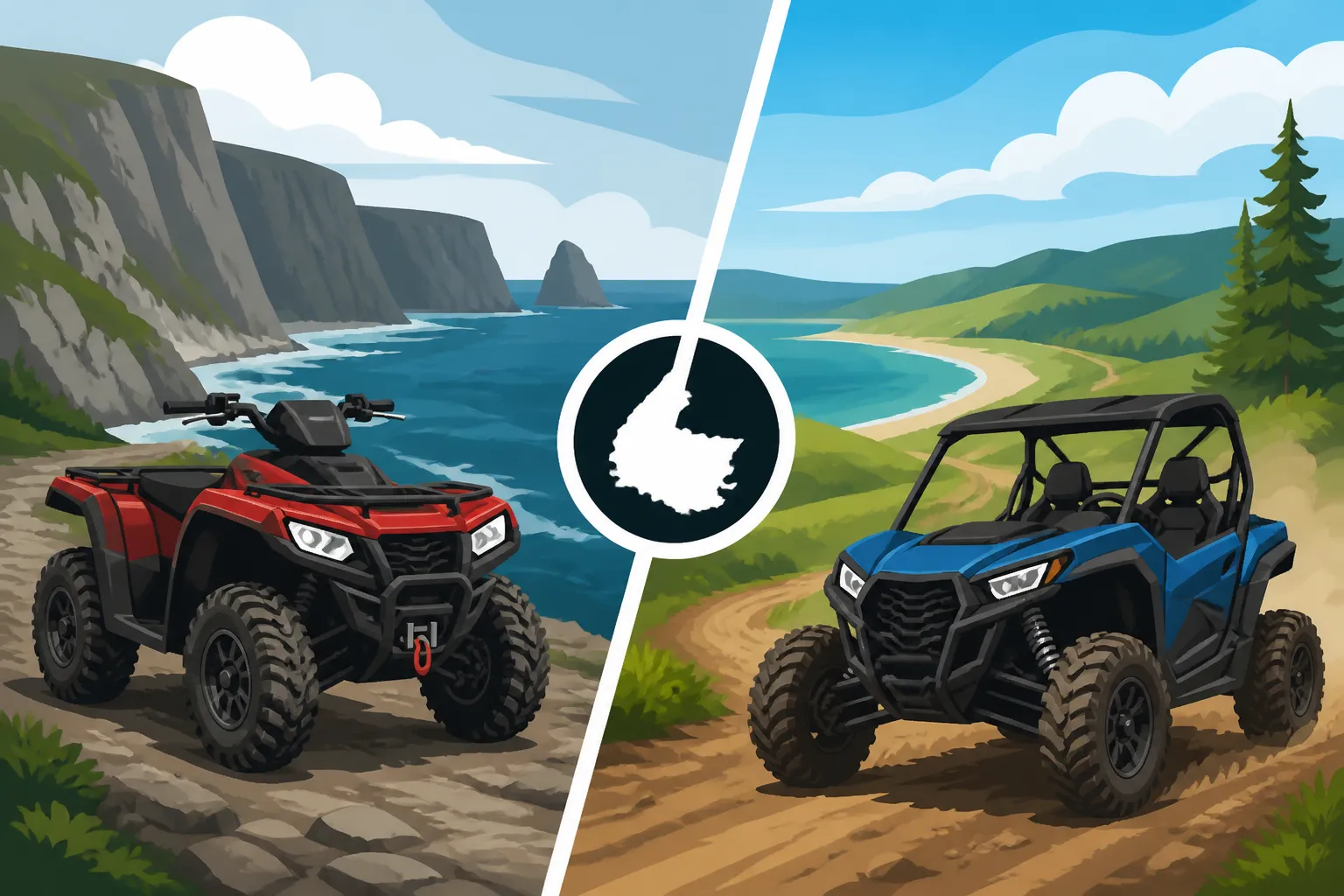
Newfoundland and Nova Scotia offer different kinds of riding
Newfoundland rewards riders who enjoy long, rugged routes
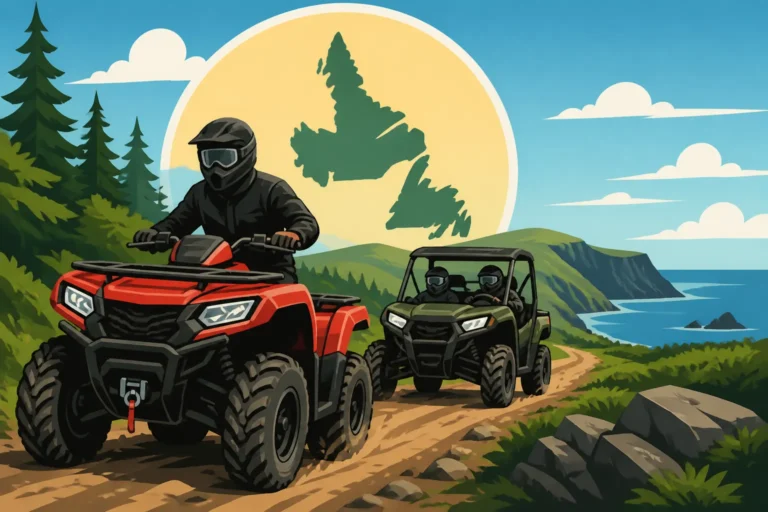
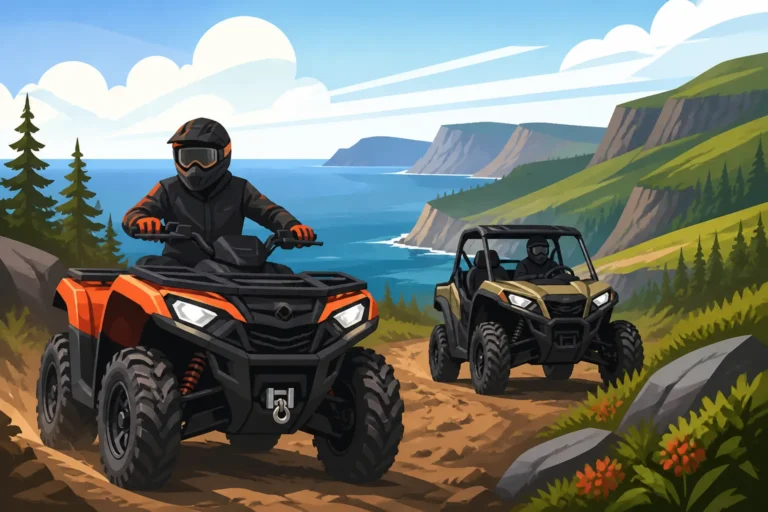
Newfoundland riding is often associated with wide-open landscapes, remote stretches and changing ground under your tires. On the island, former rail corridors and other established routes can make it possible to plan substantial point-to-point outings. The T’Railway is a well-known example, but it is not the whole story: local access, trail condition and permitted uses still vary by section. Start with [Newfoundland ATV Trails: The T'Railway and Beyond] and [The T'Railway's 883 Kilometres in Newfoundland] when you’re deciding whether a railbed route fits your trip.
The appeal is the sense of space. A ride can take you through wooded stretches, across exposed barrens or past coastal scenery, sometimes with long gaps between convenient places to stop. That variety can make a day feel like an adventure, but it also means you should not assume that a route will have consistent surfaces, nearby fuel or reliable cell service from one end to the other.
Newfoundland is especially appealing if your group is comfortable planning ahead and carrying what it needs. Before committing to a long route, look into its surface, access points, current conditions and exit options. A route that looks straightforward on a map may include rough ballast, wet ground or a stretch where turning around is inconvenient. For a broader look at what to assess, see [Newfoundland Trail Conditions Before You Ride].
Nova Scotia may suit riders looking for a more connected outing
Nova Scotia can be a good fit if you want to build a ride around a particular community, club area or regional trail network. Routes and riding opportunities differ by location, so the practical experience can depend heavily on where you start, which sections are open to your machine and what local permissions or trail requirements apply.
Compared with a remote Newfoundland outing, some Nova Scotia trips may feel easier to combine with nearby services or an overnight stay. That does not mean every trail is close to fuel, food or a repair shop. It means you should research the specific area rather than assume that provincial averages describe the route you plan to ride.
For either province, check access rules with the relevant local trail organization or land manager before setting out. Trail status, permitted vehicle types and seasonal restrictions can change by area. A route appearing on a recreational map is not, by itself, proof that you may ride it.
| Planning factor | Newfoundland | Nova Scotia |
|---|---|---|
| Typical trip feel | Spacious, rugged and sometimes remote | Often planned around regional trail areas and nearby communities |
| Route planning | Pay close attention to long distances, surface changes and exit points | Confirm the exact local route, access conditions and permitted uses |
| Services | Plan for gaps between fuel, food, repairs and cell coverage | Check service availability near your chosen riding area |
| Conditions | Weather and ground conditions can shift the experience quickly | Conditions and access vary by region and season |
| Best first step | Research the route section and its current status | Identify the local trail organization or land manager |
Trail access and rules need local checking in both provinces
Do not assume a trail is open because it appears on a map
One of the most frustrating trip surprises is reaching a trailhead and discovering that the route is closed, restricted or unsuitable for your vehicle. Maps are useful planning tools, but they do not replace checking current access information. Confirm who manages the route, which machine types are allowed and whether you need permission, a permit, a sticker or other proof before riding.
For Newfoundland, access can involve distinctions between approved areas, restricted areas, managed trails and private land. Start with [Newfoundland Crown Land Riding Rules] and check the relevant trail operator’s guidance. A route near a community may also be affected by local rules, so it is worth contacting the municipality or trail organization when the situation is unclear.
The same practical approach applies in Nova Scotia: verify the local rules for the trail you intend to use rather than relying on what was allowed on a previous trip. This is particularly important if you are crossing land managed by different groups or connecting several trail segments. An open trail on one section does not guarantee access continues beyond the next junction.
Check machine requirements and trail-specific obligations
Your machine’s registration, safety equipment and operating requirements matter no matter which province you visit. If you’re bringing a Newfoundland-registered ATV or UTV into Nova Scotia, or travelling the other direction, do not assume that your home paperwork answers every question about visiting riders. Confirm what documents, insurance and equipment you need for the destination and the specific kind of riding you plan to do.
In Newfoundland, managed trails may have additional requirements beyond general vehicle registration. Review [Newfoundland Trail Sticker Cost] and the trail operator’s instructions before your trip. If you plan to use the T’Railway or another managed route, check that the requirements apply to your machine and that you understand how to display or carry any required proof.
It also helps to make a quick document checklist before loading the trailer: registration, insurance information, any required trail proof, identification and emergency contacts. Keep those items accessible rather than buried under luggage. For more on expected behaviour along shared routes, [Newfoundland Trail Etiquette Locals Expect] is a useful starting point.
Plan for terrain, weather and distance rather than scenery alone
Newfoundland’s remoteness changes what you should carry
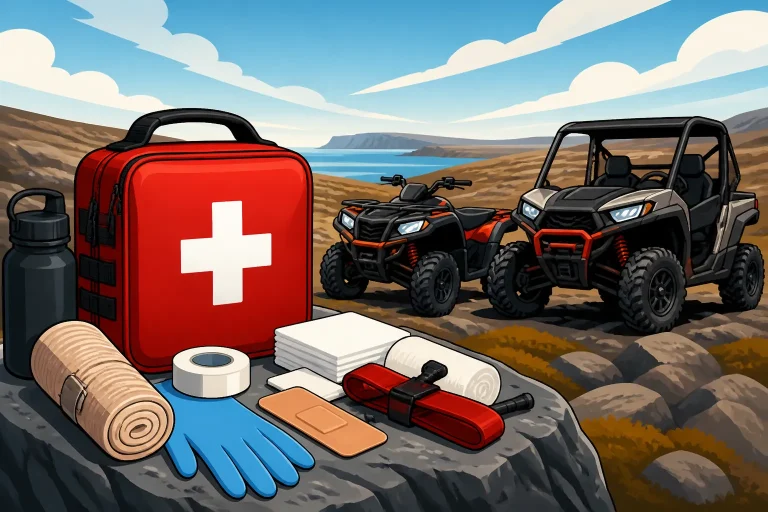
A beautiful route can still be a demanding one if it crosses exposed or wet ground, has few access roads or leaves you far from assistance. In Newfoundland, think through the consequences of a breakdown before leaving the trailhead. Carry a suitable tool kit, a tow strap, basic first aid supplies, water, food, warm layers and a way to navigate if your phone loses service. For longer rides, make sure someone outside the group knows your planned route and when you expect to return.
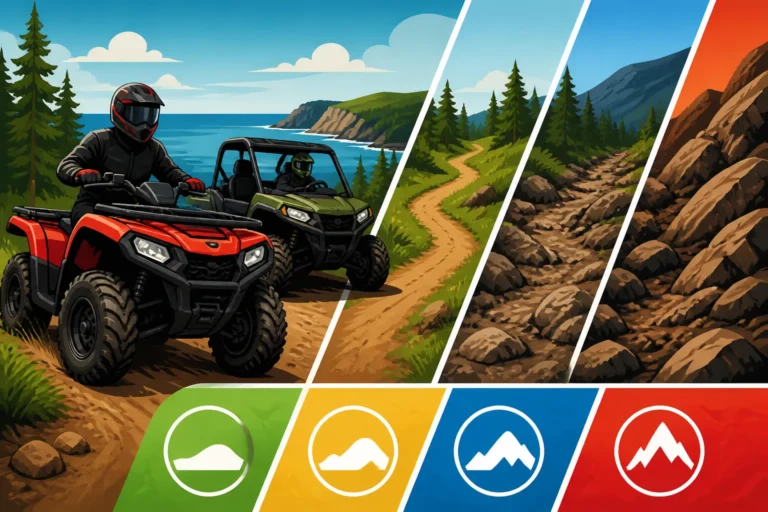
The terrain can also affect your machine and pace. Rough railbed, boggy sections, rain-softened ground and water crossings each call for different decisions. A group that assumes it can maintain road-like speeds may end up rushing, tiring out or arriving later than expected. Build in extra time for stops, route checks and helping another rider through a difficult section.
Mapping apps can help with route preparation, but use them with a backup plan. Riders sometimes use onX Offroad to review route options and keep track of a planned ride. Download or save the information you need before heading into areas where reception may be unreliable, and compare your digital route with local access guidance. A phone map should support your judgment, not replace it.
Nova Scotia still deserves careful condition checks
A less remote-feeling trip is not a reason to skip preparation. Rain can change trail surfaces, visibility can drop, and a familiar route may have closures or maintenance work. Before riding, look for local condition updates and ask whether the trail is suitable for your machine and experience level. If you are visiting an unfamiliar area, confirm where you can park a truck and trailer, where the route begins and whether the planned loop returns to the same spot.
It’s also smart to plan around your group’s least experienced rider. A route that feels easy to someone who rides every weekend might be tiring or intimidating for a new rider, especially if it includes deep mud, steep grades or long stretches without a convenient exit. Choose a shorter loop for the first day, then adjust once you have a better sense of the terrain and pace.
onX Offroad can be useful for comparing route options and organizing a ride plan, particularly when your group wants to keep a shared sense of direction. Before setting off, confirm that the route is legal and currently accessible through local sources. Save key details offline when possible, and carry a paper map or written notes for areas where a device could fail.
Choose the province that matches your trip style
Pick Newfoundland for a more remote, expansive adventure
Newfoundland may be the better choice if you want dramatic scenery, long routes and the feeling of travelling through a large, open landscape. It can be especially rewarding for riders who enjoy self-sufficient outings and don’t mind doing extra homework on conditions, services and access. For a first trip, choose one established route area rather than trying to cover too much ground in a single day.
If you’re staying near St. John’s, begin by researching nearby options and practical trail access rather than assuming that a long-distance route starts just outside town. [Newfoundland Trails Near St John's] can help you focus your search. Riders planning farther west or across the island should map out fuel and overnight stops as carefully as the riding itself.
Think about the whole trip, too: how you will get the machine to the trailhead, where you will park, whether your lodging can accommodate a trailer and what you will do if weather changes your plan. Newfoundland’s scale can make a last-minute change more complicated than simply choosing another nearby loop.
Pick Nova Scotia for a region-focused trip with flexible options
Nova Scotia may suit you if you want to organize riding around a particular region, travel with a mixed-experience group or combine trail time with nearby communities and other stops. The key is to choose the local trail system first, then build the rest of the itinerary around its access points, conditions and requirements. Avoid choosing a place to stay before confirming that the riding area you want is open to your machine.
For a group trip, compare more than mileage. Check whether the route has appropriate stopping points, whether everyone can manage the terrain, and how easily the group can adjust if someone needs to turn back. A shorter ride with clear access and good regrouping spots can be more enjoyable than an ambitious route that leaves less-experienced riders struggling to keep up.
Wherever you go, compare the actual trail sections rather than relying on broad claims that one province is easier, rougher or more scenic. A smooth stretch in one region may contrast sharply with another section nearby. Use local trail updates, contact operators or land managers when needed, and keep a flexible plan. onX Offroad or another reliable mapping tool can help organize your route, but the best trip decisions still come from combining maps with current local information.
A simple decision checklist
Before you book, answer these questions:
- How much remoteness do you want? If you enjoy long, self-contained days and are prepared to carry extra supplies, Newfoundland may be a strong match. If you prefer to plan around a specific local network and nearby stops, look closely at Nova Scotia options.
- What kind of terrain can everyone handle? Match the route to the least experienced rider and the capabilities of the machines in your group.
- Have you confirmed access? Check that the route is open to your machine and that you have any required permissions or trail proof.
- Where are the services and exits? Identify fuel, parking, food, lodging and ways off the route before you leave.
- What is your backup plan? Save navigation details, carry essentials and decide what your group will do if weather, a breakdown or a closure changes the ride.
The best choice is not necessarily the province with the longest route or the most dramatic photos. It is the place where your group can ride legally, comfortably and at a pace that leaves room to enjoy the day.
Disclaimer
This article is for general informational purposes only and does not constitute professional advice. Laws, prices and regulations vary by location and change over time. Consult a qualified professional for guidance on your specific situation.