Newfoundland Riding Areas With Group Space
Planning a group ATV or side-by-side ride in Newfoundland can get complicated before anyone turns a key: several trailers need room to unload, riders need a clear meeting point, and a busy trailhead may not have space for a large convoy. This guide explains how to assess group-friendly riding areas, plan a practical staging location, and check local access before you go.
What Makes a Newfoundland Riding Area Work for a Group
Look beyond the trail itself
A trail can be enjoyable once you’re riding and still be a poor choice for a group meetup. The first question is whether everyone can arrive, park, unload, and get moving without blocking other users or creating a safety problem. A large group might include pickup trucks, trailers, passengers, and riders who need extra time to gear up. A narrow pull-off that works for one vehicle may not work for six.
Think through the whole arrival process. Is there room for vehicles to turn around? Can a trailer be backed in without blocking the entrance? Is there a safe place to gather riders away from moving traffic? Will late arrivals be able to find the group without driving onto a trail they don’t know? These details are easy to overlook when the route is the main focus, but they often decide whether the start of the day feels calm or chaotic.
“Group space” also means different things to different people. A family ride with two machines may only need a clear parking area and an obvious meeting point. A club outing with a dozen machines may need separate arrival and unloading space, plus room to reorganize if someone’s machine has a problem. Before choosing a trailhead, estimate the number of trucks, trailers, and machines—not just the number of riders.
Distinguish public access from convenient staging
A trail corridor and a place to stage a group are not automatically the same thing. A public route may pass near a community, road, or parking area without there being a suitable place for a convoy to wait or unload. Don’t assume that a wide shoulder, business parking lot, community space, or access road can be used as a gathering point without permission.
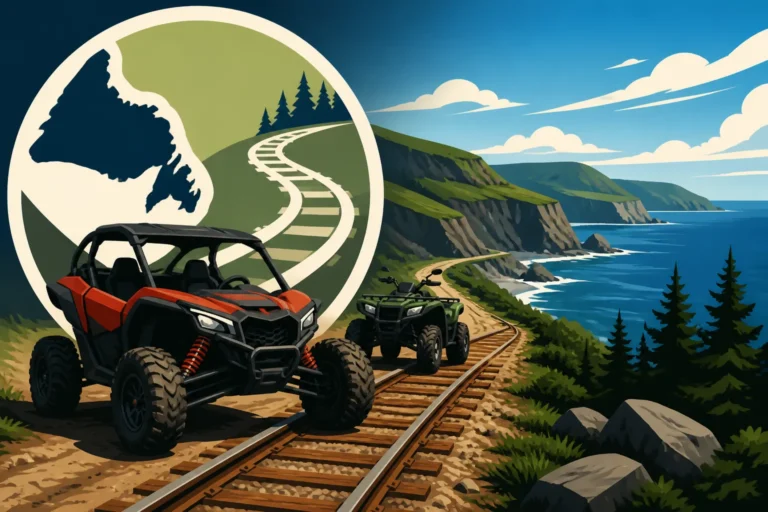
This matters along the T’Railway, which runs across Newfoundland and is shared by different kinds of trail users. A location that appears convenient on a map may have limited parking, a narrow entrance, or nearby homes and businesses. Riders should confirm where parking is allowed and whether the location can handle their group on the chosen day. For a broader look at planning along the corridor, see [Newfoundland ATV Trails: The T'Railway and Beyond] and [Newfoundland Trail Etiquette Locals Expect].
When a proposed staging spot is uncertain, contact the relevant trail operator, municipality, landowner, or local club before the ride. Ask specific questions: Can a group park there? Is unloading permitted? Are there seasonal restrictions or event requirements? Is there a better place nearby for a large group to meet? A quick confirmation can prevent a convoy from arriving to find there’s nowhere safe to stop.
How to Choose a Group-Friendly Starting Point
Assess access, parking, and unloading
Start by checking the approach to the meeting point. A tight turn, steep driveway, soft shoulder, or narrow entrance can become a bottleneck when several trucks arrive close together. If some participants are towing long trailers, consider whether they can enter and leave without backing into traffic or blocking other vehicles. If the spot seems marginal for one trailer, it may be unsuitable for a group.
Next, picture where each vehicle will go. You want enough room for trucks and trailers to park without crowding the trail entrance or access road. Riders should have space to unload, check their machines, and move gear without standing in a vehicle lane. If trailers have to be rearranged after unloading, make sure there is room to do that safely. It’s better to choose a less dramatic trail starting point with workable logistics than to begin a ride with a traffic jam.
Do a practical check before inviting everyone. If possible, visit the area in a regular vehicle, look for signs and restrictions, and note where the group can assemble. Map tools such as onX Offroad can help you compare routes and identify possible access points, but treat a mapped location as a lead—not confirmation that a large group may park or unload there. Verify access and parking with the appropriate local contact. For route planning beyond the starting point, [Newfoundland ATV Trail Map Downloads] can help you think about how trail options fit together.
Match the location to your group’s needs
A group of experienced local riders can often manage a simpler meetup than a mixed group of first-timers, families, and visitors. New riders may need more time for helmet checks, instructions, and questions. Families may need a quieter area to get children settled. A group with several side-by-sides may need more turning room than a group riding smaller machines.
Build the plan around the least experienced participant. Choose a start point that is easy to describe, avoid a confusing sequence of turns before the group is together, and allow a generous arrival window. Send a written meeting description that includes a recognizable landmark, the intended parking area, and a backup plan. Don’t rely only on a dropped map pin: phone coverage can be unreliable in some areas, and a pin may not explain which entrance or side of a road to use.
If your group includes riders unfamiliar with Newfoundland trails, keep the first leg straightforward and agree on a regrouping point before setting out. Tell everyone what to do if they arrive late or lose contact with the group. For a larger outing, planning the route and meetup as separate decisions can help: first find a lawful, workable staging location, then decide which trail sections suit the riders and machines.
| Group planning question | Why it matters | What to confirm |
|---|---|---|
| How many trucks and trailers are coming? | Vehicle count determines the space needed before the ride begins. | Parking capacity, turning room, and safe unloading space |
| Are riders new to the area? | Visitors may need clearer directions and extra time. | A recognizable meeting point and an easy first section |
| Is the location beside a shared trail? | Other users may need the same access or parking area. | Where to wait without blocking the entrance or trail |
| Could weather change the plan? | Rain, fog, or soft ground can make access harder. | A backup meetup and a suitable alternative route |
| Does the group plan an organized event? | A casual ride and a formal event may have different requirements. | Whether operator approval, a permit, or insurance is needed |
Newfoundland Areas to Consider and What to Verify
Use communities as planning anchors, not parking guarantees
Communities such as Port aux Basques, Corner Brook, Grand Falls-Windsor, Gander, Clarenville, and St. John’s can serve as useful reference points when a group is comparing travel distance, fuel stops, accommodation, and route options. They are not, by themselves, confirmation of a suitable trailhead or a place where a convoy can stage. Check the specific access point and its rules before choosing a community as your meetup base.
For a long-distance outing, participants may arrive from different directions and need a place to regroup before heading to the trail. A community can make that easier if the group identifies an appropriate meeting location with permission and enough room. Avoid telling everyone simply to meet “near town” or “at the trail.” Those instructions leave too much room for people to stop in different places, block access, or take a wrong turn.
The T’Railway can help groups think about trips that connect communities, but it is a shared corridor, not a private riding venue. Consider how hikers, cyclists, other riders, residents, and maintenance vehicles may use the same space. Check for any local restrictions and plan to keep the access area open. These considerations are particularly important when you’re organizing a large ride or inviting people who haven’t used the route before. Related reading includes [Newfoundland Group Ride Planning] and [Riding the T'Railway From St John's to Port aux Basques].
Check closures, permissions, and local rules
A route shown on a map does not necessarily mean every nearby area is open to machines. Access can depend on land status, posted restrictions, trail designations, seasonal conditions, and municipal rules. Check the current information from the relevant land manager, trail operator, or municipality rather than treating an old route description or a shared map pin as permission to ride.
This is especially important if the group plans to leave a marked or commonly used corridor, cross private land, or use an informal connector. Get permission where needed and stay out of restricted areas. If the ride involves Crown land, confirm that the intended area is approved for riding and that the group understands any conditions. [Newfoundland Crown Land Access Rules] and [Newfoundland Restricted Area Permissions] are useful starting points for understanding why a route needs more than a line on a map.
Keep separate checks for riding access and meetup access. A trail may be legal to ride but have no appropriate parking for a large group nearby. Conversely, an open parking area doesn’t establish that machines may travel from there onto a particular route. If a local contact gives instructions, share them with every participant, including where to park, where not to unload, and whether the group must stay on a specific trail. For more on the shared-use setting, see [Newfoundland Trails Shared With Hikers].
Organize the Ride So the Meetup Stays Manageable
Set a simple arrival and departure plan
Before ride day, appoint one person to manage arrivals and another to lead the ride if the group is large enough to justify it. The arrival contact can direct vehicles to the approved parking area and help latecomers find the group. The ride leader can check that the route and pace work for the participants. Avoid having everyone independently choose a place to stop once they reach the area.
Share the plan in writing. Include the exact meeting location, the expected arrival window, a backup contact method, and a reminder not to block roads, gates, trail entrances, or other users. If mobile service may be limited, agree on a point where the group will wait and a time after which the ride begins. A printed map or saved offline map can be useful when reception drops; onX Offroad may help riders review route options ahead of time, but it should not replace confirmation of access or local rules.
Set a realistic departure time rather than trying to rush riders through unloading. A short pre-ride check gives everyone a chance to secure cargo, confirm that equipment is working, and review the route. If a rider arrives late, the plan should make it clear whether they should wait at the original meetup, contact the ride organizer, or meet at a designated regrouping point. Clear instructions reduce the temptation to chase the group along an unfamiliar trail.
Build in room for changes
Newfoundland weather and trail conditions can change the feel of a ride quickly. Rain may make a parking area soft, fog can complicate travel on exposed routes, and a delay can leave the group with less daylight than expected. Have a backup location or a shorter route in mind, and decide who has authority to change the plan. If the intended staging area is crowded or unsuitable when you arrive, don’t force the group into a risky setup—use the backup or postpone.
For a large group, set expectations about pace and regrouping. Agree on a lead and a sweep rider, keep the group together at junctions, and choose safe places to stop that don’t obstruct the corridor. Avoid turning a small parking area into a long-term gathering spot once the machines are unloaded. The more the group can get organized before setting out, the less time it spends occupying shared access space.
Finally, ask participants to respect nearby residents and businesses. Keep noise down while gathering, avoid unnecessary engine idling, take all garbage with you, and leave the staging area as you found it. A considerate group is more likely to be welcomed back than one that blocks an entrance or treats a shared trailhead like private event space. When in doubt, contact the local trail operator and ask what group size the location can reasonably accommodate; [Questions to Ask a Trail Operator] can help you prepare that conversation.
Disclaimer
This article is for general informational purposes only and does not constitute professional advice. Laws, prices and regulations vary by location and change over time. Consult a qualified professional for guidance on your specific situation.