Newfoundland Riding Areas With Wash Stations
Finding an ATV or UTV wash station in Newfoundland can take more planning than finding a trail: a mapped trailhead does not necessarily have a wash bay, and a nearby campground or service stop may not allow machine washing. This guide explains how to check before you ride, what to ask local operators, and how to clean up without sending mud into a stream or sensitive area.
How to find Newfoundland ATV wash stations
Treat wash stations as a separate amenity
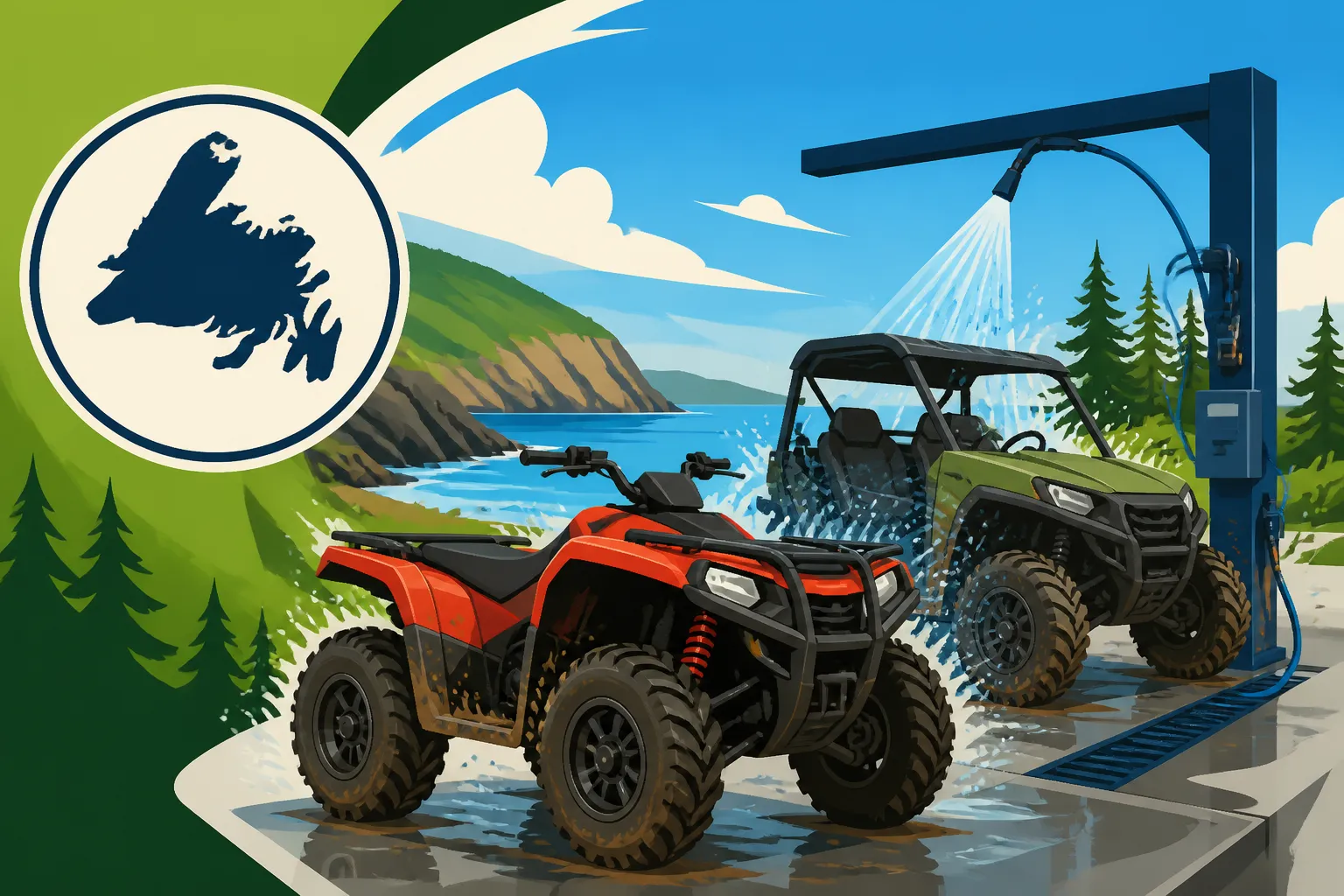
A riding area can have a parking lot, fuel nearby, or a maintained trail without offering a place to wash your machine. Wash facilities may be privately operated, limited to customers, unavailable seasonally, or intended for other uses. Even when a map pin says “wash,” it may refer to a car wash that does not accept muddy ATVs or trailers.
Before you plan around a wash station, confirm what it actually offers. Ask whether it accepts ATVs and side-by-sides, whether you need to be a campground guest or customer, and whether there is room to park and maneuver with a trailer. Check whether water, a hose, a pressure washer, or a suitable drainage area is provided. Those details can determine whether the stop is useful at all.
This matters particularly after a wet ride. Mud can build up around the skid plates, radiator, tires, and suspension, while a machine that looks clean from the seat may still be carrying a thick layer underneath. If you are heading straight to a public road, ferry, accommodation, or another trail area, knowing where you can clean the machine legally and responsibly can save time and prevent a frustrating last-minute search.
Ask the people who manage the place
Start with the trail operator, campground, outfitter, or community organization responsible for the area you plan to ride. A general map may show trail access but not current facilities or local restrictions. For questions about a particular section, [Newfoundland Trail Operator Contacts] can help you identify whom to ask, while [Questions Worth Asking a Trail Operator] offers a useful checklist for a broader pre-ride conversation.
Ask specific questions rather than simply asking, “Is there a wash station?” For example: “Can a visiting ATV use the wash area after a ride, and is it open to non-guests?” If you are bringing a side-by-side, mention its size and whether it will arrive on a trailer. A compact wash bay may not have enough room for a large machine, trailer, and tow vehicle.
Use mapping tools as a starting point, not as proof that a wash station is available. onX Offroad can help with route-planning context, but confirm facilities directly with the operator before building your day around them. A route that ends near a service area is not the same thing as a confirmed wash stop. Check access, opening conditions, and any rules for outside visitors before you leave home.
Check the whole riding plan, not just one pin
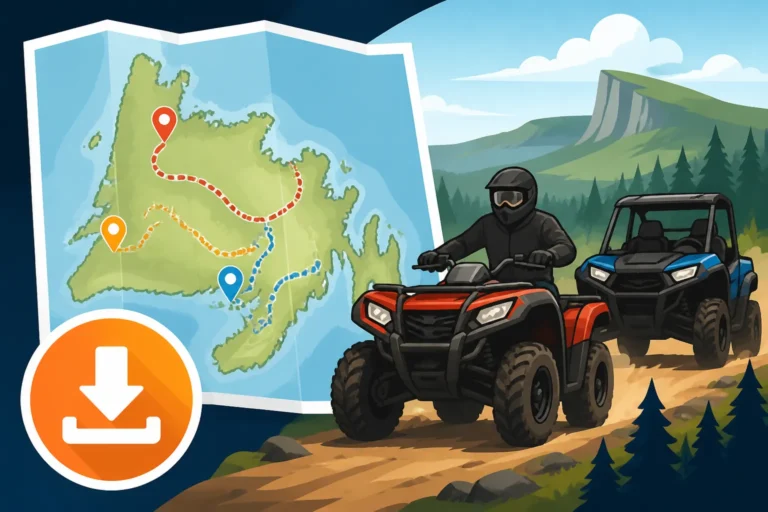
Newfoundland’s trail options include long corridors and local riding areas, and the wash-up plan depends on where you start and finish. The [Newfoundland ATV Trail Map Downloads] can help you get oriented, but a trail map and an amenity directory serve different purposes. Use the map to understand your route, then contact a local operator or business to confirm wash access.
If you are riding around Corner Brook, Gander, the Avalon, or another community, check whether the wash option is near your actual return route rather than merely somewhere in the region. A detour with a loaded trailer can turn a quick cleanup into a substantial extra trip. You may also want to ask whether the facility is open during the time you expect to arrive, especially if your ride ends late in the day or outside the main riding season.
| What to verify | Why it matters | A useful question |
|---|---|---|
| ATV and UTV access | Some facilities may serve cars only | “Can I wash an ATV or side-by-side here?” |
| Public or customer-only use | A wash area may be limited to guests or customers | “Do I need to stay or make a purchase to use it?” |
| Trailer access | A wash bay may not have room for a tow vehicle and trailer | “Can I get in and out with my trailer attached?” |
| Water and equipment | The site may not provide a hose or pressure washer | “What equipment is available, and what should I bring?” |
| Drainage and cleanup rules | Mud and wash water need to be handled responsibly | “Where should runoff go, and are there limits on washing?” |
| Seasonal access | Facilities may close or change hours | “Will it be open on the day I plan to ride?” |
Where to look near Newfoundland riding areas
Ask at established trail stops and campgrounds
Campgrounds, lodges, and outfitters near a riding area may be good places to ask about washing, but do not assume that they offer it. Some may allow guests to rinse machines in a designated spot; others may prohibit washing because of drainage, water use, or site rules. A business that welcomes riders may still have no wash facility.
When considering an overnight stop, ask about machine-cleaning arrangements while you make the booking. If you are staying near a trail, [Newfoundland Cabins Near a Riding Area] and [Newfoundland Campgrounds Near a Trailhead] can help you think through lodging options, but contact the property directly about wash access. Clarify whether the permission applies to your machine, whether the area is available to non-guests, and whether there is a designated place to rinse mud from tires and undercarriage.
If you are booking a guided outing or rental, ask the operator where customers can clean machines at the end of the ride. That does not mean a wash is included; it simply avoids finding out too late that the return location has no suitable wash area. For a rented machine, follow the operator’s instructions rather than using a pressure washer or cleaning product without permission.
Check local communities without assuming public access
A town or service centre may have car washes, fuel stations, repair shops, or other businesses that seem like convenient options. But a standard car wash may not accept off-road machines, may not allow heavy mud, or may have a layout that is unsuitable for a trailer. Get permission before unloading or washing on private property.
For local advice, contact the relevant community office, trail group, or business and explain what you need. Mention whether you are looking for a self-service bay, a hose, or simply a permitted place to rinse your machine. If you are riding near the T’Railway, remember that access to a long trail corridor does not establish that every nearby service is available to riders. Use [Newfoundland Riding Areas With Fuel Nearby] as a planning prompt, then verify each service directly instead of treating proximity as permission.
You can also use onX Offroad to get a sense of how a planned route relates to nearby roads and communities. Still, call ahead before relying on a location for washing. If a business cannot confirm machine access or drainage arrangements, plan another option rather than arriving with a muddy ATV and hoping staff will make an exception.
Build in time for trail conditions and closures
A route that is dry when you set out may be muddy after rain, and a trail section may be affected by weather or a local closure. That can change both how much cleaning your machine needs and where you can reasonably stop afterward. Check [Newfoundland Trail Closures After a Storm] and [Newfoundland Riding After Heavy Rain] when planning a ride in unsettled conditions.
Avoid treating wetlands, streams, roadside ditches, or a trailhead parking area as an informal wash bay. Muddy runoff can carry sediment and residue into places where it does not belong, and washing in a public area may be prohibited or unwelcome. Use a designated facility where possible. If there is no suitable place available, remove heavy clumps carefully at an appropriate location and wait until you can clean the machine where runoff can be managed.
How to wash an ATV or UTV responsibly
Remove heavy mud before it becomes a problem
After a muddy ride, take a moment to inspect the machine before loading it or leaving the area. Look at the underside, wheel wells, footwells, suspension components, and the area around the radiator. Mud can hide damage or obstruct parts, so a quick look is useful even if you are not doing a full wash.
Use a scraper or brush where appropriate to remove thick clumps, following the owner’s manual and avoiding sensitive parts. Do not blast dirt into electrical connections, bearings, seals, or the radiator with a high-pressure spray. A powerful stream can force water and grit into places where they may cause trouble. If you are unsure how to clean a particular component, check the machine’s manual or ask a dealer or mechanic.
A rinse at an approved wash bay is often more practical than trying to clean a machine beside a trail. Bring what the facility requires, and keep the area tidy for the next rider. If the site has a specific process for removing mud or disposing of debris, follow it rather than improvising.
Keep wash water and debris out of waterways
Do not wash a machine directly in a brook, pond, wetland, or other natural water body. Avoid letting muddy runoff flow into a storm drain or roadside ditch, either. Even plain-looking mud can carry oils, grime, and material from the trail. A designated wash area with suitable drainage is the better choice.
If you cannot find a confirmed wash station, ask the landowner or facility operator whether there is an approved place to rinse or scrape the machine. Do not assume that a quiet corner of a parking lot is acceptable. At a campground or cabin, use only the area the owner identifies, and respect any limits on water use, cleaning products, and runoff.
Responsible cleanup also helps keep access open. Riders who leave mud piles, clogged drains, or a mess around a wash bay can make a business less willing to accommodate machines in the future. Pack out any debris you remove and leave the facility as clean as you found it.
Prepare for the ride home
A machine can still carry mud after a rinse, particularly underneath or around the tires. Before loading, check that the machine is secure and that mud is not falling onto the road or trailer as you travel. If you are using a public road, make sure the plate remains visible and the machine is safely secured. For longer trips, especially when towing, plan for a cleanup stop before the return leg rather than hoping to find one at the last minute.
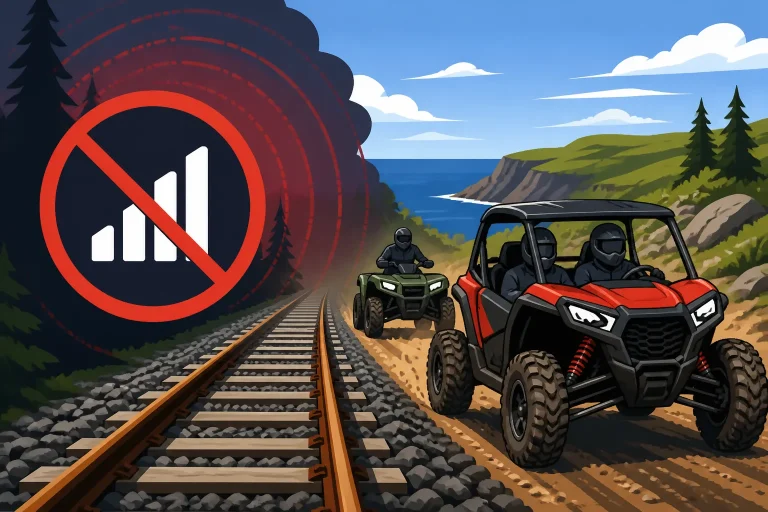
onX Offroad may be useful while organizing the route and identifying nearby roads or destinations, but it cannot replace a call to confirm wash-station access. Keep the operator’s contact information handy and note a backup option. If you are exploring an unfamiliar area, download or save the route information you need before you lose service, and ask locally about current access and conditions.
A little preparation can make the end of a ride much easier: confirm where you can wash, learn what equipment is available, and leave enough time for cleanup before closing or checkout. If no suitable facility is available, avoid washing in a sensitive place and ask the land manager or service provider what they recommend.
A simple pre-ride wash-station checklist
Confirm access before you load up
Call or message the facility before the ride, not after you arrive with a muddy machine. Confirm that ATVs or UTVs are accepted, whether access is public, and whether there are restrictions on trailers, pressure washers, cleaning products, or operating hours. If the answer is unclear, ask who can provide a definite answer.
Use a route-planning tool such as onX Offroad to help organize the day, then verify the wash location with the business or trail operator. Save the name, directions, and phone number somewhere you can reach without relying on cell service. Keep one backup option in mind, particularly if you will be riding far from a larger community.
Pack for a no-wash scenario
Even with a confirmed plan, conditions can change. A facility may be closed, too busy, or unsuitable for your machine when you arrive. Carrying a brush, scraper, gloves, and a few cleanup supplies can help you remove loose debris without turning a trailhead or campsite into an unauthorized wash area.
Do not treat those supplies as a substitute for proper washing when mud needs to be removed thoroughly. Instead, use them for basic cleanup and plan to finish at an approved place. For more route-planning help, [Newfoundland Trail Etiquette Locals Expect] is a useful reminder that shared riding areas depend on visitors treating local facilities and other users with care.
Make the wash stop part of the itinerary
A confirmed wash stop works best when it fits naturally into your ride. Put it near the day’s endpoint, leave enough time to use the facility, and avoid scheduling it so tightly that a delay forces you to wash somewhere inappropriate. If you are traveling with a group, confirm that the site can handle several machines and agree on who will pay or make the required purchase.
The practical rule is simple: verify the wash station, verify permission, and verify how the site handles runoff. Newfoundland has plenty of places to ride, but a nearby trail or campground alone does not guarantee a machine wash facility. A quick conversation before departure is usually easier than searching for one with a dirty ATV and a trailer in tow.
Disclaimer
This article is for general informational purposes only and does not constitute professional advice. Laws, prices and regulations vary by location and change over time. Consult a qualified professional for guidance on your specific situation.