Newfoundland Riding in Winter Snow
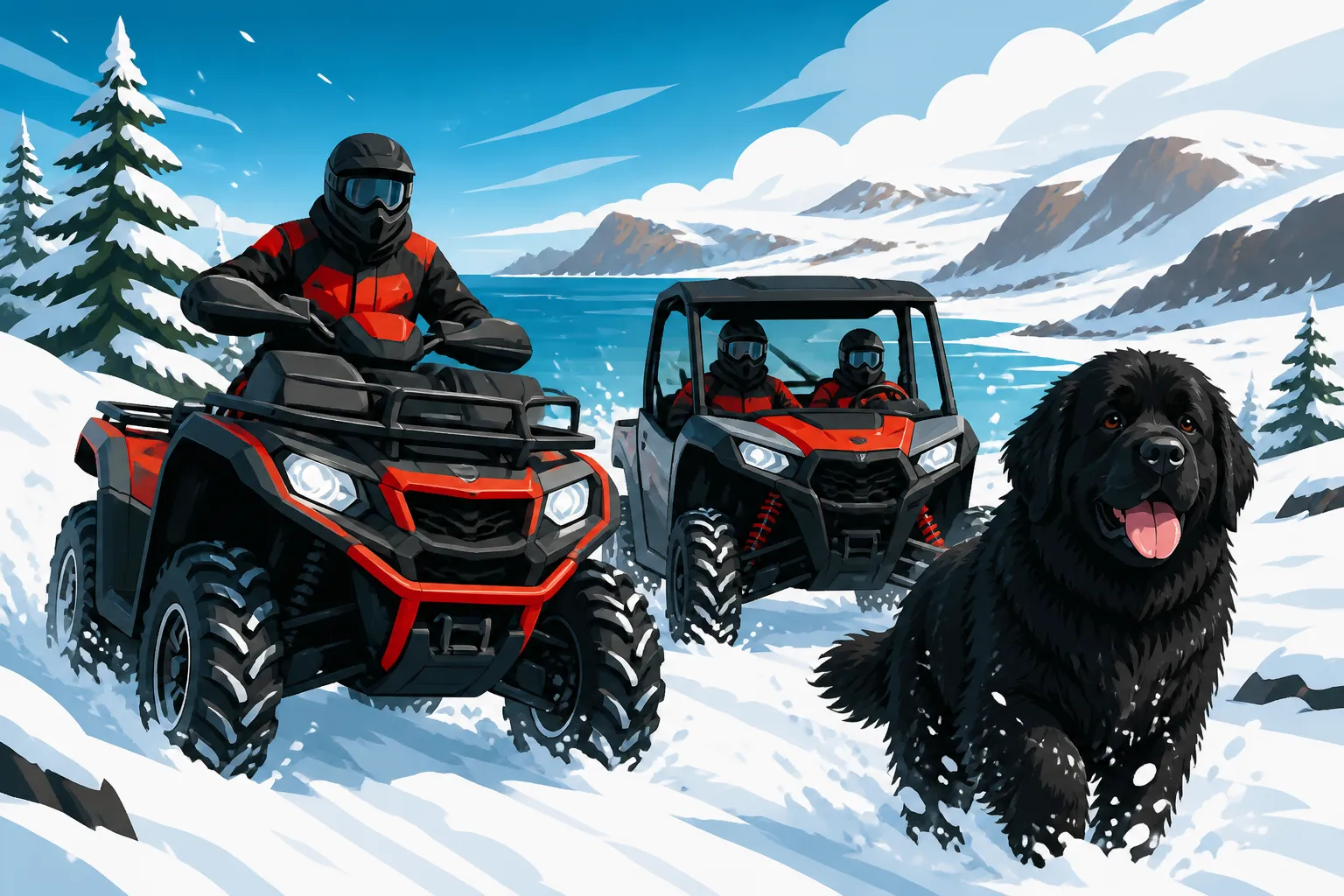
Winter riding in Newfoundland can turn a familiar trail into a very different trip: snow hides ruts, daylight is short, and a route that was open last weekend may now be unsafe or restricted. This guide covers how to check access, prepare an ATV or UTV, manage cold-weather risks, and decide when conditions make it wiser to turn back.
Check winter access before you load the machine
Confirm that the route is open to your type of vehicle
Snow on a trail doesn’t automatically mean it’s open to ATVs or side-by-sides. In winter, a route may be groomed or maintained for snowmobiles, shared with other users, closed to wheeled machines, or affected by a temporary restriction. Don’t assume that a trail you rode in summer remains available once it’s covered in snow.
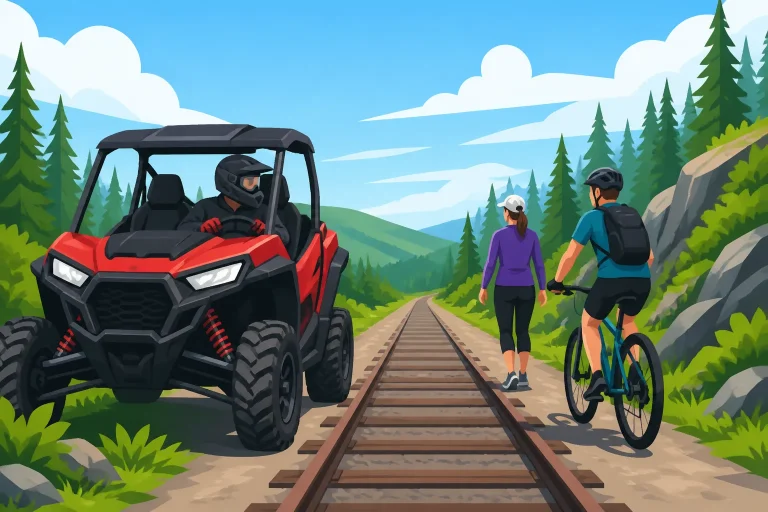
This matters on the T’Railway and on local managed trails, where permitted uses and conditions can vary by section. Check with the relevant trail operator or land manager before travelling, and ask specifically whether wheeled ATVs and UTVs are allowed in the conditions you’re planning to ride. The guidance in [Newfoundland Trails Shared With Snowmobiles] is a useful reminder that sharing a corridor doesn’t necessarily mean every vehicle has the same access.
Also review [Newfoundland Rules for Riding in Winter] before setting out. Registration, insurance, training, trail-use requirements, equipment rules, and local restrictions can still apply when the ground is frozen. If you’re heading near a community, check its bylaws as well. A trail being accessible from a road or cabin doesn’t establish that riding there is permitted.
Get a current picture of trail and weather conditions
Winter conditions can change quickly across Newfoundland. A route near Corner Brook may have different snow, wind, and visibility from one on the Avalon or near Gander. Labrador presents its own challenges, including colder conditions and long stretches with few services. Check local forecasts and ask people who know the route what they’re seeing—not just what the forecast says for the nearest town.
Pay attention to recent snowfall, thawing, rain, wind, drifting snow, and changes in temperature. A hard-looking surface may conceal soft snow, water, or a thin crust that won’t support a machine. A familiar trail can also become difficult to follow when snow covers markers and landmarks. For a broader seasonal overview, see [Newfoundland Riding Season and Weather], and use [Newfoundland Trail Conditions Before You Ride] as a reminder to verify conditions close to departure.
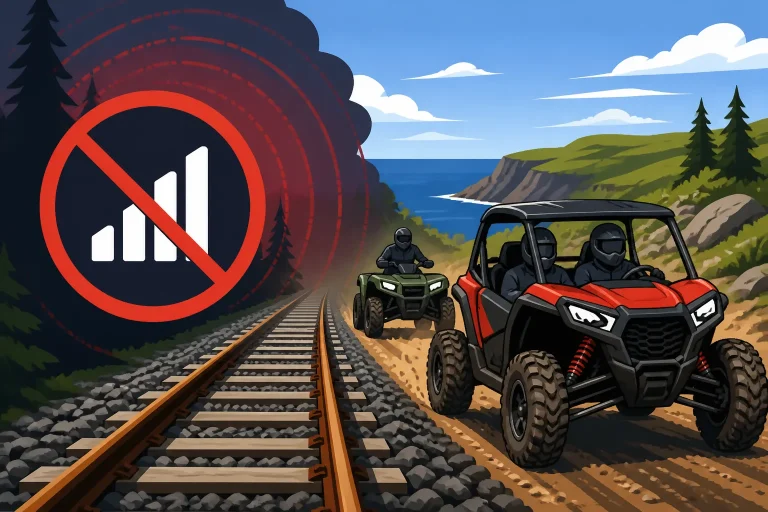
Mapping tools can help you plan, but no app can confirm that a route is open or safe today. Some riders use onX Offroad to review routes and save maps for offline reference; compare any route information with local trail notices and current advice from the operator. Carry a paper map too, especially if your ride may take you into a mobile dead zone. [Carrying a Paper Map Where There Is No Signal] covers why a backup matters on remote routes.
| Before leaving | What to confirm |
|---|---|
| Route access | Whether ATVs or UTVs are permitted on the specific trail or section |
| Current conditions | Snow depth, drifting, ice, visibility, and any recent closures |
| Weather | Wind, temperature, precipitation, and how conditions may change during the ride |
| Other users | Whether the route is shared with snowmobilers, walkers, or other trail users |
| Navigation | Saved offline information, a paper map, and a plan for unreliable cell service |
| Machine and rider readiness | Working equipment, appropriate clothing, required documents, and a return plan |
Prepare your ATV or UTV for snow and cold
Check the machine before the ride
Cold weather puts extra demands on a machine. Before you leave, check the battery, tires, brakes, lights, controls, belts, fluids, and any components that are due for maintenance. Follow the manufacturer’s instructions for cold-weather operation and storage. If the machine has been sitting through a long winter, don’t assume it’s ready simply because it started in the driveway.
Tires need particular attention. Snow, ice, packed trail, and exposed gravel can offer very different traction, and a setup that works in one place may feel unpredictable a few kilometres later. Use equipment that is appropriate for the machine and the conditions, and follow the applicable requirements. Avoid experimenting with changes you haven’t tested in a safe setting. If the machine starts to slide or struggle for grip, backing off early is usually safer than trying to power through.
Carry basic recovery and repair items suited to the route, such as a tow strap, suitable tools, and a spare belt if your machine uses one and you know how to change it. A winch can help in some situations, but it’s not a guarantee of a safe recovery—particularly when there’s no solid anchor, the snow is deep, or the machine is near a steep edge or water. Pack a first-aid kit and know how to use what’s in it. [What to Carry for First Aid on the Barrens] is relevant even if your winter route is elsewhere: remote riding brings the same need to plan for delays and minor injuries.
Dress for a stop, not just the ride
The wind and cold can feel very different once you’re moving, and a breakdown or recovery can leave you standing still for a long time. Wear warm layers you can adjust, wind-resistant outerwear, insulated gloves, suitable boots, and a helmet that fits correctly. Keep spare dry gloves and warm clothing in a waterproof bag. Wet fabric can make a cold day much harder to manage, especially if you’re far from a vehicle or shelter.
Protect exposed skin and watch how quickly conditions are affecting the group. Numb fingers can make it harder to operate controls, fasten gear, or use a phone. A rider who is shivering, confused, unusually tired, or losing coordination needs attention; don’t treat those signs as something to simply push through. Plan rest and warm-up breaks at places where the group can stop safely without blocking the route.
Make sure your required safety gear is suitable and in working order. Riders should review [Newfoundland ATV Helmet Law] and confirm they understand the rules that apply to their machine and outing. Before heading out, check [Newfoundland Insurance Requirements for Riders] as well. Winter riding does not remove the need to meet applicable legal and safety requirements.
Ride cautiously on snow-covered trails
Keep speed and spacing under control
Snow can conceal rocks, ruts, branches, drainage channels, and changes in trail width. Even a route you know well may have a different surface after a storm or a freeze-thaw cycle. Ride at a pace that lets you stop within the distance you can see, leave room between machines, and avoid following so closely that a sudden stop becomes a collision.
Keep your movements smooth. Sharp turns, sudden braking, and abrupt acceleration can make it easier to lose control on packed snow or ice. If you’re riding a UTV, remember that the machine’s extra weight and width can affect how it responds and where it can safely travel. Don’t assume a wider vehicle can squeeze through a drift or turn around on a narrow trail as easily as a smaller ATV.
Give other trail users room and approach blind corners carefully. On shared routes, snowmobilers and other riders may be travelling at different speeds and may have limited sightlines too. Slow down where the trail narrows, visibility drops, or tracks cross. If you meet someone on a tight section, take time to communicate and pass only when there is safe space. The advice in [Newfoundland ATV Trail Etiquette Locals Expect] applies in winter just as much as it does during warmer months.
Make the group plan around the least experienced rider
A winter ride is not the time to find out that someone is uncomfortable in low visibility or unsure how to recover a stuck machine. Before leaving, agree on the route, turnaround time, meeting points, and what the group will do if someone becomes separated. Keep the group together at a pace everyone can manage, and check in regularly rather than assuming silence means all is well.
Set a firm turnaround point based on daylight, weather, and the slowest likely pace—not on the distance you hope to cover. Short days can catch people out, particularly if there’s a delay from a mechanical issue or recovery. Tell someone who isn’t riding where you’re going and when you expect to return. If the route or weather deteriorates, turn back while everyone still has enough energy and daylight to do so.
For remote routes, prepare for limited service before you lose it. Save maps for offline use, carry a paper backup, and bring a charged phone and any other communication equipment appropriate to the trip. A route-planning app such as onX Offroad may help you keep track of a planned route when offline mapping has been set up in advance, but don’t rely on a phone as your only navigation or emergency plan. Conditions, battery life, and signal can all work against you in the cold.
Know when to turn around
Treat changing conditions as a reason to reassess
A route can become unsafe even when it was rideable earlier in the day. New snow can erase tracks and trail markers; wind can create drifts; warming temperatures can soften the surface; and falling temperatures can make wet sections icy. If you can no longer confidently identify the trail, visibility is shrinking, or the machine is repeatedly bogging down, pause and reassess rather than continuing because you’ve already travelled a long way.
Turn back if a rider is cold, exhausted, hurt, or struggling to control their machine. Do the same if a machine develops a problem that affects steering, braking, lights, or safe operation. A difficult recovery can consume daylight and leave the entire group exposed. If you’re unsure whether a crossing, slope, or drift is safe, don’t use another rider’s tracks as proof that it is.
Spring conditions deserve extra caution. A route can look firm from a distance while soft ground underneath is vulnerable to damage. Deep ruts and bog disturbance can harm a trail and create hazards for everyone who follows. Check for seasonal restrictions and closures rather than treating frozen ground or leftover snow as permission to ride. [Newfoundland Trails Closed in Spring] is a useful related read when winter begins to give way to thawing conditions.
Make the ride fit the season
A good winter outing does not have to cover a long distance. Choose a route with clear access information, realistic turnaround options, and a group size that can travel safely together. Start conservatively, especially if you haven’t ridden in snow recently. A short trip close to a known access point can help you judge traction, visibility, and how the machines are handling the cold before committing to a longer route.
If you’re planning to ride in Labrador, account for its distinct distances, weather, and limited services rather than applying assumptions from a shorter trip elsewhere. [Newfoundland Riding in Labrador Winter] offers a location-specific starting point for thinking about those differences. Wherever you ride, check the exact route and restrictions with the relevant local operator or land manager.
The safest winter plan includes permission to change the plan. If access is unclear, weather is worsening, or the group is no longer comfortable, choose another day or a shorter route. Protecting the trail and getting everyone home safely matter more than finishing a planned loop.
Disclaimer
This article is for general informational purposes only and does not constitute professional advice. Laws, prices and regulations vary by location and change over time. Consult a qualified professional for guidance on your specific situation.