Newfoundland Rules for a Machine With No Plate
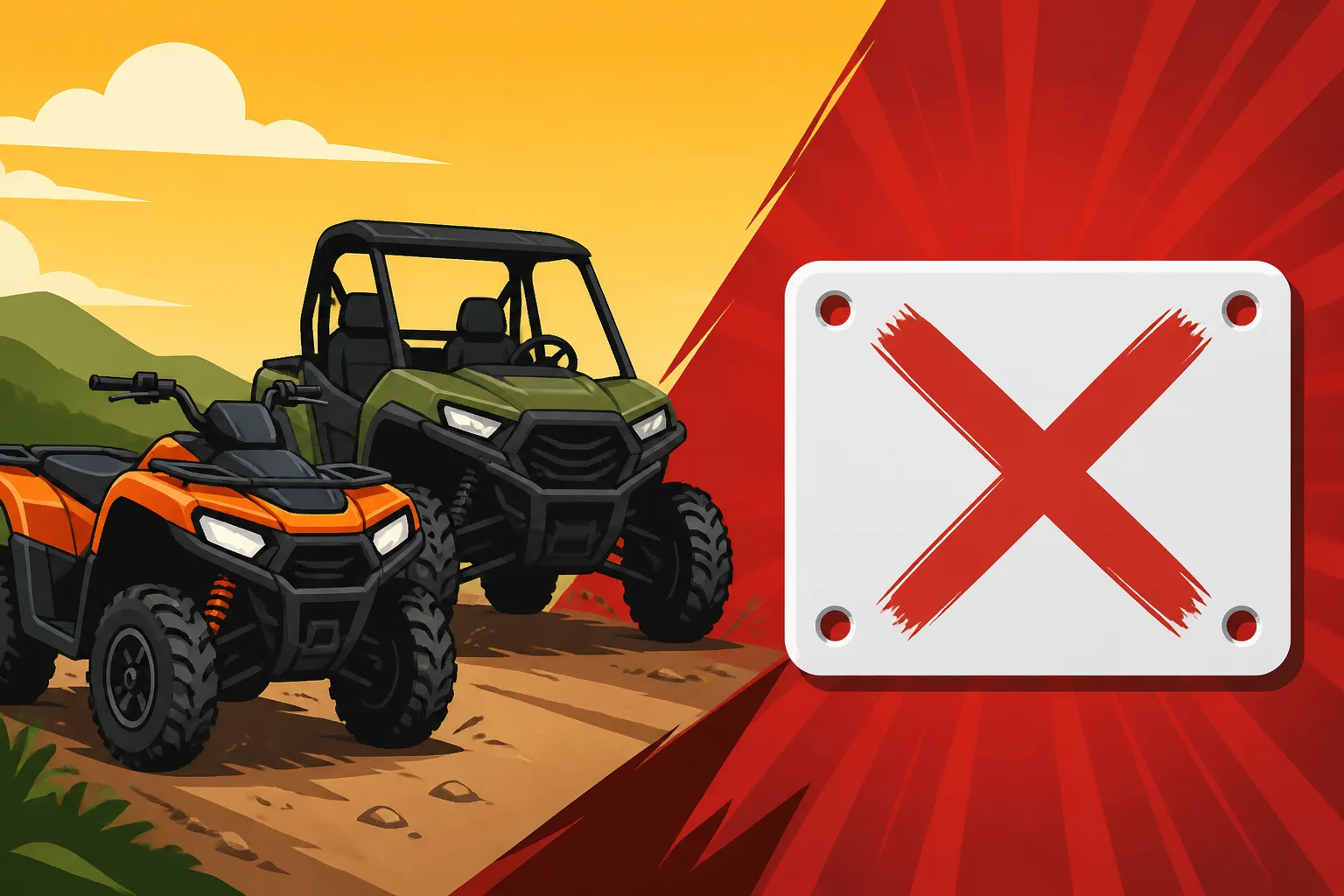
A missing plate can turn a routine ride into a stop, a fine, or an unnecessary trip back to the registry. In Newfoundland and Labrador, first work out whether the machine needs provincial registration, whether the plate is simply lost or hidden, and where you planned to ride. This guide explains what to do before operating an ATV or side-by-side without a visible plate.
First, work out why the machine has no plate
A registered machine with a lost or damaged plate
If your ATV or UTV is registered but its identification plate has fallen off, been damaged, or gone missing, treat that as a problem to fix before riding. Having a registration document does not make a missing plate visible to an officer or satisfy a requirement to display the plate on the machine. Avoid operating it in places where registration and plate display are required until you have confirmed the right next step with Motor Registration.
Check the machine carefully before assuming the plate is gone. It may have come loose, shifted behind a bumper, or been covered by mud, gear, or an accessory. If you find it, make sure it is secure and readable. If it is lost or damaged beyond use, contact the registry about getting a replacement and ask what identification and paperwork to bring. The process is covered in [Newfoundland Plate Replacement If Lost].
A replacement plate and a replacement registration document are different things. If you still have the plate but have misplaced the permit, ask about replacing the document; if you have the permit but no usable plate, ask about the plate. Those are separate problems, and sorting out which one you have before contacting the office can save a frustrating second visit. For the paperwork side, see [Newfoundland Registration Paperwork Explained].
A machine that has never been registered here
If you bought a used machine without a plate, do not assume that means it is exempt from registration. The previous owner may have removed the plate, the machine may have changed hands without the required transfer being completed, or its paperwork may be incomplete. Before riding, establish who owns it, whether it has been registered, and whether you can provide the documents needed to register it.
This is especially important after a private sale, an auction purchase, or a long chain of informal ownership. A bill of sale from the person who handed you the keys may not answer every question if the seller was not the registered owner. Check the VIN against any available permit and collect the ownership documents you have before arranging registration. If the machine has passed through several owners, [Newfoundland Registration Without a Bill of Sale] explains why the paper trail matters.
A missing plate does not tell you whether the machine is properly registered, and a permit alone does not resolve every ownership question. Treat the machine as not ready to ride until its status is clear. [Newfoundland Registration Before Your First Ride] is a useful checklist for handling that step before you plan a trail outing.
A visitor’s machine or a machine used only on private land
Some visitors bring a machine registered in another province. That situation is different from an unregistered Newfoundland machine, but it does not mean you can simply remove or ignore the plate. Keep the machine’s home registration and plate in order, and check the visitor rules before riding. Newfoundland’s visitor exemption is time-limited; the details are discussed in [When a Visiting Machine Has to Register in Newfoundland] and [Newfoundland's 30-Day Visitor Exemption].
Likewise, riding only on family property or at a cabin does not automatically settle every registration question. Registration requirements and managed-trail requirements are separate issues, and exemptions that apply to one rule may not apply to another. If you are relying on an exemption, confirm exactly what it covers rather than assuming “private land” means no paperwork or plate is needed.
| Situation | What to check before riding |
|---|---|
| Plate lost or damaged | Confirm the machine’s registration and ask Motor Registration how to replace the plate |
| Plate covered by mud or cargo | Clear the obstruction and make sure the plate is visible and readable |
| Used machine with no plate | Establish ownership and registration status before operating it |
| Visitor’s machine | Keep its out-of-province registration and plate in order, and confirm the visitor time limit |
| Machine used on private land | Check whether the specific activity or location is actually exempt |
| Plate present but ride planned on a road | Confirm that the route and type of road are open to that machine; a plate does not grant road access |
Where the plate must be and what can hide it
Secure the plate where it can be seen
A plate is useful only if it is attached securely and can be read. If the mount is bent, loose, or positioned where the tire throws mud across it, take time to correct the problem before setting off. Don’t tuck the plate under a rack, place it behind a storage box, or rely on a quick tie that could come loose on rough ground.
The proper placement can depend on the machine’s design. Check the applicable placement guidance for your ATV or side-by-side rather than assuming every model has the same mounting point. [Newfoundland Plate Placement on a Quad] is relevant if you are working out where a quad’s plate should sit. If the original bracket is damaged or no longer fits after a repair, make sure the replacement mounting arrangement still leaves the plate readable and secure.
Accessories can complicate an otherwise simple fix. A rear rack, spare-tire carrier, storage box, or cargo load may block the plate after installation, even if the plate was visible when the machine left the garage. If you have fitted an accessory from a manufacturer such as SuperATV, check the finished setup with the machine loaded as you would actually ride it. The point is not which brand made the accessory; it is whether the plate remains plainly visible.
Mud and cargo are not harmless details
Newfoundland trails can leave a machine splattered with mud, especially after a wet ride. A plate that was clear at the trailhead may be unreadable after crossing a boggy section or following a dusty convoy. Make a quick stop when conditions warrant it and clear the plate without damaging or bending it. The practical guidance in [Newfoundland Plates Unobstructed by Cargo] and [Newfoundland Plates Kept Free of Mud] addresses two common ways a valid plate becomes difficult to see.
Cargo deserves the same attention. A cooler, fuel can, duffel, chainsaw, or strapped-down hunting gear can shift as the machine moves. Before departure, look at the back of the ATV from the angle a person behind it would see. Then check again after you tighten your load. A plate that is visible when the cargo is sitting loosely in the yard may disappear once everything is strapped down.
If a rack or cargo arrangement keeps blocking the plate, change the setup rather than accepting the obstruction as unavoidable. SuperATV accessories or other aftermarket equipment may change the space available at the rear of a machine; check fit and visibility after any installation. [Newfoundland Plates Unobstructed by Cargo] is a helpful reminder that carrying a load does not make a hidden plate easier to identify.
A plate does not replace the rest of the required documents
A visible plate is not a substitute for the registration permit or other documents you may need to produce. Keep your paperwork accessible and make sure it belongs to that machine. If you are unsure what to carry or what an officer may ask for during a stop, review [What an Officer Can Ask You to Produce].
Before heading out, compare the machine’s identification details with its paperwork. If the documents do not match, or the VIN is hard to read, resolve that before assuming the plate proves everything is in order. This is particularly worthwhile when you have just purchased a used ATV, borrowed a machine, or taken over one that has been stored for years.
Also keep registration distinct from any trail sticker, safety-training proof, insurance, or other requirements that may apply to your ride. A machine can have a visible plate and still be missing something required for a managed trail or a particular type of operation. Conversely, a trail sticker does not replace a registration plate where one is required. Check the rules for the exact route and use you have in mind.
Can you ride it without a plate while you sort it out?
On public roads and roads open to ORVs
Do not treat the plate as optional just because you are only travelling a short distance. If the machine is required to be registered and the plate is missing, do not ride it on a road or other place where registration and display requirements apply until you have confirmed how to make it compliant. Pushing the machine, hauling it on a properly equipped trailer, or arranging another lawful way to transport it may be safer than riding it to a shop or registry office.
A registered plate does not, by itself, make every road legal for ATV or UTV use. Newfoundland has separate rules about where off-road vehicles may travel, how they may use a shoulder, and what conditions apply to highway crossings. Read [Can You Ride an ATV on the Road in Newfoundland?] before planning a route that includes a public road. A plate solves an identification issue; it does not grant permission to ride wherever a road exists.
The same caution applies to a side-by-side. Even if it has seat belts, lights, and a plate, those features do not automatically make it a road vehicle for every route or purpose. Check the road rules for the specific machine and road, and do not use a short shoulder connection as a reason to ignore the applicable limits.
On a managed trail or other riding area
A trail may have requirements beyond registration. Managed trails can require a sticker, while riders may also need to carry proof of safety training or insurance depending on the applicable rules. Confirm those requirements with the trail operator before travelling, especially if you are heading to a trailhead where an operator checks machines before entry.
A plate does not replace a trail sticker, and a trail sticker does not solve a missing required plate. Think of them as separate checks: one identifies the registered machine, while another may relate to access to a managed trail. If the plate is missing, contact the appropriate registry office before riding rather than relying on a sticker or the fact that other machines are on the trail.
Conditions can also make a plate hard to see even when it is technically attached. A quick pre-ride inspection is worthwhile: look at the plate, confirm it is firmly mounted, remove anything covering it, and check that the machine’s paperwork is with you. It is a small task compared with turning back after a long tow to the trailhead.
On private property
Private land does not automatically make every plate or registration concern disappear. The rules can depend on the machine, the activity, the property, and whether an exemption applies. If you are planning to ride only on your own land or a family member’s land, confirm which requirements are exempt and which still apply before treating the machine as ready to go.
Be especially careful if your route leaves the property, crosses a public road, joins a managed trail, or uses a woods road that is not yours. A ride that starts in a backyard can quickly become a different legal situation once it crosses onto another type of land. Get permission where needed and verify the rules for each part of the route.
If the machine is registered but its plate is lost, the sensible choice is still to replace it before riding where display is required. If it has never been registered, establish its status first. A private-land plan should not become an assumption that the machine can later be ridden on roads or public trails without taking care of the registration issue.
A practical checklist before the next ride
If the plate is missing
- Park the machine. Don’t ride it on a road or trail where a plate is required while you sort out the problem.
- Check the whole machine. Look around the rear mount, under racks, and behind cargo to confirm the plate is truly missing rather than hidden or loose.
- Find the permit and ownership paperwork. Confirm the machine’s registration details and have the VIN available.
- Contact Motor Registration. Ask whether you need a replacement plate, what identification is needed, and what steps apply to your particular case.
- Make the plate visible once replaced. Secure it in the appropriate location and check that cargo, mud, and accessories do not block it.
- Review the ride rules separately. Confirm road access, trail sticker requirements, insurance, and any training or document requirements for the route.
If the machine is newly purchased, add one more step: confirm that the paperwork connects the current owner to the machine. A seller’s verbal assurance that “the plate is on its way” is not a substitute for checking the registration and ownership details yourself.
If you are unsure whether the plate is required
Write down the facts before contacting the registry: where the machine is registered, where it will be ridden, whether it is a visitor’s machine, whether it was recently purchased, and whether the plate is lost or simply obstructed. Those details help narrow down the answer. For other common situations, see [Newfoundland Registration Questions Riders Ask].
If the machine belongs to a business, is part of a rental fleet, or has been imported, mention that when asking for guidance. The paperwork can differ from a straightforward local private sale. Do not guess based only on the machine’s appearance or on what a friend did with a similar ATV.
Finally, remember that a plate is only one part of being ready to ride. Check the machine, documents, route, weather, and access rules before loading it onto a trailer. A few minutes of checking at home is much easier than discovering at the trailhead that the plate is missing, the cargo hides it, or the route is not open to your machine.
Disclaimer
This article is for general informational purposes only and does not constitute professional advice. Laws, prices and regulations vary by location and change over time. Consult a qualified professional for guidance on your specific situation.