What Posted Land Means on a Woods Road
Riding the stunning woods roads and vast barrens of Newfoundland is an incredible experience, but it comes with its share of head-scratching moments. One of the biggest points of confusion for many ATV and UTV riders, both new and seasoned, revolves around "posted land" – what it means when you see those signs, and more importantly, what you can and can't do. This guide aims to clear up that confusion, helping you understand your responsibilities and how to navigate these areas legally and respectfully.
Understanding "Posted Land" in Newfoundland
When you're out exploring Newfoundland's incredible landscapes on your quad or side-by-side, you'll eventually encounter signs that declare "Private Property," "No Trespassing," or "Posted Land." It can be frustrating to see a perfect trail or inviting woods road suddenly blocked off, especially when you're not sure if it's truly private or just someone trying to deter casual traffic. Let's break down what this really means in our province.
The Legal Definition and Its Purpose
At its core, "posted land" in Newfoundland refers to private property where the owner has taken explicit steps to inform the public that access is restricted or forbidden without permission. This isn't just a suggestion; it carries legal weight. Unlike vast tracts of [Newfoundland Crown Land Riding Rules] where specific regulations apply, posted land falls squarely under private property rights. The purpose is straightforward: it's about a landowner's right to control who enters their property, for whatever reason they deem necessary. This could be to protect their privacy, safeguard natural resources, prevent damage, or avoid liability for accidents. The signs serve as a formal notification, and once posted, anyone entering without permission is trespassing, which is an offence under provincial law. This isn't about arbitrary rules; it's about respecting ownership and the legal framework that protects it.
Imagine you're out on a Sunday ride near a community, and you come across a gravel road leading into a thick stand of trees. There are no houses visible, just forest. Then, you spot a weathered sign nailed to a tree: "Posted Land – No Trespassing." Even if the road looks inviting and well-used, that sign changes everything. It signifies that someone owns that particular parcel of land, and they have clearly stated their desire to keep people, including riders, off it. Ignoring that sign isn't just rude; it's a violation of their property rights and could lead to legal trouble, even if you meant no harm.
Common Posting Methods You'll See
Landowners use various methods to post their property, and while some are more formal than others, the intent remains the same. The most common methods you'll encounter are:
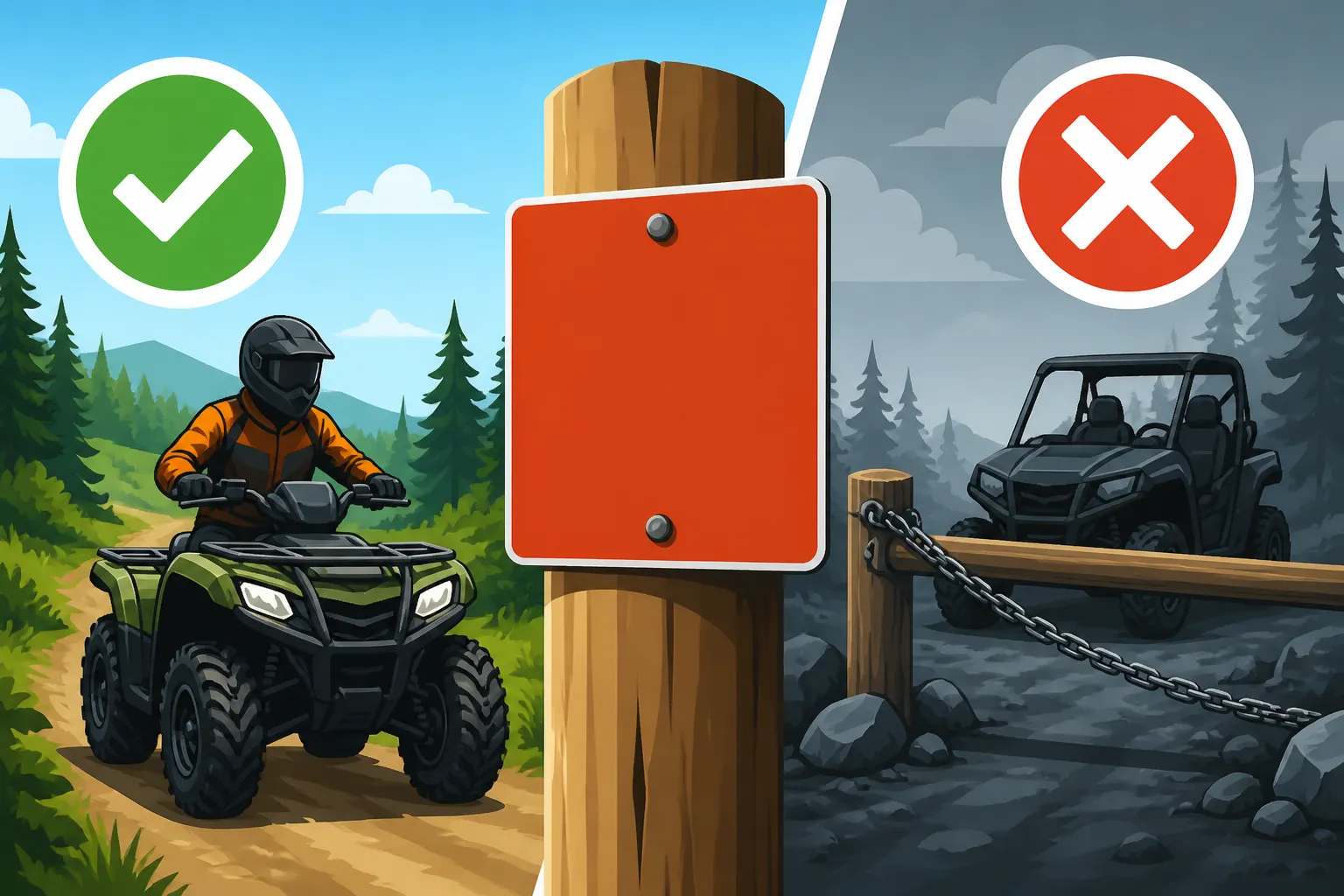
- Signs: These can range from professionally printed "No Trespassing" signs to hand-painted warnings on plywood. They might specify "No Motorized Vehicles," "Private Road," or simply "Posted." The wording can vary, but the message is clear.
- Paint Marks: In some areas, property lines are marked with specific coloured paint on trees, especially common in logging or resource areas. While this isn't always a "no trespassing" sign in itself, it signals a property boundary that riders should be aware of and respect.
- Gates and Chains: Physical barriers like locked gates, chains strung across a road, or even mounds of earth are very clear indicators that access is restricted. These aren't just there to keep vehicles out; they are definitive statements of no entry.
- Fencing: While less common on vast woods roads, fences, especially around cleared areas or cabins, are obvious boundaries that should not be crossed without explicit permission.
It's important to remember that even if a sign looks old or partially obscured, its legal effect still stands. A faded "Private Road" sign isn't an invitation to enter; it's a continuing warning. When you're kitting out your machine, perhaps with a new cargo box from SuperATV, it's worth considering how you might carry a small, portable shovel or even some brightly coloured flagging tape to help mark your path if you're navigating complex, permitted routes to avoid inadvertently straying onto posted land.
Why Landowners Post Their Property
Landowners have a multitude of reasons for posting their property, and it's rarely done out of spite. Understanding these motivations can help foster a greater sense of respect among riders.
- Privacy: Many landowners value their solitude and privacy, especially if their property includes a cabin or camp. They don't want strangers, or their machines, passing through their private space, disturbing the peace, or generating noise.
- Liability Concerns: This is a huge one. If someone gets hurt on their property, even if they were trespassing, the landowner can potentially be held liable. Posting "No Trespassing" helps to mitigate this risk by clearly stating that entry is unauthorized, thus shifting some of the legal burden.
- Protection of Resources: Private land often contains valuable timber, wildlife habitats, or sensitive ecosystems. Landowners may post their property to prevent poaching, illegal logging, dumping, or damage to trails and natural features by unauthorized vehicles. They might be actively managing their forest or have specific conservation goals.
- Safety: Active logging operations, quarry sites, or even areas with hidden hazards like old wells or dangerous terrain are often posted for the safety of the public. These areas are not suitable for recreational riding, and the signs are there for your protection.
- Preservation of Infrastructure: Woods roads and trails on private land are often maintained by the landowner for their own use. Unauthorized traffic, especially during wet seasons, can quickly degrade these routes, creating ruts and erosion that cost time and money to repair. A SuperATV winch might be your best friend when you're legally stuck in a bog, but it's not a solution for tearing up someone's private road!
Consider a scenario where a family owns a large wooded parcel of land with a remote cabin, used for generations. They love the peace and quiet, the hunting, and the simple cabin life. Over time, they start finding garbage dumped along their access road, ruts from quads during the spring thaw, and even signs of people using their cabin when they're not there. To protect their property, their privacy, and to avoid the financial burden of cleaning up after others or potential liability from someone getting hurt, they decide to post "Private Land – No Motorized Vehicles." This isn't about being anti-ATV; it's about protecting their personal haven and investment.
Navigating Posted Land as an ATV/UTV Rider
Encountering posted land can be a real buzzkill for an otherwise perfect day of riding. But how you react makes all the difference, not just for your own legal standing but for the broader reputation of ATV and UTV riders in Newfoundland. It's about being prepared and knowing what steps to take.
The Importance of Permission
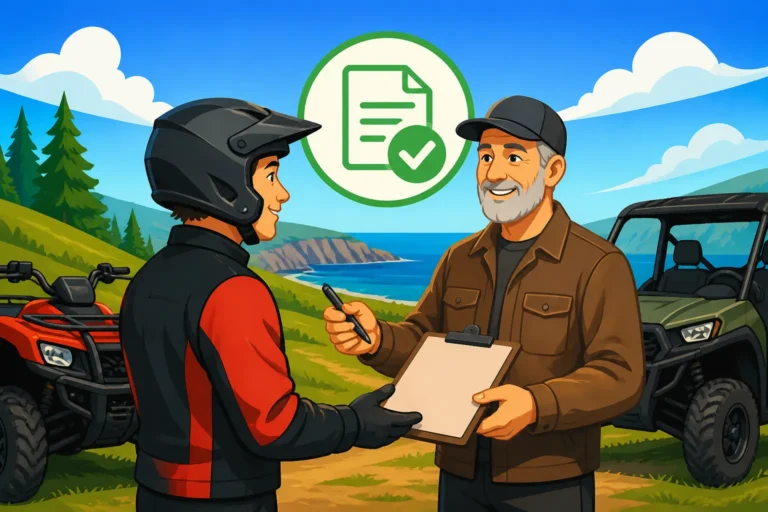
This cannot be stressed enough: when land is posted, permission is paramount. A "No Trespassing" sign means exactly that – do not enter. The only legal way to ride on posted private land is if you have explicit permission from the landowner. This isn't permission by assumption; it needs to be clear.
- How to Ask for Permission: If you genuinely believe a route goes through private land and you wish to use it, the best approach is to identify the landowner and respectfully ask for permission. This might involve checking property records at the local municipal office or Registry of Deeds, or sometimes asking local residents if they know who owns the land.
- Written vs. Verbal Permission: While verbal permission might seem sufficient, having something in writing (an email, a text message, or a signed note) can save a lot of headaches if you're ever questioned. It removes ambiguity and provides proof.
- Conditions of Permission: If permission is granted, respect any conditions the landowner sets. This might include specific times of year you can ride, certain trails you must stick to, or restrictions on group size. Adhering to these conditions shows good faith and helps maintain future access.
Imagine you're trying to reach a favorite fishing spot, and the most direct route takes you across a short stretch of what appears to be posted private land. Instead of just trying to "sneak by," take the time to find out who owns that land. Perhaps it's a local resident or a logging company. A polite knock on a door or a phone call, explaining your intent and promising to be respectful, could open up that access for you and others. A lot of negative perceptions about riders come from people feeling their property rights aren't respected. Being proactive about seeking permission goes a long way.
What to Do When You Encounter a Gate or Chain
Physical barriers are the clearest indicators that access is absolutely forbidden. When you see a locked gate, a chain across a road, or even large rocks placed to block vehicle access, these are not meant to be circumnavigated or forced open.
- Do Not Go Around: Attempting to ride around a gate or chain, even if it seems passable, is still trespassing and often causes damage to the surrounding land. This shows a complete disregard for the landowner's intentions.
- Do Not Force Entry: Never cut a chain, break a lock, or dismantle a gate. This is not only illegal trespassing but also vandalism, carrying much harsher penalties. Breaking a lock to continue your ride is a surefire way to escalate a simple mistake into a criminal offense.
- Turn Back and Find an Alternate Route: The only responsible action when encountering a closed gate or chain on posted land is to turn around and find another way. This might mean adding significant mileage to your trip or changing your plans entirely, but it's the right thing to do. It’s always good to have a reliable mapping system, or a GPS on hand – some riders even mount their devices with durable holders from brands like SuperATV – to help reroute when unexpected blockages appear. Always have a plan B, and sometimes a plan C, when exploring new areas or riding in remote locations. For example, knowing [Newfoundland Rules for Riding a Woods Road] might help you distinguish between a legal woods road and a private one.
It’s often a difficult lesson, especially when you’ve planned a long loop or are heading to a specific destination. But consider the alternative: pushing through could lead to fines, your machine being seized, or even an encounter with a landowner who is understandably frustrated. Having to turn back is frustrating, but it's far better than facing a hefty fine or legal action.
Consequences of Ignoring Posted Land Signs
The legal consequences of trespassing on posted land in Newfoundland can range from a warning to significant fines and even legal action. It's not something to take lightly.
- Fines for Trespassing: Under provincial acts, peace officers have the authority to issue fines for trespassing. These fines can vary depending on the severity and frequency of the offence, but they are not insignificant.
- Machine Seizure: In more serious cases, especially repeat offences or if damage is caused, your ATV or UTV could be seized. Getting your machine back can involve substantial fees, court appearances, and a lot of hassle. [Newfoundland Machine Seizure Rules] can be quite strict.
- Property Damage Charges: If your actions result in damage to the landowner's property (e.g., tearing up a private road, cutting a fence), you could face additional charges for property damage, which might involve civil lawsuits for repair costs.
- Loss of Access for Everyone: Every time a rider ignores "posted land" signs, it reinforces negative stereotypes about the riding community. This often leads landowners to become even stricter, putting up more signs, installing more robust barriers, and ultimately restricting access for everyone, even those who are respectful and law-abiding. This can make [Newfoundland Crown Land Approved Areas] even more critical for recreational use.
Picture this: you decide to ignore a "No Trespassing" sign on what looks like an old logging road. A few kilometres in, you encounter the landowner, who is not pleased. They call the RCMP. You might be issued a fine on the spot, potentially hundreds of dollars. If there's evidence of damage or if you're a repeat offender, your machine could be loaded onto a tow truck. Not only have you ruined your day, but you've incurred significant costs and potentially contributed to a harder stance against all riders in that area. It's a lose-lose situation.
Best Practices for Respectful Riding and Landowner Relations
Riding in Newfoundland is a privilege, and maintaining access to our beautiful wilderness requires a collective effort from the riding community. Being a responsible rider means more than just following the law; it means actively working to build and maintain positive relationships with landowners and the broader community.
Building Positive Relationships with Landowners
Good relationships are built on respect, communication, and understanding. As ATV and UTV riders, we have a role to play in fostering these connections.
- Respect Private Property: This is the golden rule. If you see a "No Trespassing" sign, turn around. Period. Your actions reflect on the entire riding community.
- Communicate Clearly: If you do seek permission, be clear about your intentions, how long you plan to be on the property, and what routes you intend to take. If you have a group, state the size.
- Offer to Help: Sometimes, landowners might be more amenable to granting access if you offer a little help in return. This could be as simple as picking up any litter you see on their property or even assisting with a small chore if appropriate.
- Leave No Trace: Always pack out everything you pack in. Don't litter, don't damage vegetation, and try to minimize your impact on the land. Leaving an area cleaner than you found it leaves a lasting positive impression.
- Be Mindful of Noise: ATVs and UTVs can be noisy. When passing by residences or cabins, slow down, keep your distance, and be mindful of exhaust noise, especially early in the morning or late in the evening. This also ties into [Newfoundland Muffler and Noise Rules].
| Action When Encountering Posted Land | Impact on Landowner Relations | Legal Implications |
|---|---|---|
| Ignore signs, ride through | Negative, builds resentment | Trespassing fines, potential machine seizure |
| Go around gate/chain | Very negative, shows disrespect | Trespassing fines, potential property damage charges |
| Cut lock/chain | Extremely negative, criminal | Trespassing, vandalism charges, significant fines |
| Turn back, find alternate route | Positive, shows respect | No legal issues, promotes good will |
| Seek permission politely | Positive, builds trust | Legal access, potential for future permission |
For those times you do get permission, consider outfitting your machine with robust storage from a brand like SuperATV to ensure all your gear, and any trash, stays securely contained and doesn't end up scattered along someone else's property.
Technology and Tools for Identifying Land Ownership
In today's digital age, there are more resources available than ever to help riders determine property lines and avoid accidental trespassing.
- Mapping Apps and GPS Devices: Many GPS devices and smartphone apps (both free and subscription-based) offer detailed maps that can show property boundaries, often overlaid with satellite imagery. These can be incredibly useful for planning routes and confirming your location in relation to private land.
- Provincial Land Information Systems: Government websites in Newfoundland and Labrador may offer publicly accessible land information maps or property databases. While not always real-time, these can provide valuable insights into ownership.
- Local Knowledge: Sometimes, the best "tool" is simply asking locals. Residents of rural communities often have intimate knowledge of who owns what land and where the unofficial boundaries lie.
- Pre-Ride Planning: Before heading out on an unfamiliar trail, take the time to study maps, both paper and digital. Look for signs of private property and plan your route to stick to public access points or known authorized trails like those found on the [The T'Railway's 883 Kilometres in Newfoundland].
Using these tools demonstrates proactive responsibility. It’s far better to spend a few minutes planning your route with a map or an app than to face the embarrassment and legal issues of accidentally trespassing. Being equipped with a reliable GPS is a must for serious riders, especially when exploring remote areas.
Advocating for Responsible ATV/UTV Use
Beyond individual actions, the riding community has a collective responsibility to advocate for legal, safe, and respectful riding practices.
- Join a Local Club: ATV and UTV clubs often work directly with landowners, local municipalities, and government agencies to secure and maintain trail access. They are the voice of the riders and play a crucial role in negotiating access. For example, some clubs might organize events to clear trails, which could involve obtaining permits and respecting private land boundaries. You can also learn about [Newfoundland ATV Clubs Worth Joining].
- Educate Other Riders: If you see someone riding irresponsibly or ignoring posted land, gently educate them about the rules and the potential consequences. A polite conversation can be more effective than confrontation.
- Support Trail Maintenance Efforts: Many trails are maintained by volunteers. Participating in trail clean-ups or donating to trail associations helps demonstrate commitment to responsible use.
- Adhere to All Regulations: This includes not just trespassing laws, but also speed limits, helmet laws, [Newfoundland Insurance Requirements for Riders], and [Newfoundland Equipment Requirements]. Every rule disregarded undermines the community's standing.
Ultimately, the future of ATV and UTV riding in Newfoundland depends on the collective actions of its enthusiasts. By understanding what "posted land" truly means, respecting private property rights, and actively promoting responsible riding, we can ensure that our incredible woods roads and trails remain accessible for generations to come. Having proper gear, like sturdy UTV doors or windshields from SuperATV, not only protects you but also reinforces a professional and responsible image when you're out on the trails.
Disclaimer
This article is for general informational purposes only and does not constitute professional advice. Laws, prices and regulations vary by location and change over time. Consult a qualified professional for guidance on your specific situation.