When an Enclosed Cab Replaces Eye Protection
Riding an ATV or UTV in Newfoundland is an exhilarating experience, but nobody wants their adventure cut short by a stray branch, flying gravel, or simply the harsh elements. A common concern for many riders, especially those investing in a machine with more creature comforts, is whether that snazzy enclosed cab actually counts as proper eye protection under the law, saving them from needing goggles or a face shield. This guide will dive deep into Newfoundland's regulations to clarify exactly when an enclosed cab provides the legal eye protection you need to stay safe and compliant on our trails and roads.
Understanding Newfoundland's Eye Protection Requirements
Before we get into the specifics of enclosed cabs, it’s really important to grasp the baseline of what Newfoundland’s Off-Road Vehicles Act says about eye protection. It’s not just a suggestion; it’s a non-negotiable part of safe riding, designed to protect you from the myriad hazards our diverse terrain can throw your way. Think about all the things you encounter out on the barrens or through a wooded trail: dust clouds kicked up by another machine, low-hanging branches eager to snag an exposed face, sudden downpours that can obscure vision in an instant, or even just the relentless glare of the sun off snow or water. Your eyes are incredibly vulnerable, and the law recognizes that.
Generally speaking, the Act mandates that operators and passengers of off-road vehicles must wear eye protection. This isn't just about helmets, though helmets are equally critical. Eye protection specifically refers to items like goggles or a face shield that is part of an approved helmet. The intention here is clear: to ensure your field of vision remains unobstructed and your eyes are shielded from potential injury. Many riders, especially those new to the scene, might mistakenly think a pair of sunglasses is enough, but official regulations usually call for more robust, impact-resistant protection that fully encloses the eye area. This means standard sunglasses, while good for glare, typically won't cut it for legal compliance or genuine safety. This baseline requirement applies to almost all riding scenarios unless a specific exemption is met. For more on general gear, check out [Newfoundland Equipment Requirements].
The type of off-road vehicle you’re operating also plays a role in how these rules are interpreted. While an ATV offers an open-air experience where helmets and goggles are universally expected, a side-by-side (UTV) often blurs the lines with its more automotive-like features. These machines often come with windshields, roofs, and sometimes even doors, leading riders to question if they truly need to don goggles in addition to a helmet. This is where the nuance of the enclosed cab comes into play. It’s a common point of confusion and frustration, as many believe their UTV’s factory-installed features should be sufficient. The province has put specific language in place to address these very situations, trying to balance practicality with paramount safety.
The Enclosed Cab Exception: What the Law Says
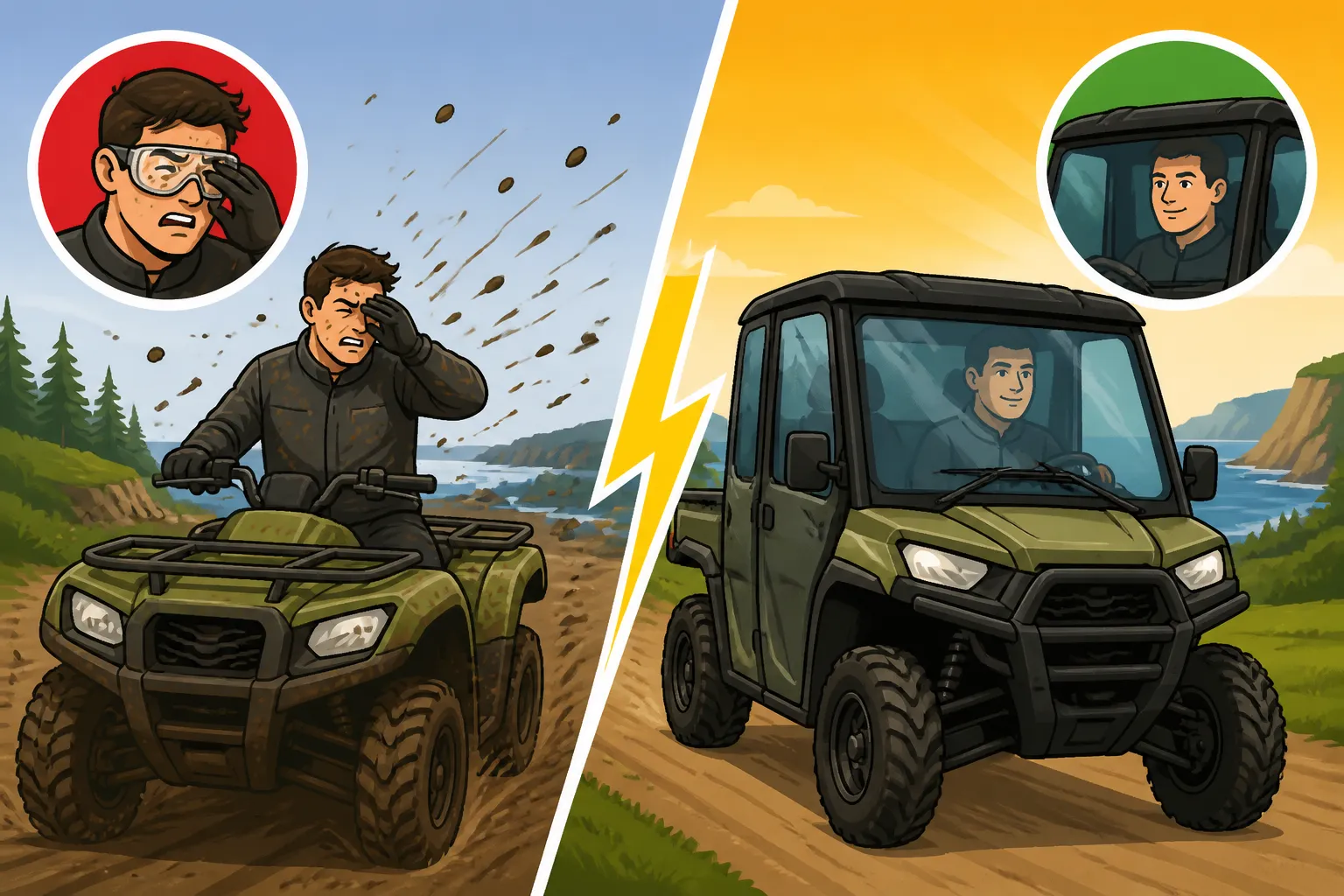
So, let's get right to it: when does an enclosed cab actually count as eye protection? The Newfoundland Off-Road Vehicles Act, specifically Regulation 30/22 (which replaced an older act), provides clarity on this. It explicitly states that a person operating or riding in an enclosed cab on an off-road vehicle is exempt from the eye protection requirement IF the cab's windshield and windows provide adequate protection from the elements and airborne debris. This is fantastic news for side-by-side owners, or anyone who has added a full cab enclosure to their machine. It acknowledges that a properly designed and maintained enclosure offers a comparable level of safety to traditional goggles.
However, there's a crucial "if" in that statement. "Adequate protection" isn't just a vague suggestion; it implies a certain standard. This means your cab can't just be a flimsy tarp or a broken windshield. For the exemption to apply, the cab must be genuinely enclosed, and its windshield and any windows must be intact, free from major cracks or obstructions, and capable of deflecting debris. Think about what your eyes would encounter without that enclosure – mud flying from tires, branches scraping past, wind-whipped rain or snow. If your cab isn't effectively blocking those hazards, then it doesn't meet the "adequate protection" criteria. Many riders opt for quality aftermarket cab systems, such as those offered by SuperATV, which are designed with robust materials and clear, durable windshields that easily meet these protective standards. These products often come with features like hard tops, full doors, and even rear panels that complete the enclosure, providing comprehensive protection.
This exception is particularly relevant for modern side-by-sides, which often come with these features straight from the dealer. For example, a new Honda Pioneer or a Polaris Ranger often includes a full windshield, and many owners then add hard doors or rear panels to create a truly enclosed space. In such a setup, wearing goggles inside the cab would be redundant and, frankly, quite uncomfortable. The law, in its practical wisdom, recognizes this. However, if you're riding with the windshield folded down, removed, or if your UTV only has a half-windshield, then the exemption for the enclosed cab likely doesn't apply, and you'd need to revert to wearing approved eye protection like goggles. It’s all about whether your eyes are truly shielded from the environment. Consider this rule carefully, especially when you're preparing for [Newfoundland Riding in Winter] or other inclement weather conditions where visibility can be compromised.
Maintaining Your Cab for Continued Protection
Just having an enclosed cab isn't a one-and-done solution; its effectiveness as eye protection hinges on its ongoing maintenance and condition. A cab that was once perfectly capable might degrade over time or suffer damage, compromising its ability to protect you. This means regularly inspecting your windshield and windows for cracks, chips, or excessive scratching that could impair visibility or weaken their structural integrity. A spiderweb crack might not seem like much, but a sudden impact on the trail could turn it into a full-blown shatter, leaving your eyes exposed.
Beyond physical damage, cleanliness is also paramount. A dirty, mud-splattered windshield, while technically "there," doesn't provide adequate protection because it obstructs your vision, which is a major safety hazard in itself. Regular cleaning, using appropriate products that won't scratch polycarbonate or glass, is essential. Fogging is another common issue, especially with rapid temperature changes. If your cab regularly fogs up, investing in anti-fog treatments or a cab heater with a defrost function can be crucial for maintaining clear vision. Some high-quality aftermarket enclosures, including those you might find from SuperATV, often feature vents or wiper systems specifically designed to combat these issues, ensuring your field of view remains clear no matter the weather. Remember, the goal of eye protection, whether goggles or a cab, is to keep your vision unimpeded and your eyes safe.
Furthermore, consider the integrity of your cab seals and doors. A "partially" enclosed cab with gaps where wind, rain, or debris can easily penetrate might not qualify for the exemption. If your doors don't latch securely, or if your window seals are cracked and letting in significant amounts of water, then your eyes aren't truly protected. This is particularly important for those who frequently ride in harsh conditions or during [Newfoundland Riding After Heavy Rain]. It's not just about the law; it's about your personal safety and comfort on long rides across the barrens or through dense woods. Taking the time to patch up seals, replace broken latches, or repair cracked panels ensures that your investment in an enclosed cab continues to serve its primary function as effective eye protection, allowing you to ride with confidence and comfort.
Other Essential Safety Gear for Newfoundland Riders
While an enclosed cab can take care of your eye protection, it’s just one piece of the safety puzzle. Newfoundland's regulations, and good common sense, demand a broader approach to rider safety. First and foremost, a properly fitted helmet is absolutely non-negotiable for nearly all off-road vehicle operators and passengers. Even if your enclosed cab covers eye protection, the helmet is still crucial for protecting your head from impacts. The law is very specific about this, requiring helmets to meet certain safety standards, such as those approved by the Canadian Standards Association (CSA), US DOT, or ECE. Make sure your helmet has the correct markings. You can learn more about [Newfoundland Helmet Law for Every Rider].
Beyond the helmet, think about what else protects you from the elements and potential injury. Sturdy riding boots that cover the ankles can prevent sprains and protect against impacts, while gloves offer grip, warmth, and protection from scrapes. Long sleeves and pants, even in warmer weather, are essential to shield your skin from sun, branches, and abrasions in case of a tumble. While an enclosed cab offers a fantastic barrier against wind and rain, proper riding attire adds an extra layer of defense against unexpected spills or challenging terrain. Consider what you’d want between you and the ground if you had to bail out.
Finally, remember that your machine itself needs to be up to snuff. Functional headlights and taillights are crucial, especially if you find yourself out past sunset, or if fog rolls in suddenly, a common occurrence on our coast. Adequate brakes, a properly working muffler (no illegal cut-outs!), and tires suited for the terrain are all part of keeping you and others safe. Even if your SuperATV-equipped side-by-side is a fortress, neglecting the mechanical aspects can lead to trouble. Regular pre-ride checks – tires, fluids, lights, controls – are quick habits that can prevent big problems. For a deeper dive into what officers look for, you might want to read [Newfoundland Equipment Checks by Officers]. Riding safely in Newfoundland is a holistic endeavor, combining smart choices in gear, responsible riding habits, and a well-maintained machine.
| Eye Protection Type | Typical Use Case | Legal Compliance (Newfoundland) | Pros | Cons |
|---|---|---|---|---|
| Goggles | Open-air ATVs, UTVs without full enclosure | Required | Excellent impact protection, snug fit, good field of vision | Can fog, may be uncomfortable with some helmets, don't protect face from wind/rain |
| Face Shield | Full-face helmets on ATVs, UTVs without full enclosure | Required (as part of approved helmet) | Integrated with helmet, offers wider facial protection | Can scratch easily, may fog, airflow can be limited |
| Enclosed Cab Windshield/Windows | UTVs with full cab enclosure (hard top, doors, rear panel) | Replaces separate eye protection if adequate protection provided | Superior weather protection, comfort, reduces wind/noise | Requires diligent maintenance (cleanliness, integrity), limits open-air feel |
| Sunglasses | Any ORV | Not generally compliant as primary eye protection | Reduces glare, lightweight | No impact protection, often fall off, don't seal against dust/debris |
Disclaimer
This article is for general informational purposes only and does not constitute professional advice. Laws, prices and regulations vary by location and change over time. Consult a qualified professional for guidance on your specific situation.