Producing Proof of Insurance After a Roadside Stop
Picture this: you're out on a beautiful trail, enjoying the rugged Newfoundland landscape on your ATV or side-by-side, when suddenly you see flashing lights behind you. A roadside stop can be nerve-wracking for anyone, and if you're like many riders, you might suddenly wonder: "Do I have everything I need? What exactly do I need to show an officer if I get pulled over?" This guide is here to walk you through exactly what's expected when it comes to producing proof of insurance after a roadside stop in Newfoundland, helping you stay calm and compliant.
The Immediate Aftermath of a Roadside Stop: Staying Composed
It's natural for your heart to pound a little when you see those lights. The first thing to remember is to stay calm, pull over safely, and cooperate respectfully with the officer. They're primarily concerned with ensuring you and your machine are operating legally and safely. One of the key pieces of information they'll be looking for is proof that your off-road vehicle (ORV) is properly insured.
The Officer's Request: What They Look For
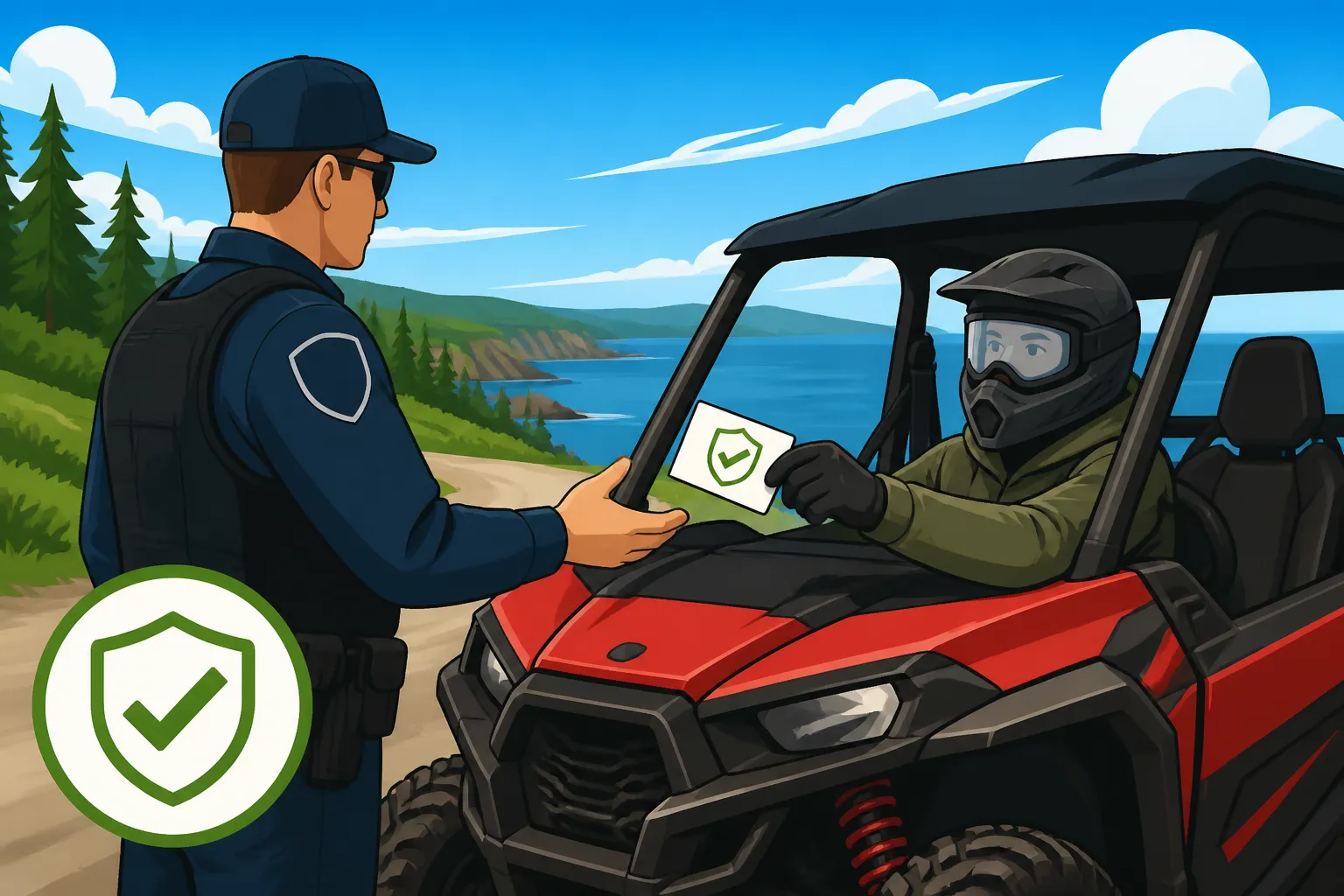
When an officer approaches your machine, they'll typically ask for a few things: your driver's license (if you're operating on a highway or certain public roads where one is required), your ORV registration permit, and proof of insurance. They're looking for valid, up-to-date documentation that confirms your machine meets the minimum legal requirements to be on the trails or roads. It's not just about liability; it's about making sure that if something unfortunate happens, there's a safety net in place, both for you and for others. Being ready with these documents makes the stop much quicker and less stressful.
Your Responsibilities: What to Provide and How
Your main responsibility is to provide the requested documents clearly and without delay. This means having them accessible, whether it's in a waterproof pouch on your machine, a dedicated compartment, or even a secure pocket on your riding gear. Fumbling around or claiming you "forgot" them can complicate the situation. The officer needs to see that you've fulfilled your legal obligation. It's always a good practice to keep your documents separated from your wallet, just in case, or stored in a way that protects them from the elements when you're out on the trails. Things like a secure storage box, maybe even a durable one from a brand like SuperATV, can really come in handy for keeping your vital papers safe and dry.
Understanding Newfoundland's Insurance Requirements for ATVs & UTVs
Unlike some provinces, Newfoundland has a clear-cut mandate for ORV insurance, especially when it comes to operating on Crown lands, shared trails like the T'Railway, or crossing public highways. It's not just a suggestion; it's a legal requirement designed to protect everyone.
The Mandatory Minimum: Liability Coverage
Under the Off-Road Vehicles Act in Newfoundland, you must carry a minimum of $200,000 in third-party liability insurance for your ATV or UTV if you're operating it off your own property. This specific amount is non-negotiable and applies to virtually all riders on public lands or when interacting with public roads. This liability coverage is crucial because it protects you financially if your machine causes damage to someone else's property or injures another person. Without it, you could be personally responsible for significant costs, which no one wants to face. It's important to understand this isn't about damage to your own machine; it's about the harm you might cause to others. This requirement applies whether you're riding a brand-new side-by-side or a well-loved quad. For a deeper dive into this, you might find [Newfoundland's Minimum Insurance Requirement] particularly helpful.
Where to Get Your Insurance
Most major insurance providers operating in Newfoundland and Labrador offer off-road vehicle insurance. It's typically a separate policy from your car insurance, though sometimes you can bundle it for a discount. Don't assume your home or auto policy covers your ATV – it rarely does adequately for off-road use. When you're shopping for insurance, be transparent with your broker about where and how you intend to use your machine. Will you be primarily sticking to private land, or will you be exploring vast trail networks like the T'Railway? Different uses might subtly influence your policy, even if the minimum liability remains the same. It’s always best to compare quotes from a few different companies to ensure you're getting comprehensive coverage that fits your needs and budget, keeping that $200,000 minimum in mind.
Acceptable Proof of Insurance: Physical vs. Digital
So, you're stopped, and the officer asks for proof of insurance. What exactly are they looking for? And what if you don't have the traditional paper card?
The Physical Insurance Card: Your Go-To Proof
The gold standard for proving your insurance is the physical insurance card provided by your insurer. This little card typically includes your policy number, the effective dates of your coverage, and details about your specific machine (make, model, VIN). It's tangible proof that an officer can quickly examine and verify. Most riders keep this card laminated or tucked away in a waterproof holder to protect it from the elements. Losing this card can be a hassle, so treat it like you would your driver's license. If you've just bought a machine or renewed your policy, make sure you've received and have the current card before heading out. Keep in mind that a good sturdy case from a company like SuperATV can keep this vital piece of paper safe from the elements and accidental damage when you're out on the trails.
Digital Alternatives: Are They Accepted?
In our increasingly digital world, many people wonder if showing proof on a smartphone is acceptable. While some jurisdictions across Canada have embraced digital proof of insurance, it's always best practice in Newfoundland to have a physical copy. The provincial regulations for off-road vehicles are quite specific about producing documents. Relying solely on your phone can lead to issues if your battery dies, you lose signal in a remote area, or if the officer prefers a physical document. While an officer might accept a digital image in certain circumstances, it's not guaranteed, and they are within their rights to require a physical document. Avoid the uncertainty and always carry that physical card. When in doubt, err on the side of caution.
When You Don't Have Proof Immediately
It happens. Maybe you just switched insurance companies, forgot to put the new card in your machine, or simply overlooked it in the rush to hit the trails. If you're stopped and can't produce immediate proof of insurance, it's crucial to be honest and cooperative. Do not try to make excuses or be evasive. Explain the situation clearly. The officer will still likely issue a ticket, but they often have a process for you to provide proof later, which can sometimes lead to the ticket being dropped or reduced. This leads us directly to the "Two Business Days" rule, which is a very important concept for Newfoundland riders.
| Document Type | Accepted in Newfoundland? | Best Practice | Notes |
|---|---|---|---|
| Physical Insurance Card | Yes, always | Carry at all times | Primary and most accepted form of proof. |
| Digital Image (Phone) | Potentially, but not guaranteed | Have physical backup | Officer discretion; phone issues can prevent verification. |
| Insurance Binder (temp) | Yes, if valid | Carry until card arrives | Temporary proof from insurer after purchase/renewal. |
| Policy Document (full) | Yes, if available | Keep secure, maybe not on person | Too bulky for trail, but has all details if card is missing. |
Consequences of Failing to Produce Proof of Insurance
Failing to produce proof of insurance when requested by a peace officer is a serious matter in Newfoundland and Labrador. It's not just a minor inconvenience; it carries specific penalties outlined in the Off-Road Vehicles Act.
Initial Penalties: Fines and Tickets
If you're stopped and cannot provide valid proof of insurance, you will almost certainly receive a ticket. The fines for operating an uninsured ORV can be substantial, and they are designed to be a deterrent. These fines are not just for not having insurance, but also for simply failing to produce proof of it when asked. Remember, the officer is trying to determine if you meet the legal requirements. If you can't show them, they have to assume you don't. While specific dollar amounts can change, it’s safe to say these fines are significant enough to make you wish you'd double-checked your documents. For example, if you're curious about ticket costs, you might want to look up [Newfoundland Ticket Costs for Riders].
The "Two Business Days" Rule Explained
Here's where the "Two Business Days" rule comes into play, a little-known but very important provision for riders. If an officer stops you and you cannot produce proof of insurance at that moment, they may issue you a ticket. However, the law often allows you two business days to present valid proof of insurance at a specified Royal Newfoundland Constabulary (RNC) or RCMP detachment. If you can present valid proof within this timeframe (meaning you were insured at the time of the stop, but just didn't have the card), the charge for failing to produce proof might be dropped or reduced. This doesn't apply if you simply weren't insured at all. This provision is a lifeline for honest mistakes, but it's not an excuse to ride uninsured. Make sure you understand [Producing Proof of Insurance After a Roadside Stop] and its implications.
Long-Term Repercussions: Suspensions and Seizures
Beyond the immediate fines, riding without insurance (or being unable to prove you have it repeatedly) can lead to much more severe consequences. Consistent non-compliance could result in the suspension of your ORV registration, meaning your machine is no longer legally allowed on any public lands. In extreme cases, and often coupled with other serious offenses like impaired riding, your off-road vehicle could even be seized by authorities. Getting a seized machine back often involves significant fees, time, and stress, including potential impound fees and administrative costs. This is why having that liability coverage is not just about avoiding a ticket, but about protecting your right to enjoy the trails you love. You might find more details on severe penalties in [Newfoundland Machine Seizure Rules] or [Newfoundland Impaired Riding Penalties]. Ensuring your machine is always properly insured is a fundamental part of responsible riding in Newfoundland.
Disclaimer
This article is for general informational purposes only and does not constitute professional advice. Laws, prices and regulations vary by location and change over time. Consult a qualified professional for guidance on your specific situation.