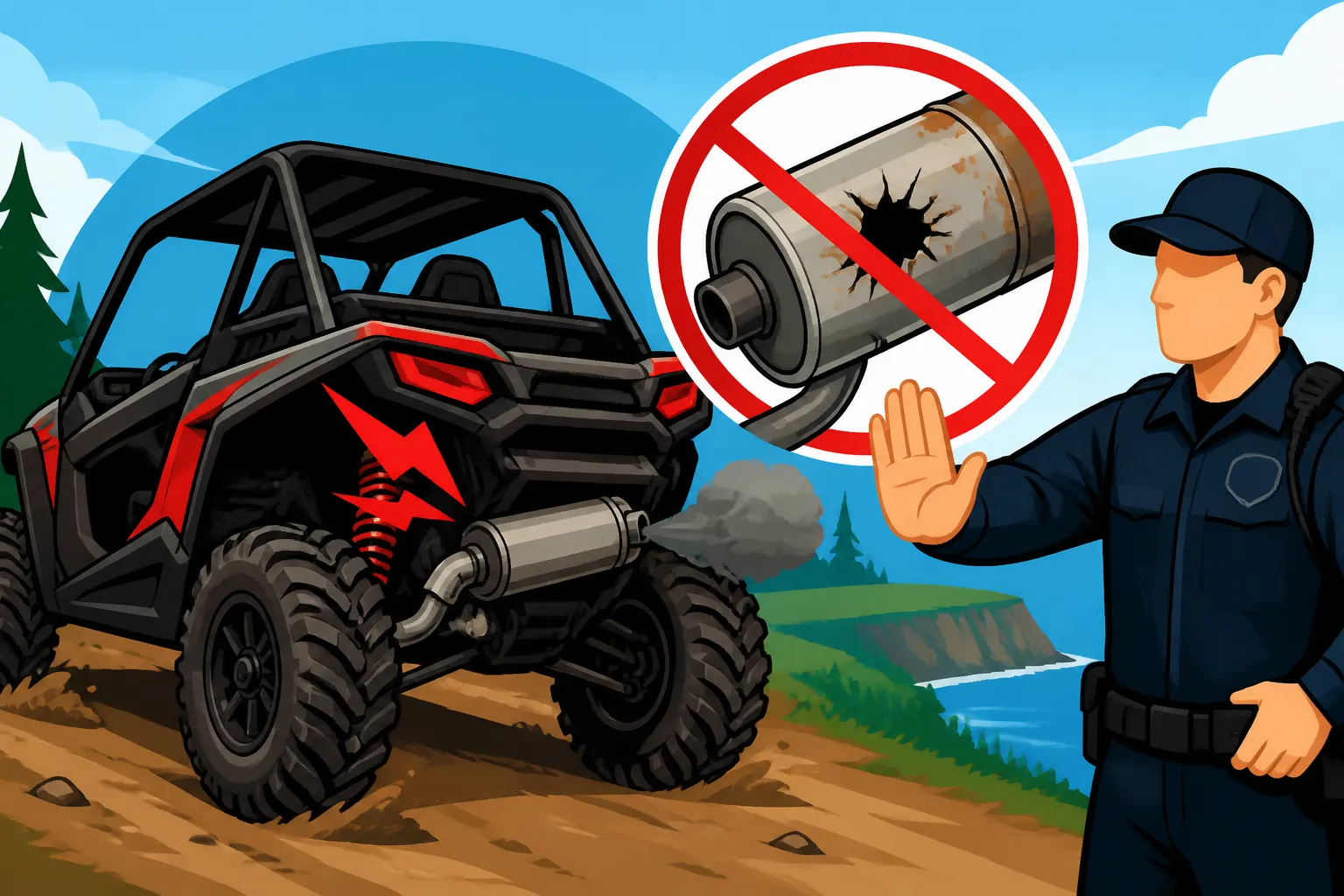
Newfoundland Fines for a Defective Muffler
There’s nothing quite like the freedom of tearing up a trail on your ATV or UTV, but sometimes that freedom can feel a bit constrained by rules, especially when it comes to something as seemingly simple as your exhaust system. Many riders find themselves scratching their heads, wondering exactly what constitutes a "defective" muffler in Newfoundland, and more importantly, what kind of fine you could be facing if an officer flags your machine. This guide is here to cut through the noise, explaining the regulations, potential penalties, and practical steps you can take to ensure your off-road vehicle stays compliant and your wallet stays full.
Understanding Newfoundland's Muffler Regulations for ATVs and UTVs
It's a common misconception that off-road vehicles operate in a regulatory wild west, but that's far from the truth, especially in Newfoundland. The provincial government, through the [Newfoundland's Off-Road Vehicles Act], has clear expectations for how these machines should operate, and noise is a significant part of that. These rules aren't just for show; they're designed to protect the environment, reduce disturbance to wildlife, and ensure a peaceful co-existence with other trail users and residents who live near riding areas.
Think about it: an excessively loud machine can disrupt a quiet community, scare wildlife, and even annoy other riders trying to enjoy the natural sounds of the barrens or woods. The rules aim to strike a balance, allowing you to enjoy your machine while minimizing negative impacts on others and the sensitive ecosystems we're so fortunate to have here. The focus isn't necessarily on making ATVs whisper quiet, but on preventing modifications or neglect that lead to excessive and unnecessary noise.
The Spirit Behind the Exhaust Rules
When you're out on the trails, you're often sharing the space with hikers, mountain bikers, and even people trying to enjoy the tranquility of their cabins. An ATV or UTV with a roaring exhaust can really spoil the experience for everyone else. The provincial regulations concerning mufflers are fundamentally about managing noise pollution. It’s about ensuring that the noise generated by off-road vehicles remains within reasonable limits, preventing it from becoming a nuisance or an environmental disturbance.
These rules reflect a broader commitment to responsible off-road vehicle use. It acknowledges that while riding is a popular recreational activity, it needs to be conducted in a way that respects the rights and enjoyment of all citizens and protects our natural heritage. So, when you see a regulation about mufflers, try to think of it not as a hindrance, but as part of being a good steward of our shared outdoor spaces. It’s about ensuring that the freedom you enjoy on your machine doesn't infringe on the peace and quiet of others.
Why Your Muffler Matters Beyond Just Noise
While noise is the most obvious concern, your muffler plays a crucial role in other aspects of your machine's operation and environmental impact. A properly functioning muffler is also part of your machine's emission control system. It helps to direct exhaust gases away safely and, in many cases, works with catalytic converters or other components to reduce harmful pollutants. When a muffler is "defective," it can mean more than just being loud; it could also mean your machine is emitting more pollutants than it should, or even posing a fire risk if hot gases are expelled improperly.
Beyond the environmental considerations, a sound muffler ensures optimal engine performance. A damaged or modified exhaust can throw off your engine's back pressure, potentially leading to reduced power, increased fuel consumption, or even long-term damage to the engine itself. So, while you might be tempted to tinker with your exhaust for a "performance" sound, remember that these systems are engineered for a reason, and maintaining them means you're not just complying with the law, but also looking after your machine and the air we all breathe.
What Constitutes a "Defective" or Illegal Muffler in Newfoundland?
The term "defective muffler" might sound a bit vague, but in the eyes of the law, it's pretty clear. Essentially, it boils down to any exhaust system component that isn't working as originally designed by the manufacturer to suppress noise effectively. This can cover a range of issues, from simple wear and tear to intentional modifications that amplify sound.
It’s important to remember that off-road vehicles are designed with a specific exhaust system to meet noise and emission standards right from the factory. Any deviation from that original design that results in a louder, more obnoxious sound is generally what enforcement officers are looking for. They're not just listening for a loud machine; they're looking for machines that have been altered to be loud, or machines that have fallen into disrepair.
Common Issues That Lead to Muffler Fines
Let's break down some common scenarios where your muffler might land you in hot water.
- Missing or Damaged Baffles/Internal Components: Many mufflers contain a series of baffles, chambers, or packing material designed to absorb and deflect sound waves. If these components corrode, break loose, or are intentionally removed (often referred to as "gutting" a muffler), the exhaust gases have a more direct path out, resulting in a much louder sound. This is a classic "defective" muffler scenario.
- Straight Pipes: This is probably the most obvious and easily identifiable violation. A straight pipe means removing the muffler entirely and replacing it with a direct pipe from the engine, or bypassing the muffler entirely. This results in an extremely loud and often obnoxious exhaust note, far exceeding any reasonable noise limit. It's almost guaranteed to get you a ticket.
- Holes or Leaks: Over time, mufflers can rust, crack, or develop holes, especially in our damp, salty Newfoundland environment. These unintended openings allow exhaust gases to escape prematurely, creating a much louder and often raspier sound than the original design intended. While not an intentional modification, it's still considered a "defective" muffler because it's no longer performing its noise-suppressing function.
- Aftermarket Exhaust Systems That Aren't Compliant: This is a tricky one. Many riders upgrade their exhaust systems for performance or aesthetic reasons. While reputable brands like SuperATV offer a wide range of aftermarket exhaust components, it's crucial to ensure that any replacement muffler or system is explicitly designed for off-road use and meets or exceeds the provincial noise standards. Just because it's an "aftermarket" part doesn't automatically make it legal if it significantly increases noise output. Always check the specifications and look for markings indicating compliance with local regulations.
- Modified Tip or End Cap: Sometimes, riders modify just the very end of their muffler, either by installing a larger, less restrictive tip, or by removing a spark arrestor or similar component that also helps with noise suppression. While this might seem minor, if it results in a noticeable increase in sound, it can still lead to a fine.
What the Act Says About Exhaust Systems
The [Newfoundland Exhaust and Muffler Rules] are quite clear. The regulations state that an off-road vehicle must be equipped with an exhaust system that "is in good working order and in constant operation." It specifically prohibits modifications that would increase noise or allow for the emission of excessive smoke or fumes. This means any alteration from the manufacturer's original design, or any state of disrepair, that leads to an increase in noise output can be deemed a violation.
The key phrase "in good working order and in constant operation" implies that every part of the original exhaust system, designed to control sound and emissions, must be present and functioning correctly. This directly targets modifications like straight piping or removing baffles, but also encompasses maintenance issues like rust holes or loose components that rattle and add to the overall noise. It's not just about what you add to your machine, but also what you take away or neglect.
Penalties and Consequences for Muffler Violations
Getting caught with a defective or illegal muffler in Newfoundland isn't just a slap on the wrist. The fines can be significant, and there can be other inconvenient consequences that can really put a damper on your riding season. It's not a risk worth taking, especially when staying compliant is usually a straightforward matter of proper maintenance or careful selection of aftermarket parts.
Peace officers are out on the trails, and they are authorized to enforce the [Newfoundland's Off-Road Vehicles Act]. They are well aware of the common modifications and issues that lead to excessive noise. They will often conduct [Newfoundland Equipment Checks by Officers] as part of their routine patrols, and an overly loud muffler is something that will immediately draw their attention.
How Much Can a Defective Muffler Cost You?
The actual fine amounts can vary, but generally, offences under the Off-Road Vehicles Act, including those related to equipment like mufflers, carry a range of penalties. For a first offence, you could be looking at a fine that certainly stings, easily in the hundreds of dollars. For instance, Newfoundland Fines for a Defective Muffler can be a significant chunk of change, money that would be much better spent on fuel, gear, or even an upgrade that actually improves your machine legally.
The fines are often set to be a deterrent, making it more expensive to break the rules than to simply comply. And let's be honest, nobody wants to be pulled over and handed a ticket when they're trying to enjoy a beautiful day out on the quad. Beyond the initial fine, you might also face court costs if you choose to dispute the ticket and lose, adding to the overall financial burden. It’s a costly lesson many riders learn the hard way.
| Muffler Issue | Description | Potential Consequence |
|---|---|---|
| Missing/Damaged Baffles | Internal components removed or corroded, increasing noise | Significant fine |
| Straight Pipe | Muffler completely removed or bypassed | Significant fine, immediate order to repair |
| Rust Holes/Leaks | Exhaust gases escaping before the muffler's end | Fine, order to repair |
| Non-Compliant Aftermarket | Aftermarket system not meeting noise standards | Fine, need to replace with compliant system |
| Modified Tip/End Cap | Alterations to the exhaust outlet amplifying sound | Fine |
Beyond the Initial Fine: Other Consequences
A fine isn't always the end of the story. Depending on the severity of the violation, and perhaps if it's not your first offence, there can be other consequences:
- Order to Repair: An officer might issue an order requiring you to repair or replace the defective muffler within a certain timeframe. Failure to comply with this order could lead to additional fines or even further action, like having your machine impounded.
- Machine Seizure: In more egregious cases, or for repeat offenders, officers have the authority under the [Newfoundland Machine Seizure Rules] to seize your off-road vehicle. Getting your machine back from impound is a costly and time-consuming process involving storage fees and potentially additional fines. This is a scenario every rider wants to avoid.
- Negative Impact on Trail Access: While not a direct penalty to an individual, widespread non-compliance with noise regulations can lead to broader restrictions on off-road vehicle use. When communities complain about noise, it often results in tighter bylaws, reduced access to trails, or even closures in certain areas. This impacts every rider, even those who are compliant. Responsible riding, including maintaining proper mufflers, helps protect access for all.
The overall message is clear: these rules are taken seriously. It's not worth the risk of facing a hefty fine, the hassle of repairs under duress, or potentially losing access to your machine, all for the sake of a louder exhaust.
Avoiding Muffler Fines: Maintenance and Compliance Tips
The good news is that avoiding muffler fines in Newfoundland is relatively easy. It primarily comes down to regular maintenance, common sense, and making informed choices if you decide to modify your machine. Being proactive will save you money, hassle, and help maintain good relations with other trail users and communities.
It's all about being a responsible rider, which includes ensuring your machine is mechanically sound and compliant with all provincial regulations. This not only keeps you out of trouble but also contributes to the longevity and performance of your ATV or UTV.
Regular Checks and Maintenance
Just like you check your oil and tire pressure, your exhaust system should be part of your routine maintenance.
- Visual Inspections: Before and after every few rides, take a quick look at your muffler and exhaust pipes. Are there any visible cracks, rust spots, or holes? Is anything rattling or loose? Is the muffler securely attached? Look for any signs of damage that could compromise its function.
- Listen for Changes: Pay attention to the sound of your machine. Does it sound louder than usual? Is there a new, raspy tone? Any noticeable change in exhaust note can indicate a developing issue. If your machine suddenly sounds like a race car when it used to purr, it’s time to investigate.
- Check for Corrosion: Newfoundland's climate can be tough on metal. Rust is a common enemy. Pay particular attention to welds, seams, and mounting points where corrosion can start. Addressing small rust spots early can prevent them from turning into large holes.
- Tighten Loose Components: Vibrations from riding can loosen bolts and clamps. Ensure all parts of your exhaust system are securely fastened. A loose connection can cause rattles and leaks, leading to increased noise.
- Cleanliness: While not directly affecting noise, keeping your exhaust system relatively clean allows you to spot issues more easily. Mud and grime can hide small cracks or rust spots that could worsen over time.
Think of it as taking care of your investment. A well-maintained machine is a safer, more enjoyable, and legally compliant machine.
Smart Choices for Aftermarket Parts
If you're considering an aftermarket exhaust system, do your homework. Don't just pick the loudest option or the cheapest one.
- Look for Compliance Markings: Reputable manufacturers often indicate if their products meet specific noise or emission standards. While there isn't always a universal "Newfoundland compliant" stamp, look for products that advertise meeting SAE (Society of Automotive Engineers) J1287 or similar standards for off-road vehicle noise.
- Consult with Dealers: Your local ATV or UTV dealer can be a great resource. They often know which aftermarket products are generally accepted or which ones might cause issues with local regulations. They can also advise on proper installation.
- Prioritize Performance and Compliance: Brands like SuperATV offer a variety of accessories and performance parts, including exhaust options. When considering such upgrades, ensure that any performance gains don't come at the cost of legal compliance. It’s possible to improve performance without drastically increasing noise beyond legal limits.
- Avoid "Race Only" Systems: If an exhaust system is advertised as "for competition use only" or "not for street/trail use," take that warning seriously. These systems are almost certainly too loud for general trail riding and will likely get you a fine.
- Consider a Spark Arrestor: While [Newfoundland Has No Spark Arrestor Rule], many aftermarket mufflers come with integrated spark arrestors, which are a good safety feature, especially when riding in dry conditions or through wooded areas. Some jurisdictions require them, and while not mandated here, it's a responsible addition that may also contribute to sound suppression.
By making responsible choices and performing regular checks, you can enjoy your off-road adventures without the worry of fines or disturbing others. Remember, being a good rider means being a responsible one, and that includes your muffler.
Disclaimer
This article is for general informational purposes only and does not constitute professional advice. Laws, prices and regulations vary by location and change over time. Consult a qualified professional for guidance on your specific situation.