Newfoundland Rules for a Visiting Quebec Rider
Okay, so you're itching to bring your quad or side-by-side from Quebec over to the rock for some serious riding. That's fantastic! Newfoundland and Labrador offers some truly epic trails and scenery that's completely different from what you're used to back home. But let's be real, crossing provincial lines with your off-road vehicle (ORV) can feel like navigating a legal minefield. You're probably wondering what paperwork you need, if your Quebec registration is good here, and what rules you absolutely can't break. This guide is here to cut through that confusion, giving you a clear roadmap of what a visiting Quebec rider needs to know to enjoy Newfoundland's vast landscapes without running afoul of the law.
Understanding Newfoundland's Baseline Rules for Visiting ORVs
Bringing your machine from Quebec to Newfoundland is generally pretty straightforward for short visits, but there are some critical differences you need to be aware of right off the bat. It's not just about having a valid registration from home; it's also about understanding how long that registration is recognized here and what other provincial requirements might apply to you. The key thing to remember is that while Newfoundland welcomes visitors, it also has its own comprehensive set of rules laid out in [Newfoundland's Off-Road Vehicles Act] that everyone, local or visitor, must generally adhere to.
This isn't about making things complicated; it's about ensuring safety and responsible riding for everyone sharing our trails and roads. Many riders assume that if their machine is legal where they live, it's legal everywhere. And while there's a kernel of truth to that for a brief period, Newfoundland's specific regulations around registration, insurance, and even equipment can catch visitors off guard if they haven't done their homework. So, before you even think about loading up the trailer, let's dive into the specifics that apply to you as a Quebec resident.
The Initial 30-Day Exemption for Out-of-Province Machines
Here’s the good news for short visits: Newfoundland offers a grace period. If your off-road vehicle is properly registered and insured in Quebec, you can generally ride in Newfoundland for up to 30 consecutive days without having to register your machine here. This is a huge relief for many folks planning a two-week vacation or a long weekend adventure. You don't have to go through the hassle of local registration just for a quick trip. Think of it as Newfoundland saying, "Welcome, enjoy our trails, just make sure you're legal back home!" This exemption is designed to make it easy for tourists to experience what our province has to offer.
However, this doesn't mean you can just hop on and ride without a care in the world. You must still carry proof of your Quebec registration, proof of valid insurance from Quebec, and your personal identification, including your driver's licence. These documents are essential and an officer can ask you to produce them at any time. It's like travelling anywhere else; your home province's paperwork covers you for a limited time. Don't forget that if you've done any modifications, perhaps adding a lift kit or specialized tires from a brand like SuperATV, ensure they still comply with Quebec's regulations as well as Newfoundland's general safety standards. While Newfoundland doesn't have a separate "visitor permit" or decal for this period, simply having your valid Quebec documents is your ticket to ride for those first 30 days. You can find more specific details about this allowance under [Newfoundland's 30-Day Visitor Exemption].
What Happens After 30 Days? Navigating Longer Stays
Alright, so you've fallen in love with the barrens, the bogs, and the incredible scenery, and your 30-day exemption is about to run out – or maybe you're planning an extended stay from the get-go. This is where things change significantly. If you intend to use your ORV in Newfoundland for more than 30 consecutive days, your Quebec registration is no longer sufficient. At this point, you are required to register your off-road vehicle in Newfoundland. This is a crucial step that many visitors overlook, and it can lead to fines and even machine seizure if ignored.
The process for registering a machine that's already registered in another province involves some specific steps. You'll need proof of ownership (your Quebec registration and potentially a bill of sale), proof of identity, and you'll pay the applicable Newfoundland registration fee. For an ATV, for example, [Newfoundland Charges $95 for an ATV], a one-time fee that covers your machine for as long as you own it here. It's a bit of paperwork, yes, but it ensures you're fully compliant with local regulations for your longer adventure. Think of it as becoming a temporary local rider. This is also important for new residents; if you move here from Quebec, you have [Newfoundland's 90-Day New Resident Rule] to get your machine registered locally. If you're planning to stay, it's best to address this sooner rather than later to avoid any surprises down the trail.
Essential Requirements for Riding on Newfoundland Roads and Trails
Beyond registration, there are fundamental rules around safety gear and insurance that apply to every rider in Newfoundland, regardless of where your machine is registered. While Quebec has its own comprehensive ORV laws, there can be subtle differences in requirements for helmets, eye protection, and insurance coverage. Assuming your Quebec standards are identical to Newfoundland's could lead to unnecessary trouble. It's crucial to understand these requirements before you venture out, especially when considering the type of terrain you might encounter, which might differ vastly from Quebec. Whether you're riding a stock machine or one kitted out with heavy-duty protection and suspension from SuperATV, safety is paramount.
Newfoundland's rules are designed to protect riders and others sharing the landscape. This includes strict regulations on personal protective equipment and minimum insurance coverage. Failing to meet these standards isn't just a minor infraction; it can result in significant fines, and in the case of an accident, expose you to severe financial liability. It’s always better to be over-prepared than under-prepared when it comes to safety on the trails.
Helmet and Eye Protection Standards
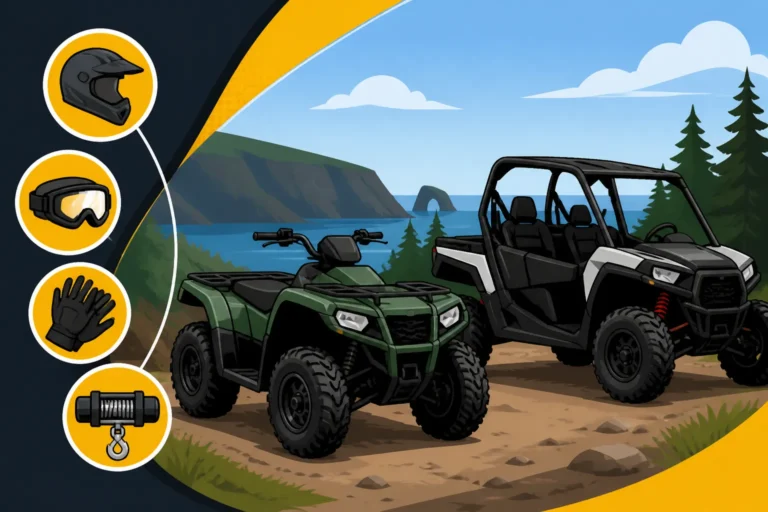
When you're riding in Newfoundland, wearing an approved helmet isn't just a suggestion; it's the law for every operator and passenger. This is probably similar to Quebec's rules, but it’s vital to ensure your helmet meets accepted safety standards here. Newfoundland accepts helmets that are marked with the Canadian Standards Association (CSA), US DOT, or European ECE standards. So, if your helmet is compliant in Quebec and carries one of these markings, you're good to go. The key is that the helmet must be properly secured with the chin strap fastened. An unfastened strap is as good as no helmet in the eyes of the law. You can read more about what's accepted under [Newfoundland Helmet Standards Accepted].
Beyond helmets, proper eye protection is also mandatory. This usually means wearing goggles, a face shield on your helmet, or having a windshield on your side-by-side or ATV that offers adequate protection. Cruising through the rugged Newfoundland landscape, you're bound to encounter dust, mud, flying debris, and even low-hanging branches, making eye protection absolutely essential. Don't risk a serious eye injury that could ruin your trip. Think about the conditions; a sudden turn in weather, typical on the coast, can bring fog or driving rain, and good eye protection makes all the difference.
Insurance and Licensing for Visiting Riders
Proof of valid insurance is non-negotiable when riding your ORV in Newfoundland. Even with your Quebec registration, you must carry proof of insurance that meets Newfoundland's minimum liability coverage. Our provincial minimum is $200,000 in third-party liability insurance. This is crucial because it protects you financially in case you're involved in an accident that causes injury or property damage to someone else. Make sure your Quebec policy meets or exceeds this minimum. If your Quebec policy offers less, you might need to look into supplementary coverage or a short-term policy. You can read more about this requirement here: [Newfoundland Minimum Insurance Requirement].
As for licensing, if you're riding your ORV on a highway (which is generally restricted to crossings and specific shoulder sections), you'll need to hold a valid driver's licence. For most trail riding, a standard driver's licence isn't strictly required to operate the ORV itself, but you'll certainly need one if you're trailering your machine on public roads to get to your riding destination. Always carry your Quebec driver's licence with you when operating your ORV, as it's proof of your identity and driving privilege for any road sections you might legally traverse. An officer can also ask for it as part of proving your identity. For a deeper dive into what officers can request, check out [What an Officer Can Ask You to Produce].
Navigating Newfoundland's Trails and Road Crossings
Newfoundland offers an incredible network of trails, from the legendary T'Railway to countless informal paths and woods roads. However, knowing where you can legally ride, and how to safely and legally cross or use public roads, is paramount for any visiting rider. It's easy to get lost in the beauty of the landscape and inadvertently stray into restricted areas or misuse public roadways. The rules here might differ from what you're accustomed to in Quebec, so understanding them is key to a smooth and enjoyable trip. If your machine is equipped for serious trail use with components like SuperATV winches or heavy-duty axles, you're ready for the terrain, but you still need to know the rules of the road – or rather, the trail.
Remember that Newfoundland's terrain can be extremely varied, from flat railbeds to rocky barrens and deep bogs. Understanding your machine's capabilities and the specific rules for each type of riding area will keep you safe and legal.
Approved Riding Areas and Restricted Zones
Newfoundland boasts the T'Railway Provincial Park, an 883-kilometre multi-use trail that spans the entire island. This old railway bed is a fantastic place to ride and is generally open to ATVs and side-by-sides. It's a great option for long-distance touring or accessing different communities. You can learn more about this iconic trail and its management by checking out [Newfoundland ATV Trails: The T'Railway and Beyond]. Beyond the T'Railway, there are numerous other approved trails and vast tracts of Crown Land where ORV use is permitted. However, "Crown Land" doesn't mean "anything goes." There are still rules, especially regarding environmental protection, wetlands, and caribou migration routes. Always look for signage and check local maps or consult with local ORV clubs before venturing off known trails onto unfamiliar Crown Land.
Crucially, certain areas are strictly off-limits to ORVs. National Parks, for instance, generally prohibit ORV use off designated highways. Gros Morne National Park, for example, is a beautiful area but strictly regulates ORVs. Provincial Parks may also have their own specific rules. Riding in these restricted zones can result in heavy fines and even seizure of your machine. It’s always best to verify your route with local authorities or knowledgeable locals if you're unsure. Never assume that just because a path looks well-used, it’s an approved ORV trail.
Road Crossings, Shoulder Use, and Municipal Bylaws
This is an area where Newfoundland's rules can significantly differ from other provinces, including Quebec. While ORVs are generally not permitted to operate on public highways, there are specific, limited circumstances where you can cross them or ride on shoulders. For crossing a highway, you must do so at a right angle to the highway, and you need to ensure you have a clear, unobstructed view of at least 150 metres in both directions. This isn't just a suggestion; it's a strict safety requirement. An officer will be looking for riders making safe, visible crossings. You can find more detail on this critical rule here: [Crossing a Newfoundland Highway Needs 150 Metres of Visibility].
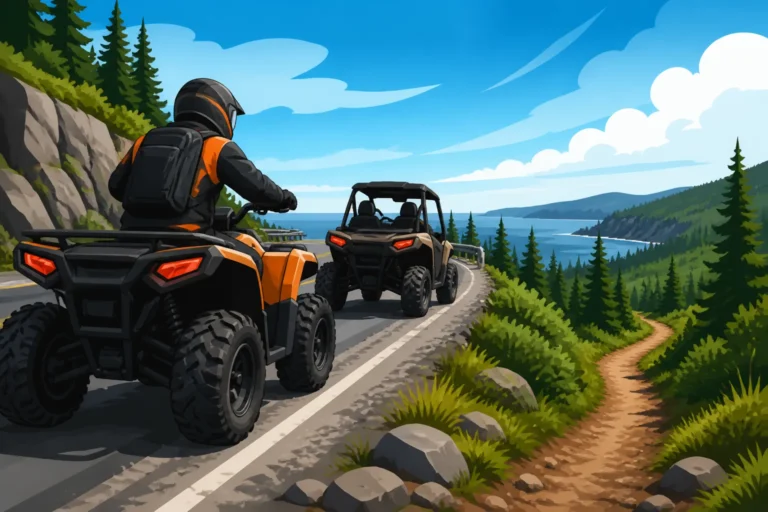
Riding on the shoulder of a highway is also tightly controlled. You can only use the shoulder to access an off-road trail, and only for a maximum distance of one kilometre. While on the shoulder, your speed must not exceed 20 km/h, and you must yield to all highway traffic. This is not an invitation for leisurely shoulder cruises; it's strictly for transit to and from trails. Furthermore, many municipalities have their own bylaws restricting ORV use on local roads within town limits. What might be legal on a back road in rural Quebec could be illegal in a Newfoundland town. Always check with the local municipal office if you plan to ride on any local roads within a community. Ignoring these specific rules can lead to serious fines. You can explore further information on local regulations via [Newfoundland Municipal Road Bylaws].
Practical Advice and Avoiding Common Mistakes
As a visiting Quebec rider, you're here to experience the unique beauty and adventure Newfoundland has to offer. The last thing you want is for your trip to be marred by legal issues or preventable accidents. Being prepared, understanding the local nuances, and respecting the rules will ensure your time on the island is memorable for all the right reasons. Newfoundland is incredibly welcoming, but like anywhere, understanding and respecting local regulations is key to a hassle-free visit.
It's also worth noting that the weather here can change rapidly, and the terrain can be challenging. Always carry appropriate safety gear, emergency supplies, and communicate your travel plans to someone reliable. Even if your machine is fully loaded with rugged gear from SuperATV, always ride within your limits and the limits of the environment.
Documentation You Must Carry
Let's reiterate this because it's so important: always carry your essential documentation with you when riding. This includes your valid Quebec ORV registration, proof of your Quebec ORV insurance (ensuring it meets Newfoundland's $200,000 minimum liability), and your valid driver's licence or other government-issued ID. While you might not need a driver's licence for all off-road riding, it serves as crucial identification. For passengers, especially children, you should have identification available as well. Make sure these documents are easily accessible and protected from the elements – a waterproof pouch is a great idea.
An officer can stop you at any time and request to see these documents. Being unable to produce them can lead to delays, fines, or even having your machine impounded. It's a simple step that can prevent a lot of headaches. It's always a good idea to have photos of these documents on your phone as a backup, but paper copies are generally preferred by enforcement officers. Familiarize yourself with [What an Officer Can Ask You to Produce] so you know exactly what to expect during a roadside or trailside stop.
Understanding Local Enforcement and Penalties
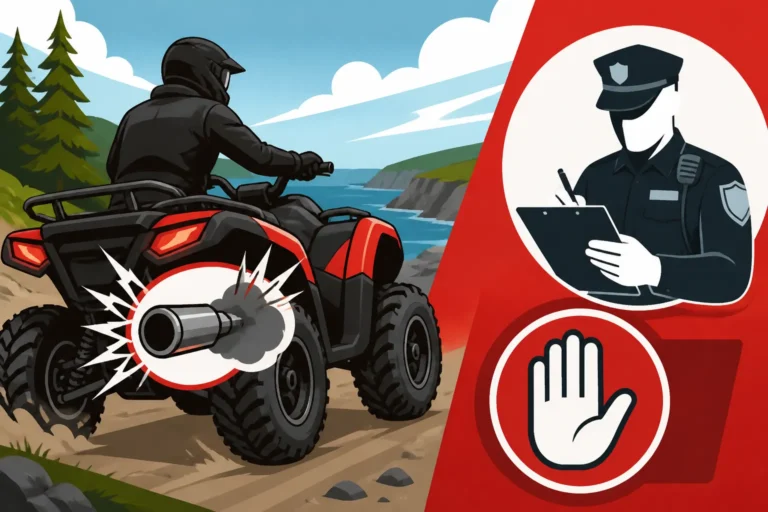
Newfoundland takes its ORV regulations seriously, and enforcement is carried out by various agencies, including the Royal Newfoundland Constabulary (RNC), the Royal Canadian Mounted Police (RCMP), and provincial enforcement officers from various departments. This means you could encounter an officer anywhere, from a major highway crossing to a remote trail. The fines for violating the Off-Road Vehicles Act can be substantial, ranging from hundreds to thousands of dollars, depending on the severity and nature of the offense. For instance, operating an unregistered ORV (after your 30-day exemption) or riding without insurance can carry hefty penalties.
Furthermore, serious infractions, such as impaired riding, can lead to immediate machine seizure and even criminal charges, with consequences that can impact your driving privileges back in Quebec. Don't underestimate the potential consequences of not following the rules. It's not just about avoiding a ticket; it's about contributing to safe riding for everyone and preserving access to our beautiful natural spaces. A good resource to review is [Newfoundland Fine Ranges by Offence] to understand the scope of penalties. Always ride respectfully and responsibly, not just for your own safety, but for the enjoyment and safety of all riders and the environment.
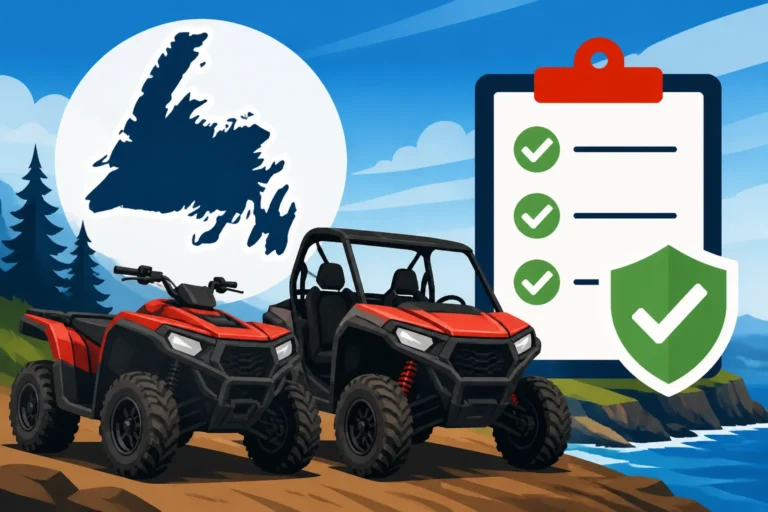
Visitor Checklist for Newfoundland ORV Riding (Quebec Riders)
| Item | Requirement for Quebec Rider (First 30 Days) | Requirement After 30 Days or for New Residents | Notes |
|---|---|---|---|
| ORV Registration | Valid Quebec ORV registration certificate. | Newfoundland ORV registration required. | No local registration needed for 30 days. After that, register in NL. |
| ORV Insurance | Valid Quebec ORV insurance, minimum $200,000 third-party liability. | Valid NL ORV insurance, minimum $200,000 third-party liability. | Ensure your Quebec policy meets NL minimums. |
| Driver's Licence/ID | Valid Quebec Driver's Licence or government-issued ID. | Valid NL Driver's Licence or government-issued ID. | Always carry identification. Licence needed for highway use. |
| Helmet | Approved helmet (CSA, DOT, ECE) with chin strap fastened. | Approved helmet (CSA, DOT, ECE) with chin strap fastened. | Mandatory for all operators and passengers. |
| Eye Protection | Goggles, face shield, or windshield providing adequate protection. | Goggles, face shield, or windshield providing adequate protection. | Essential for safety and mandatory. |
| Trail Sticker | Not required for general Crown Land access. May be required for specific managed trails (check with operator). | Not required for general Crown Land access. May be required for specific managed trails (check with operator). | Managed trails (like some sections of the T'Railway) might require one. |
| Safety Training | Not mandatory for adults if already experienced and licensed in Quebec. (Mandatory for young riders under 16). | Not mandatory for adults if already experienced. (Mandatory for young riders under 16 or first-time registrants in NL). | Children must meet age/engine size requirements and be supervised. |
| Proof of Ownership | Bill of Sale or equivalent (in case of inquiries). | Bill of Sale or equivalent. | Important for verification, especially for longer stays. |
| Knowledge of NL Rules | Understand NL's Off-Road Vehicles Act, especially road crossing & shoulder rules. | Understand NL's Off-Road Vehicles Act. | Ignorance is no excuse for breaking the law. |
Disclaimer
This article is for general informational purposes only and does not constitute professional advice. Laws, prices and regulations vary by location and change over time. Consult a qualified professional for guidance on your specific situation.