Newfoundland Rules for Towing a Sled
Trying to figure out the ins and outs of towing a sled or utility trailer behind your ATV or UTV in Newfoundland can feel like navigating a bog without a map. There's a lot of chatter out on the trails, and not all of it is accurate, leading to confusion about where you can tow, what you can tow, and most importantly, what's strictly off-limits. This guide is here to cut through the noise, offering clear, realistic insights into Newfoundland's rules for towing a sled so you can ride safely and legally, whether you're bringing in firewood to the cabin or hauling out a successful hunt.
Understanding the "What" and "Where" of Towing in Newfoundland
When we talk about towing a sled with your off-road vehicle (ORV) in Newfoundland, it's important to be clear about what kind of "sled" we're discussing and where such activities typically take place. The rules are often geared toward keeping everyone safe and preserving the environment, so knowing the distinctions is key to staying on the right side of the law.
Types of Sleds and Trailers You Might Tow
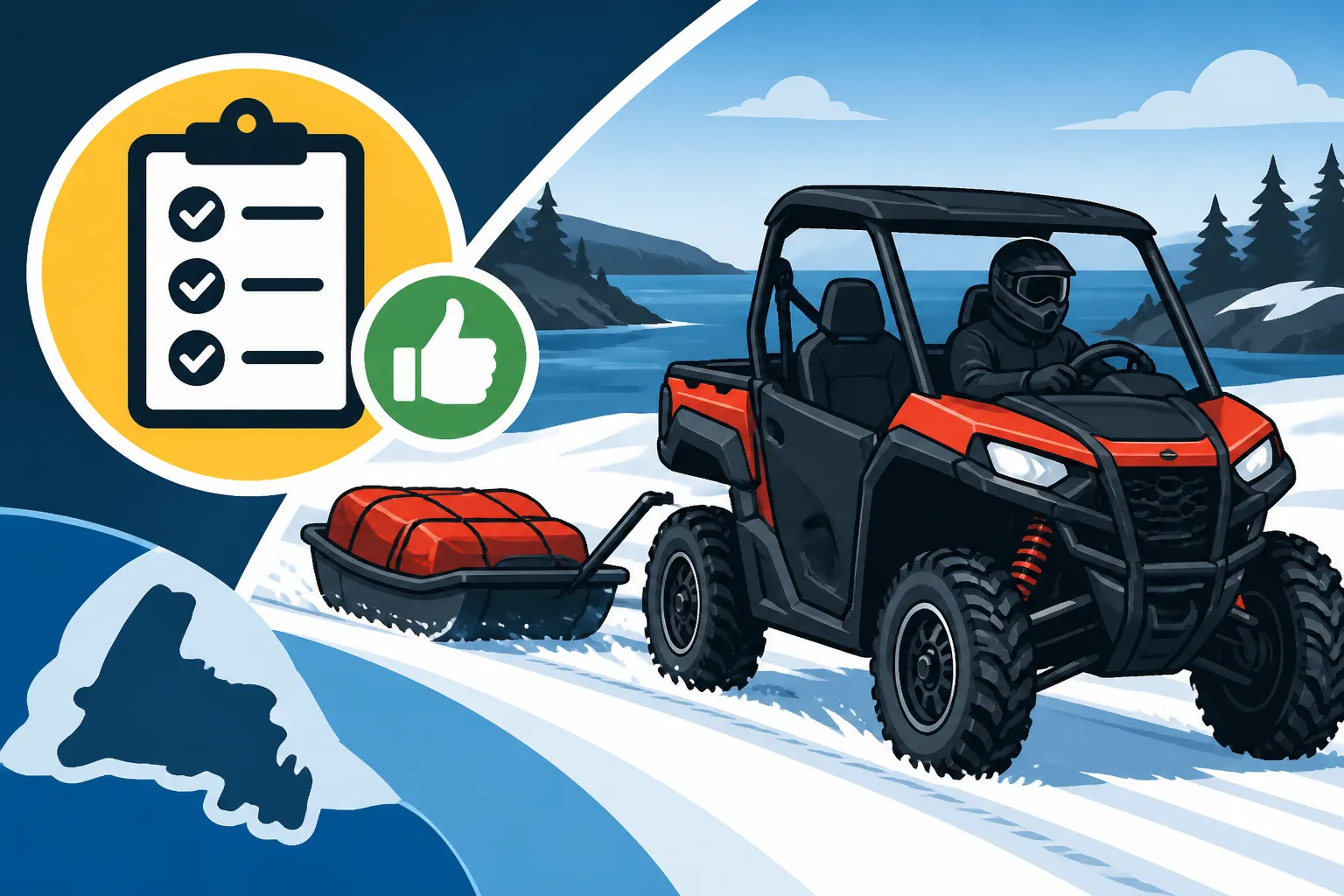
First off, let's define what we mean by a "sled" in the context of ATV and UTV use here in Newfoundland. For many riders, a sled isn't necessarily a snowmobile that's broken down, though that certainly happens! More commonly, it refers to a utility sled – often made of durable plastic or lightweight metal – designed to be pulled behind your machine. These are invaluable for a multitude of tasks: think hauling out a moose or caribou during hunting season, bringing in supplies for your remote cabin, transporting ice fishing gear across a frozen pond, or even moving firewood from a cutting block back to your staging area. They typically don't have wheels and are meant to slide over varied terrain, from snow and ice to boggy ground and rough trails.
Then there are utility trailers. These are distinct because they do have wheels. While a simple, un-registered utility trailer might be used strictly off-road for similar purposes, if it's designed to ever touch a public highway, even briefly, it enters a whole different category of registration and equipment requirements. For the purpose of this guide, we're primarily focusing on those non-wheeled "sleds" that are a common sight on the backcountry trails. Understanding the difference is crucial, as the moment wheels are involved and highway use is contemplated, the rules around lights, reflectors, and separate registration can change dramatically. Many of these aftermarket utility sleds from companies like SuperATV are designed for rugged off-road performance and integrate seamlessly with your ORV's hitch system, but their design intention is strictly for the wilderness, not the pavement.
Where You Can Legally Tow a Sled
The primary domain for towing a utility sled in Newfoundland is unequivocally off-road. This includes vast expanses of Crown land, private land (provided you have explicit permission from the landowner), and the extensive network of designated ORV trails across the province, such as sections of the Trans Canada Trail, affectionately known as the T'Railway. These environments are where your ATV or UTV, with a sled in tow, is truly in its element. Whether you're navigating the rugged barrens of the interior or the dense forest paths leading to a fishing spot, these are the places where the utility of a towed sled shines. The very design of these sleds, meant to glide over obstacles rather than roll, speaks to their intended use away from paved surfaces.
It's vital to remember that the design and purpose of these ORVs and their towed sleds are fundamentally different from highway vehicles. The traction, suspension, and braking systems of an ATV or UTV are optimized for uneven terrain, mud, snow, and gravel, not high-speed highway travel. Consequently, the legal framework, particularly [Newfoundland's Off-Road Vehicles Act], is structured around this distinction. Sticking to approved off-road areas not only ensures you're complying with regulations but also maximizes your safety and the longevity of your equipment. It's in these wilder spaces that your machine, possibly enhanced with robust towing accessories, can truly perform its intended tasks without the constraints and hazards of road traffic.
Navigating Road-Related Towing Rules
This is where things can get a bit tricky and where many riders find themselves scratching their heads. The convenience of using your ATV or UTV to tow a sled right from your driveway down the road to the trail might be tempting, but Newfoundland's laws are quite specific about where and how off-road vehicles (and anything they're towing) can interact with public roads.
The Core Restriction: Highways and Public Roads
Let's be absolutely clear from the outset: towing a utility sled (the kind without wheels, meant for off-road use) behind your ATV or UTV on a paved public road or highway in Newfoundland is generally prohibited. When the law refers to a "highway," it's not just talking about the Trans-Canada Highway; it encompasses any road, street, or thoroughfare that the public has a right to use. This means most residential streets, rural roads, and provincial highways fall under this restriction.
The rationale behind this prohibition is multifaceted, and it primarily boils down to safety and vehicle classification. Off-road vehicles and their towed sleds are simply not designed for the speed, weight, braking distances, and traffic conditions found on public roads. A utility sled, designed to glide, has no suspension, brakes, or specific lighting required for highway use. Attaching it to an ORV and taking it onto a road creates a significant safety hazard, both for the ORV operator and for other motorists. Your ATV or UTV is registered as an off-road vehicle, and while it might be allowed certain limited interactions with highways, those permissions do not extend to non-highway-approved attachments like a sled. Even a robust hitch from a brand like SuperATV, designed for maximum towing capacity on the trail, doesn't suddenly make your sled road-legal. This is a crucial distinction that can save you from a hefty fine or, worse, an accident.
Exceptions and Limited Access for Towing
While the general rule is "no towing sleds on public roads," there are very specific, highly restricted circumstances where your ORV might interact with a highway. However, it's critical to understand that these exceptions are almost exclusively for the ORV itself to traverse a short distance, and typically do not extend to towing a non-highway-approved sled.
Crossing a Highway
Newfoundland's Off-Road Vehicles Act does allow for ORVs to cross a highway, but under very strict conditions. To legally cross, you must have an unobstructed view of at least 150 metres in both directions along the highway. This is a quick, direct crossing, intended to get from one section of a trail to another or to access private property. It is not an invitation to tow a sled across. Even if you manage to meet the visibility requirement, adding a bulky, unlit, and unbraked sled behind your machine drastically increases the risk and the time it takes to cross. An officer observing this would likely consider it an unsafe operation and a violation, even if the ORV itself is permitted to cross. The intent of the crossing rule is for minimal, quick interaction, and towing a sled complicates this too much. [Newfoundland Rules for Crossing a Highway] lays out the specifics, but again, these are generally understood to apply to the ORV operating alone.
Riding the Shoulder
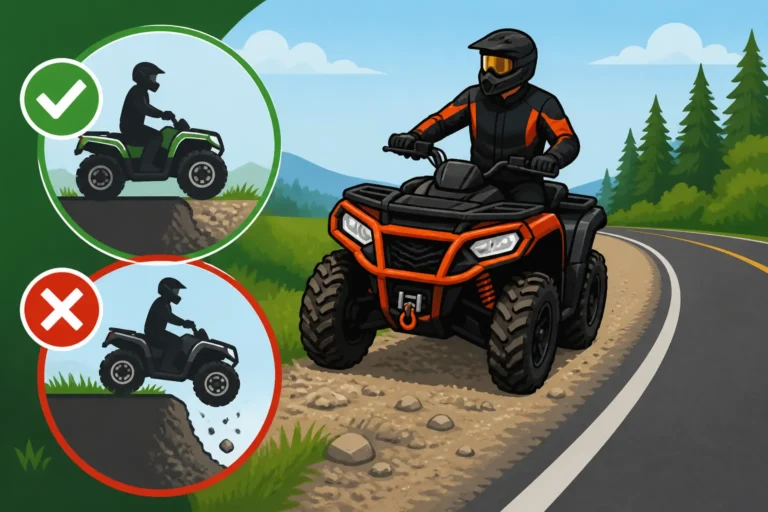
Another limited exception allows ORVs to ride on the shoulder of a highway, but only for a maximum distance of 1 kilometre and at a speed not exceeding 20 km/h. This is typically to access an authorized trail or private property when there's no other reasonable off-road route. Similar to highway crossings, this allowance is for the ORV itself, and extending it to tow a non-highway-approved sled is highly problematic. The 1-kilometre shoulder rule is about the ORV being a temporary presence on the very edge of the road; adding an unapproved towed item contravenes the spirit of this limited permission. Your machine and whatever it's hauling must still conform to general safety principles, and a sled, lacking lights and proper road-going features, would likely be deemed unfit for even this brief shoulder travel. [Newfoundland Rules for Riding a Shoulder] offers more detail on these specific restrictions, emphasizing the temporary and limited nature of such access.
Private Roads and Cabin Roads
The rules can soften a bit if you're operating on a truly private road – such as a logging road that isn't open to public traffic or a dedicated cabin access road that you or a group of owners maintain. In these scenarios, the "highway" definition often doesn't apply, as the road is not publicly maintained or accessible. However, it's still crucial to:
- Have permission: Always ensure you have explicit permission from the landowner or managing authority to use and tow on such private roads.
- Check local bylaws: Some municipalities or land management bodies may have their own bylaws that apply even on private access roads.
- Prioritize safety: Even on private roads, manufacturer towing capacities, safe speeds, and proper loading practices remain paramount.
The key takeaway here is that any interaction with roads and a towed sled is extremely limited and fraught with potential legal issues. When in doubt, it’s always best to keep your sled firmly off the pavement.
Safety, Equipment, and Practical Considerations for Towing
Beyond the legalities, there are critical safety and practical considerations when towing a sled with your ATV or UTV. The wilderness of Newfoundland is rugged and unpredictable, and improper towing practices can quickly turn an enjoyable outing into a dangerous situation.
Essential Equipment for Safe Towing
Towing a sled safely isn't just about hooking it up and going; it requires the right equipment, properly installed and maintained.
- Tow Hitch and Ball: Your ATV or UTV should be equipped with a properly rated tow hitch. Ensure the hitch ball is securely fastened and matches the coupling on your sled (if it has one, though most utility sleds are just a drawbar or rope). Never exceed your machine's manufacturer-recommended towing capacity. Aftermarket hitches from companies like SuperATV can offer enhanced durability and capacity, but even with the strongest hitch, you must always adhere to your ORV's specified limits for safe operation. Trying to tow too much weight can damage your transmission, strain your engine, and, most critically, compromise your braking and steering control.
- Tow Bar, Rope, or Chain: For utility sleds, you'll often use a tow rope or a simple rigid tow bar. Ensure whatever you use is strong enough for the load and in good condition, free of frays or damage. If using a rope or chain, keep it as short as practical to minimize slack and potential for entanglement, but long enough to allow for turns without hitting your machine. High-visibility flags on the rope or chain are crucial, especially in low light or dense bush, to make the connection visible to anyone nearby.
- Lights and Reflectors: While utility sleds are not required to have specific lighting for off-road use, adding reflectors or even battery-powered LED lights can significantly improve visibility, especially when riding in low light, fog, or at night. This is particularly important if your sled is wide or long enough to obscure your ORV's tail lights or [Newfoundland Reflectors Requirements]. Imagine traversing a trail just as dusk is settling in – a well-marked sled could prevent a collision with another rider.
- Brakes: Most simple utility sleds do not have their own braking systems. This means all the braking power for the combined unit comes from your ATV or UTV. This drastically increases your stopping distance, especially when descending hills or carrying a heavy load. If you're considering a larger, heavier utility trailer (the wheeled kind), it's worth investigating if it has or requires its own braking system for safety, though such trailers generally move into a different regulatory category.
Weight Limits, Stability, and Operator Skill
Overloading your ORV or the sled is one of the most common and dangerous mistakes riders make. Every ATV and UTV has a manufacturer-specified towing capacity. Exceeding this capacity can lead to a host of problems:
- Damage to Your Machine: Over-stressing the engine, transmission, and suspension can lead to premature wear or catastrophic failure.
- Reduced Braking Effectiveness: Your machine's brakes are designed for its weight plus a certain amount of towed load. Exceeding that load significantly compromises your ability to stop safely.
- Loss of Steering Control: Too much weight at the rear can lift the front wheels, reducing traction and making steering difficult, especially on inclines.
- Instability and Jackknifing: A heavily loaded or poorly balanced sled can push your ORV around, leading to jackknifing on turns or descents, making your entire setup unstable and prone to rollovers.
- Loading for Stability: When loading your sled, distribute weight evenly, with heavier items placed low and over the sled's axle (if it has one) or towards the centre. Avoid putting all the weight at the very front or back, as this can either cause too much tongue weight (pushing down on your hitch) or too little (making the sled sway). Securing your cargo with ropes or cargo nets is also non-negotiable to prevent shifting or loss of items on rough terrain.
- Operator Experience: Towing changes the way your ORV handles dramatically. Turning radius increases, acceleration is slower, and braking distances are longer. You'll need to adjust your riding style: slower speeds, wider turns, and extra caution on hills or uneven terrain. If you're new to towing, practice with a lighter load in an open, safe area before tackling challenging trails with a heavy haul. Consider taking a safety course that might touch on towing techniques, as even experienced riders benefit from refreshing their skills.
Visibility, Passengers, and General Rules
A few other important points to keep in mind when towing:
- Visibility for the Operator: Ensure your towed sled and its cargo do not obstruct your view, particularly to the rear. Also, make sure your ORV's [Newfoundland Plates Unobstructed by Cargo] and its lights are not blocked. This is a common violation that can lead to fines.
- Passengers on the Sled: Never allow passengers to ride on a towed sled. These sleds offer no safety restraints, protection, or suspension, making them incredibly dangerous for occupants, especially over rough terrain or in the event of a sudden stop or turn. All passengers on your ORV must be seated in a factory-installed seat designed for a passenger and wear appropriate safety gear, including a helmet, as per [Newfoundland Helmet Law for Every Rider] and [Newfoundland Eye Protection Requirements].
- Secure Cargo: Always ensure anything you're hauling in your sled is securely fastened. Losing cargo on the trail is not only frustrating but can create hazards for other riders or damage the environment.
- Trail Conditions: Be extra mindful of [Newfoundland Trail Conditions Before You Ride] when towing. A sled can make navigating mud, deep snow, or steep grades much more challenging. Be prepared for conditions to change, and know when to turn back if it's too risky.
Avoiding Penalties and Staying Legal
Nobody wants to cut short a great day out on the land with a ticket, or worse, have their machine seized. Understanding the potential consequences of illegal towing is just as important as knowing the rules themselves.
Fines and Enforcement
Newfoundland's law enforcement, including the RCMP and various provincial conservation officers, actively patrol off-road areas and highway access points. They are well-versed in [Newfoundland's Off-Road Vehicles Act] and are prepared to enforce it. If you're caught illegally operating an ORV on a highway, or illegally towing a non-highway-approved sled on a public road, you could face significant penalties.
Fines for operating an ORV illegally on a highway can range from hundreds to thousands of dollars, depending on the severity and whether it's a repeat offence. The additional act of towing a non-compliant sled could lead to further charges for unsafe operation or even a more severe infraction. [Newfoundland Penalties for Riding Illegally] outlines these potential financial consequences, which can quickly add up and ruin your day, or even your season.
In more serious cases, especially for repeat offenders or if the operation is deemed exceptionally dangerous, peace officers have the authority to seize your off-road vehicle. [Newfoundland Machine Seizure Rules] means your machine could be impounded, and you'd face additional fees and a lengthy process to get it back, if you get it back at all. The cost of retrieving a seized machine, combined with the initial fines, can be a huge burden.
When in Doubt: Ask the Experts
Given the complexities and the potential for serious penalties, if you're ever unsure about a specific towing scenario or how a particular type of sled or trailer fits into the regulations, it's always best to seek official clarification.
- Contact Motor Registration Division: The provincial Motor Registration Division is the primary authority on vehicle registration and operation. They can provide definitive answers on what's legal and what's not.
- Consult Local Law Enforcement: Your local RCMP detachment or provincial enforcement office can also offer guidance on how the rules are applied in practice in your specific area.
- Review the Act: For the most detailed information, you can always consult [Newfoundland's Off-Road Vehicles Act] directly. Understanding the actual text of the legislation can help clarify ambiguities, although legal language can sometimes be challenging to interpret without professional guidance.
Remember, the goal of these regulations isn't to prevent you from enjoying your ORV or using it for practical purposes; it's to ensure the safety of all road users and to protect the environment. By understanding and adhering to the rules for towing a sled, you're not just avoiding fines – you're contributing to a safer, more responsible riding community in Newfoundland.
Summary of Towing Rules and Considerations
To help keep everything clear, here’s a quick overview of the key points for towing a sled in Newfoundland. This table summarizes the main distinctions and advice to help you stay compliant and safe on your adventures.
| Feature | Off-Road / Trails / Private Land | Public Roads / Highways (Paved) |
|---|---|---|
| Sled Type | Primarily un-wheeled utility sleds, game sleds, small gear trailers. | Generally prohibited for un-wheeled sleds. Wheeled trailers require separate registration/highway features. |
| Legality of Towing | Generally permitted, following manufacturer limits and safety. | Not permitted for un-wheeled sleds. Limited ORV access for crossing/shoulder only. |
| Towing Capacity | Crucial to adhere to ORV manufacturer's limits. Overloading is unsafe. | N/A (as towing sleds is prohibited) |
| Equipment | Strong hitch (e.g., SuperATV), secure tow bar/rope, cargo securement. | N/A, as sleds lack highway-approved lights, brakes, etc. |
| Visibility | Ensure ORV lights/plate are clear; consider reflectors for sled. | N/A, as sleds would obstruct/lack proper road markings. |
| Passengers | Never allow passengers on a towed sled. ORV passengers seated properly. | N/A |
| Speed/Handling | Reduce speed, adjust for turns, longer braking. | N/A |
| Potential Fines | Generally low, unless reckless operation. | Significant fines, machine seizure possible, traffic violation. |
| Best Practice | Always prioritize safety, check terrain, secure load. | Avoid at all costs. Use alternative transport for sleds/gear to trailheads. |
Disclaimer
This article is for general informational purposes only and does not constitute professional advice. Laws, prices and regulations vary by location and change over time. Consult a qualified professional for guidance on your specific situation.