Why an Amphibious Machine Must Be Registered Too
Many off-road vehicle enthusiasts in Newfoundland and Labrador are well aware that their ATVs, snowmobiles, and even their side-by-sides need to be registered with Motor Registration. However, a common point of confusion often arises when it comes to more specialized machines, particularly those quirky, incredibly capable amphibious vehicles. It’s a common misconception that because these machines operate on both land and water, they might fall into a different regulatory category, or perhaps even slip through the cracks altogether. This comprehensive guide will clear up that confusion, explaining precisely why your amphibious machine absolutely requires registration in Newfoundland and Labrador, and what that process entails.
Understanding Newfoundland's Off-Road Vehicles Act
The landscape of off-road vehicle (ORV) regulation in Newfoundland and Labrador underwent a significant update with the introduction of the [A Statute in Force Since May 2022]. This Act, officially known as the Off-Road Vehicles Act, was designed to create a clear and comprehensive framework for the safe and responsible operation of a wide range of machines that venture beyond paved roads. Before this Act, some categories of ORVs might have existed in a grey area, leading to uncertainty for owners and enforcement challenges for authorities. The intent was to bring consistency and clarity to the rules governing everything from a simple dirt bike to a complex utility vehicle.
When we talk about the scope of this Act, it’s remarkably broad. It doesn't just focus on the machines you typically see on the T'Railway or tearing through the barrens. Instead, it encompasses pretty much any motorized vehicle that's primarily designed for off-road use. This comprehensive approach is crucial for public safety, environmental protection, and ensuring that all operators are accountable for their actions. Whether your machine rolls on tires, tracks, or floats on water, if its primary design purpose is to operate off the beaten path, the Act likely has something to say about it.
The inclusion of amphibious machines under this Act is a testament to its forward-thinking nature. These vehicles, often celebrated for their versatility and ability to traverse challenging terrain and water bodies, certainly fit the description of an "off-road vehicle" by their very nature. Their dual-environment capability actually underscores why they need to be regulated. Without proper registration and adherence to the Act, an amphibious machine could easily move from regulated land environments to un-regulated water environments and back again, creating significant challenges for tracking, identification, and ensuring compliance with safety standards. It’s about ensuring that as these machines become more popular, their operation remains safe and responsible, no matter where they roam or float.
What Qualifies as an Amphibious Machine in Newfoundland?
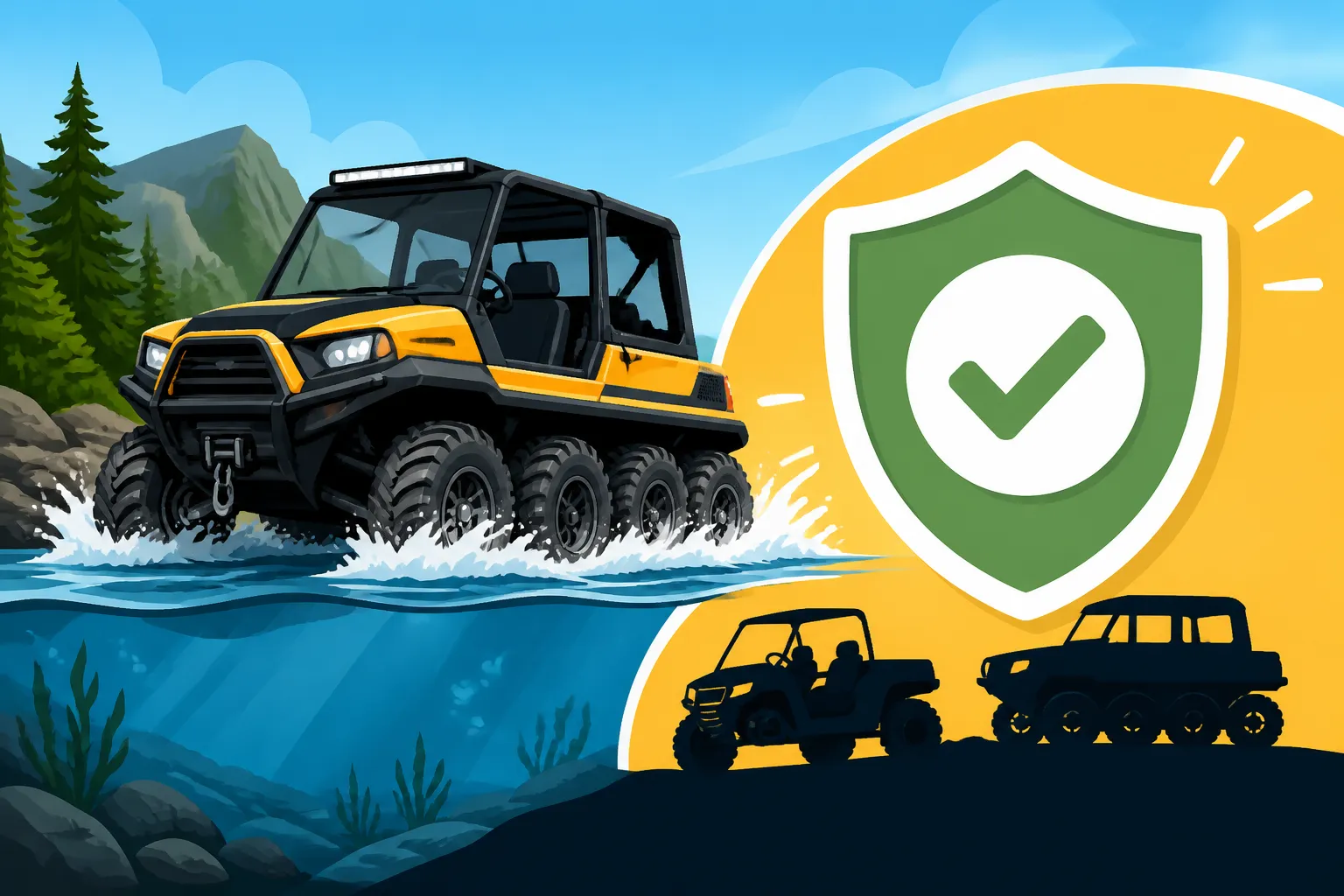
So, what exactly are we talking about when we say "amphibious machine" in the context of Newfoundland's Off-Road Vehicles Act? Generally, these are specialized vehicles designed with the unique capability to travel seamlessly across both land and water. Think of iconic models like the Argo, for instance, which are often multi-wheeled or tracked, completely sealed, and equipped with propulsion systems that work both on solid ground and in the water. These aren't just regular ATVs that happen to drive through shallow puddles; they are purpose-built to float and move through rivers, bogs, and ponds with relative ease.
The key distinction lies in their inherent design for waterborne travel, rather than just tolerating wet conditions. A standard ATV might splash through a stream, but an amphibious machine will actually float and "swim" across it, using its wheels or a dedicated propeller system for propulsion. The Act takes a wide view of what constitutes an ORV, and specifically addresses the unique nature of these dual-purpose vehicles. It's not just about the number of wheels or whether it has handlebars or a steering wheel; it's about its intended primary use and design characteristics. This is where clarity is so important, especially for machines that blur the lines between traditional land vehicles and boats. The [Newfoundland Amphibious Machines and Dune Buggies] guideline specifically clarifies that these types of machines fall under the Act's purview, treating them as distinct classes of ORVs alongside more conventional quads and side-by-sides.
Understanding the [Newfoundland Classes the Act Covers] is helpful here. While ATVs, snowmobiles, and side-by-sides are distinct classes with specific rules, amphibious machines are also brought into this framework. This means that regardless of whether your machine has six wheels, eight wheels, or tracks, if it's designed to operate on land and water, it's considered an ORV that requires registration. This ensures that these highly versatile machines are subject to the same foundational rules regarding ownership, identification, and accountability as any other ORV operating in the province. Without this clear classification, there would be a significant loophole, allowing machines with immense capabilities to operate without the oversight deemed necessary for all other off-road vehicles.
The Mandatory Registration Process for Amphibious Machines
Registering an amphibious machine in Newfoundland and Labrador might seem like a daunting task, given its unique characteristics, but in reality, the process closely mirrors that for any other off-road vehicle. The province's Motor Registration Division needs to have a record of who owns the machine, so that it can be properly identified and associated with an owner. This is fundamental for enforcing safety regulations, tracking ownership for sales or transfers, and generally maintaining order on the trails and waterways. You can't just take your new amphibious vehicle straight from the dealership or private seller and head out to the barrens or a pond without first making it official.
The first step, like with any ORV, involves gathering the correct [Newfoundland Registration Paperwork Explained]. This typically includes proof of ownership, such as a bill of sale. If you're buying a new amphibious machine from a dealer, they will usually provide a New Vehicle Information Statement (NVIS), which acts as the official birth certificate of your machine. For a used machine, you'll need a clear chain of ownership, usually in the form of a [Newfoundland Bills of Sale From Each Owner] leading back to the original NVIS. This paperwork confirms that you are the rightful owner and helps prevent the registration of stolen machines. For unique situations where standard paperwork might be incomplete, resources like LawDepot can be incredibly helpful for drafting a robust bill of sale or other necessary legal documents, ensuring all parties are protected and the transfer is clear. Their customizable forms can assist in documenting even less common transactions, making sure you have all your bases covered.
Once you have your paperwork in order, the next step is to make an appointment with the Motor Registration Division. While walk-ins might be possible in some offices, it's always best to book a [Newfoundland Registration by Appointment] to ensure you get dedicated time and avoid long waits. Bring all your original documents, including your bill of sale, NVIS (if applicable, as [Newfoundland Requires an NVIS for a New Machine]), and personal identification. The staff will review your documents, verify the machine's details, and process your registration. While there is a fee involved, remember that [Newfoundland ORV Registration You Pay Once], meaning you won't face annual renewal fees, which is a significant relief for owners. It's a one-time investment for lifelong legal operation. Having a clear and concise bill of sale, perhaps drafted with the help of a service like LawDepot, can make this appointment much smoother, as all the necessary details will be correctly presented.
The Consequences of Unregistered Amphibious Operation
Operating an unregistered amphibious machine in Newfoundland and Labrador isn't just a minor oversight; it carries significant legal consequences. The Off-Road Vehicles Act is quite clear on this point: any ORV operating off private property must be registered. This applies equally to your eight-wheeled amphibious vehicle as it does to a standard quad or a snowmobile. Ignoring this requirement can lead to a host of problems that could quickly turn a fun day out into a costly headache.
The most immediate consequence is typically a fine. Peace officers, including the Royal Newfoundland Constabulary, the RCMP, and even provincial park enforcement officers, are authorized to check for valid registration. If your amphibious machine is found to be unregistered, you could face substantial [Newfoundland Penalties for Riding Illegally]. These fines are not trivial; they are designed to be a strong deterrent to ensure compliance and promote responsible machine operation. It's far cheaper and less stressful to go through the proper registration channels than to risk being caught and ticketed. Imagine being deep in the wilderness, enjoying the unique capabilities of your machine, only to have your trip cut short by an enforcement officer and a hefty fine.
Beyond just financial penalties, there's a more severe consequence: the potential for your machine to be seized. The Act empowers authorities to impound unregistered ORVs. This means your prized amphibious machine could be loaded onto a tow truck, taken to an impound lot, and held there until you sort out the registration issues and pay any associated fees and fines. The process to get your machine back can be lengthy, involving additional administrative costs, storage fees, and towing charges, on top of the original registration fee and fine. The [Newfoundland Machine Seizure Rules] are robust, and they are not applied lightly. This is a situation no machine owner wants to find themselves in, as it represents a significant disruption and financial burden. Having all your paperwork in order, perhaps pre-emptively using a service like LawDepot to generate any necessary proof of ownership forms, can save you from this kind of ordeal. It's about proactive compliance to protect your investment and your peace of mind.
Registration Comparison for ORV Types
Understanding the specific requirements for different types of off-road vehicles can sometimes feel like navigating a maze. While the core principle of registration applies broadly, some nuances exist between how various machines are classified and what that means for their owners. This table offers a quick comparison to highlight the general approach to ORV registration in Newfoundland and Labrador, putting amphibious machines into context.
| ORV Type | General Use Case | Key Registration Requirement | Special Considerations |
|---|---|---|---|
| ATV (All-Terrain Vehicle) | Recreational riding, utility tasks on land. | Mandatory provincial registration | Age limits, helmet laws, insurance requirements. |
| Snowmobile | Winter recreation, trail riding on snow. | Mandatory provincial registration | Specific trail permits, seasonal operation. |
| Side-by-Side (UTV) | Recreational, utility, passenger transport on land. | Mandatory provincial registration | Seat belt laws, passenger limits, sometimes larger size. |
| Dirt Bike/Trail Bike | Off-road motorcycling, sport riding. | Mandatory provincial registration | Often lighter weight, specific training recommendations. |
| Amphibious Machine | Land and water travel, remote access, utility. | Mandatory provincial registration | Unique design (sealed hull, water propulsion), often multi-wheeled/tracked. |
| Dune Buggy | Sand or open terrain recreation. | Mandatory provincial registration | Less common, often custom-built, specific areas of use. |
This table clearly illustrates that regardless of how specialized or unique your off-road vehicle might be, the expectation in Newfoundland and Labrador is consistent: if it’s an ORV, it needs to be registered. This standard approach ensures that all operators contribute to a regulated and safer off-road environment. What the Registrar's Permit Says About Your Machine is crucial for all these types, as it serves as your official proof of registration and contains vital details about your specific vehicle.
Conclusion
The message is clear: if you own an amphibious machine in Newfoundland and Labrador, it absolutely must be registered under the provincial Off-Road Vehicles Act. While these versatile vehicles offer incredible freedom and access to places others can only dream of, that freedom comes with the responsibility of compliance. The province has intentionally created a comprehensive framework to ensure that all ORVs, regardless of their specific design or operating environment, are properly documented and operated safely.
Failing to register your amphibious machine isn't just a minor oversight; it's a direct violation of provincial law that can lead to significant fines and even the seizure of your valuable equipment. By taking the time to complete the straightforward registration process, you not only avoid these unpleasant penalties but also contribute to the safety and sustainability of off-road recreation for everyone. So, before you launch into that bog or cross that remote pond, make sure your paperwork is in order, your machine is registered, and you're ready to enjoy the incredible capabilities of your amphibious vehicle responsibly.
Disclaimer
This article is for general informational purposes only and does not constitute professional advice. Laws, prices and regulations vary by location and change over time. Consult a qualified professional for guidance on your specific situation.