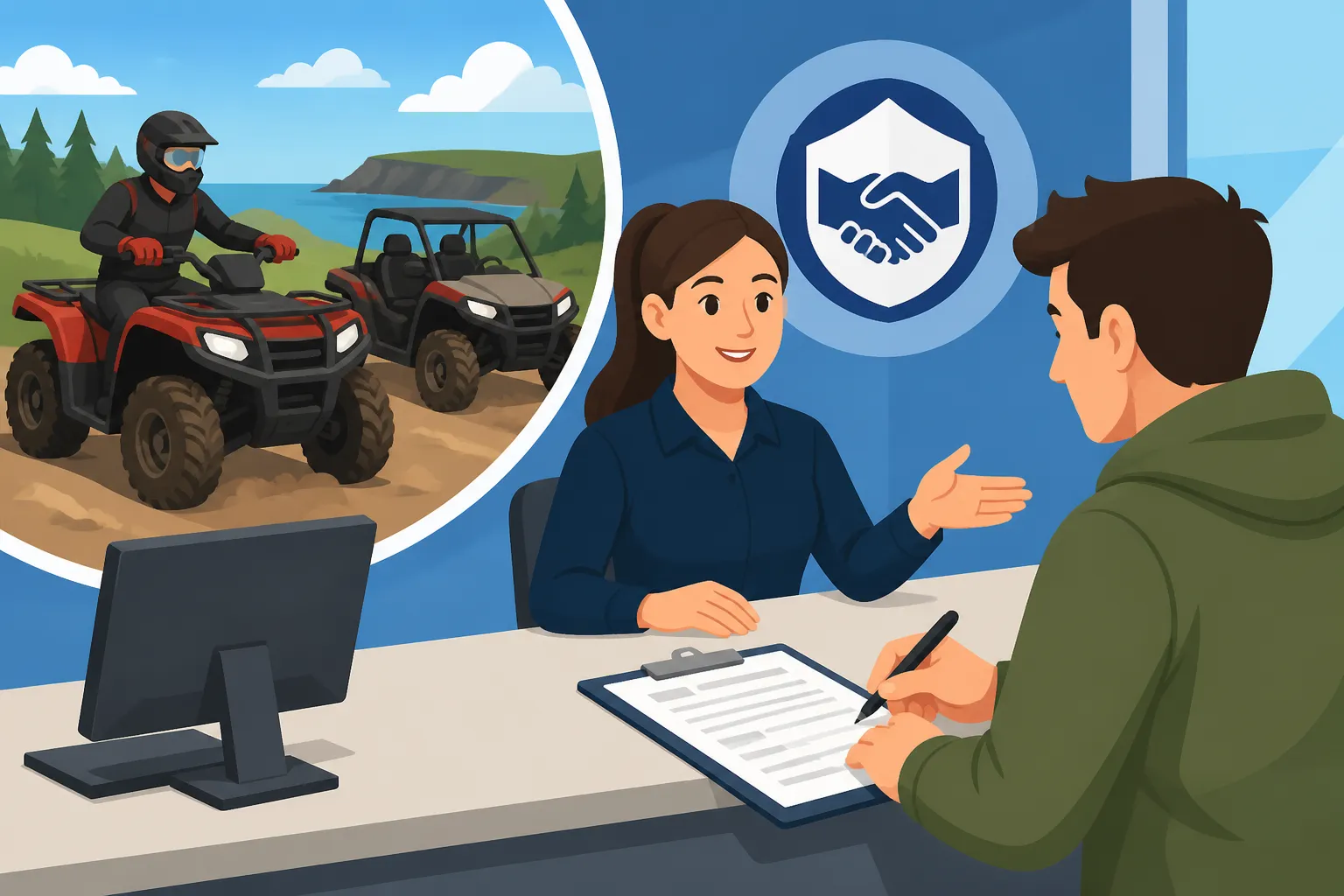
Signing an Indemnity Form at the Registry Counter
It’s a frustrating scenario many off-road vehicle owners in Newfoundland eventually face: you’ve got a quad or side-by-side, but some of the original ownership paperwork is missing or unclear. Maybe it was a handshake deal years ago, or a machine passed down through the family, and now you’re stuck trying to get it properly registered. This comprehensive guide will walk you through exactly what an indemnity form is, why the Motor Registration Division might ask you to sign one, and how to navigate the process at the counter to finally get your machine legal.
Why You Might Need an Indemnity Form for Your ORV Registration
You’ve got a machine, you want to ride, and you know you need to get it registered in Newfoundland. But then you hit a snag: the paperwork isn't quite right. This isn't an uncommon problem, especially with used ATVs or snowmobiles that have changed hands a few times over the years. The registry needs a clear chain of ownership, and if that chain has a weak link, an indemnity form often becomes part of the solution.
When Paperwork Goes Missing or Is Incomplete
Imagine you bought your dream quad from a buddy of a buddy years ago. It was a cash deal, on the side of the road, and you got a handwritten receipt – or maybe nothing at all. Or perhaps you inherited an old trail bike from a family member who'd owned it for decades, and while you know it was theirs, you can't find any official record of their purchase or the original registration. These are classic situations where you might find yourself needing an indemnity form. The Motor Registration Division, which handles off-road vehicle registration, requires a clear paper trail, and if you can't produce a proper bill of sale or a full history of ownership, they need a way to move forward while protecting themselves and future owners. It’s not about accusing you of anything; it’s about maintaining a legal record. Sometimes, the problem might even stem from an issue with a previous owner who never properly transferred the machine themselves. The fact is, without a clear, verifiable record, proving you’re the rightful owner can be a real headache. This is where options like [Newfoundland Registration Without a Bill of Sale] become highly relevant, and often, an indemnity form is central to that process.
The Registry's Need for Assurance
From the perspective of the Motor Registration Division, they need to be absolutely certain that they are registering the machine to its rightful owner. Why? Because they are creating a public record of ownership. If they register a machine to someone who isn't the true owner, it could lead to all sorts of legal complications down the road, including fraud, disputes over property, and even issues if the machine turns out to be stolen. The indemnity form serves as a legal promise from you. By signing it, you're essentially telling the Province, "I swear I am the rightful owner of this machine, and I will take full responsibility if anyone else ever comes forward claiming ownership, or if there are any other legal problems related to this machine's ownership history." It's a way for the Province to say, "Okay, we'll proceed with registration, but the onus of proof and responsibility for any future ownership claims falls squarely on you." It protects them from potential lawsuits and ensures that the public record they maintain is as sound as possible, even when faced with incomplete or informal documentation.
What Exactly Is an Indemnity Form for ORV Registration?
The term "indemnity" might sound intimidating, like something only lawyers deal with. But when it comes to registering your off-road vehicle, it’s a specific document designed to clarify ownership and responsibility. It’s a formal declaration that helps the system move forward when the standard paperwork isn't available.
Understanding Indemnity and Your Role
At its core, an indemnity is a legal agreement where one party (you, in this case) agrees to protect another party (the Province of Newfoundland and Labrador) from losses or damages that might occur due to a specific event or situation. When you sign an indemnity form for your ORV registration, you're making a solemn declaration that you are indeed the rightful and legal owner of that specific ATV or UTV. You're acknowledging that while you might not have the complete paper trail, you assert your ownership and take on the responsibility should any third party ever make a claim against the machine. Think of it as a formal promise: "I guarantee that my claim of ownership is true, and I will hold the Province harmless if my claim is ever contested or found to be incorrect." This is often paired with [Newfoundland Sworn Affidavits and Indemnity Forms], where you might also have to provide a sworn statement of facts about how you acquired the machine. This dual approach provides a robust framework for the registry to accept your ownership claim. Many people find themselves in situations where they need to create or understand various legal documents; for general purposes, resources like LawDepot can offer insights into different types of legal agreements, though the indemnity form you sign at the registry will be their specific government document.
Protecting the Province and Future Owners
The indemnity form isn't just about you making a promise; it's a critical tool for the Province to safeguard itself. Without it, if they registered a machine based on incomplete paperwork and then a true owner appeared, the Province could be liable for damages or legal costs. By having you sign the indemnity, they shift that potential liability directly to you. Furthermore, it adds a layer of protection for any future owners. If you decide to sell your machine down the line, and someone discovers an issue with the ownership chain that predates your registration, your indemnity form helps to clarify that you took responsibility for that gap. It ensures that the current registration, even if based on less-than-perfect initial documentation, is legally sound moving forward. This makes the ORV market in Newfoundland more secure for everyone. It's a testament to the comprehensive nature of [Newfoundland Registration Paperwork Explained] that includes contingencies for these situations.
Step-by-Step: Signing Your Indemnity Form at the Counter
Dealing with government paperwork can feel like a maze, but signing an indemnity form at the Motor Registration counter doesn’t have to be. Knowing what to expect and what to bring can make the process smooth and straightforward.
Preparing for Your Appointment
Before you even think about heading to the Motor Registration office, preparation is key. First and foremost, you'll likely need to book an appointment. The days of just walking in are largely gone for complex transactions like this. Use the online portal or call ahead to schedule your visit. Booking an appointment through [Newfoundland Registration by Appointment] is crucial to ensure someone is available to assist you.
Next, gather everything you have related to the machine. Even if it's not a formal bill of sale, bring:
- Any handwritten receipts or informal agreements.
- Previous registration documents (even if they're not in your name, they can help establish a history).
- Identification for yourself (driver's license, etc.).
- Proof of your address.
- The New Vehicle Information Statement (NVIS) if it's a relatively new machine, or if you can track it down. For older machines, you might just have the VIN.
- Photographs of the machine's Vehicle Identification Number (VIN), clearly visible.
- Any evidence of how you acquired the machine, such as a will if it was inherited, or contact information for previous owners if you can get it.
It's also a good idea to mentally (or even physically) outline the story of how you came to own the machine. The registry staff will want to understand the circumstances that led to the missing paperwork. Thinking this through beforehand will help you articulate it clearly and confidently. Remember, the goal is to provide enough credible information for them to be comfortable with your claim, even if a formal bill of sale is missing.
The Counter Experience and Notarization
When you arrive for your appointment, you’ll present your documents and explain your situation to the Motor Registration staff. They will review what you've brought and assess if an indemnity form is indeed the appropriate solution. They’ll have their specific provincial form ready. This form usually requires you to declare under oath (or affirmation) that you are the rightful owner. This means you’ll be asked to sign the form in front of a qualified individual, often a Commissioner for Oaths or a Notary Public, who may be on staff at the registry, or you might need to have it notarized beforehand.
The staff will typically guide you through each section of the form, ensuring you understand what you are declaring. It’s important to read it carefully and ask any questions you have. Once you sign, the Commissioner for Oaths or Notary Public will also sign and stamp the document, affirming that you've sworn or affirmed your declaration in their presence. This notarization adds significant legal weight to your statement. Be prepared to pay any applicable registration fees, such as the [Newfoundland Charges $95 for an ATV] fee, and potentially a small fee for the notarization if it's done externally.
What Happens After Signing
Once the indemnity form is properly signed and witnessed, it becomes a crucial part of your registration package. The registry staff will then process your application for off-road vehicle registration. If everything else is in order – like your identification and proof of address – they will issue your official registration permit and your ORV identification plate. You'll finally have that piece of paper saying your machine is legally registered! This permit will include details about your machine and confirm your ownership. The indemnity form itself will be kept on file by the Motor Registration Division, serving as a permanent record of your declaration and assumption of responsibility. From this point forward, you are the registered owner, and your machine is officially part of the provincial records. This entire process demonstrates the thoroughness involved in getting your [Newfoundland ORV Registration Cost] to reflect a properly documented machine, even when starting from a less-than-ideal paper trail.
Important Considerations Before You Sign
Signing a legal document like an indemnity form is not something to take lightly. While it solves the immediate problem of registering your ORV, it carries significant legal weight and long-term implications.
The Legal Weight of Your Signature
When you sign an indemnity form, you're not just filling out a piece of paper; you're entering into a legally binding agreement with the Province of Newfoundland and Labrador. This document essentially makes you personally responsible for any legal fallout related to the ownership of the off-road vehicle, even if the issues arose before you acquired it. For example, if someone else were to legitimately claim ownership of the machine after you've registered it, you could be held liable for their losses, legal fees, or even face charges if you knowingly made a false declaration. It’s a serious declaration, and the Province relies on your honesty and commitment. If you're ever in doubt about any part of the document, or the history of the machine you're trying to register, it's always wise to pause and seek clarity before putting your signature down. The implications can be far-reaching, especially in scenarios involving [Newfoundland Registration for an Auction Buy] where the ownership chain can sometimes be murky, or [Newfoundland Registration When the VIN Is Gone], which presents its own set of unique challenges.
Seeking Legal Advice
For most straightforward situations, where you genuinely believe you are the rightful owner and the missing paperwork is simply an oversight or a result of an informal sale, signing the indemnity form as guided by the registry staff is standard procedure. However, if there are any red flags, any doubts about the machine's true history, or if the value of the ORV is substantial, it’s highly advisable to consult with a lawyer before you sign. A lawyer can review the specifics of your situation, explain the full scope of your obligations under the indemnity, and help you understand potential risks. They can also advise you on how to best protect yourself, particularly if you suspect there might be a lien on the machine (which is a different issue covered by [Newfoundland Registration and Lien Records]) or if the chain of ownership is exceptionally complex. While resources like LawDepot can provide general legal document templates and information, they cannot offer specific legal advice for your unique situation; that requires a qualified legal professional who understands Newfoundland law. Don't hesitate to seek professional guidance if you feel unsure.
Alternatives and Preventative Measures
While an indemnity form can be a lifesaver when you're faced with missing paperwork, it's always best to avoid needing one in the first place. The primary alternative to an indemnity form is, of course, a complete and verifiable paper trail. When buying a used machine, always insist on a proper bill of sale that clearly identifies the seller, buyer, machine (including VIN), and sale price. Ensure the seller is the registered owner and can provide their current registration or [Newfoundland Transfer of Ownership Explained] documentation. If buying from a private seller, physically check the VIN on the machine against any provided paperwork.
For future transactions, and especially for anyone considering selling their registered machine, it's vital to keep accurate records. This means retaining all bills of sale, registration documents, and any transfer paperwork. If you’re inheriting a machine, ensure the estate handles the transfer correctly, possibly through [Newfoundland Registration After the Owner Dies] procedures which have specific requirements. Being diligent with your paperwork from day one can save you, and subsequent owners, a significant amount of hassle and potential legal risk down the road. Ultimately, clear documentation is always the preferred path over needing to rely on an indemnity.
Below is a table summarizing when an indemnity form might be needed versus a standard registration process:
| Scenario | Required Documentation | Likelihood of Indemnity Form | Notes |
|---|---|---|---|
| New Machine from a Dealer | New Vehicle Information Statement (NVIS), Bill of Sale, ID | Very Low | Dealer handles most paperwork; clear chain of title from manufacturer. |
| Used Machine with Full Paperwork | Bill of Sale (from registered owner), Previous Registration/Transfer, ID | Very Low | Clear and complete ownership chain is presented. |
| Used Machine, Lost Bill of Sale | Any proof of purchase, written statement, ID | High | You can demonstrate you acquired it, but formal proof is missing. Often requires a sworn affidavit too. |
| Used Machine, No Prior Registration | Proof of purchase (if any), written statement on acquisition, ID | High | The machine may have never been formally registered, or its history is unknown. |
| Inherited Machine, No Will/Proof | Affidavit of Heirship, written statement, ID | High | If no formal probate or will specifies ownership, documentation becomes crucial. [Newfoundland Registration After the Owner Dies] has specific protocols. |
| Machine from an Auction | Auction receipt, written statement on provenance (if possible), ID | Medium to High | While an auction provides a bill of sale, the history prior to the auction might be unclear, leading to registry questions. [Newfoundland Registration for an Auction Buy] needs careful documentation. |
| Machine with Altered/Missing VIN | Police report, written statement, ID, inspection | Extremely High / May Be Denied | This is a serious issue that often involves criminal investigation. Indemnity might not be sufficient; additional steps required for [Newfoundland Registration When the VIN Is Gone]. |
Disclaimer
This article is for general informational purposes only and does not constitute professional advice. Laws, prices and regulations vary by location and change over time. Consult a qualified professional for guidance on your specific situation.