Newfoundland Requires an NVIS for a New Machine
Buying a brand-new ATV or side-by-side in Newfoundland is a thrilling experience, full of anticipation for hitting the trails. But that excitement can quickly turn to frustration when you realize there's a specific piece of paperwork, the New Vehicle Information Statement (NVIS), that's absolutely critical for registration and often overlooked. This comprehensive guide will walk you through what the NVIS is, why it's non-negotiable for new machines, and how to navigate the registration process in Newfoundland to get you riding legally and smoothly.
Understanding the NVIS Requirement for New Machines
When you purchase a brand-new off-road vehicle (ORV) in Newfoundland, whether it's an ATV, a side-by-side, or a snowmobile, you might be handed a stack of documents by the dealer. Among these, the New Vehicle Information Statement, or NVIS, is perhaps the most vital, yet often the least understood by new owners. Without it, you simply cannot register your machine with the provincial Motor Registration Division. It's a foundational document that proves your machine is genuinely new and establishes its initial legal identity.
What Exactly is an NVIS and Why Does It Matter?
Think of the NVIS as the birth certificate for your new off-road machine. It's an official document issued by the manufacturer or the authorized importer, confirming that the vehicle is indeed new and hasn't been previously registered in Canada. This statement contains crucial information: the vehicle identification number (VIN), the make, model, year, and type of vehicle, and often the engine size. It acts as proof that the vehicle is entering the system for the very first time.
The NVIS matters profoundly because it's the primary document Motor Registration uses to establish a clean chain of ownership from the manufacturer to you, the first retail owner. Without this clear initial record, the province has no way of verifying the machine's 'new' status, making it impossible to assign it a registration number and plate. It's a common point of confusion for new buyers who might assume a bill of sale is enough, but for a new machine, the NVIS is the non-negotiable starting point for official records.
The Dealer's Role in Providing Your NVIS
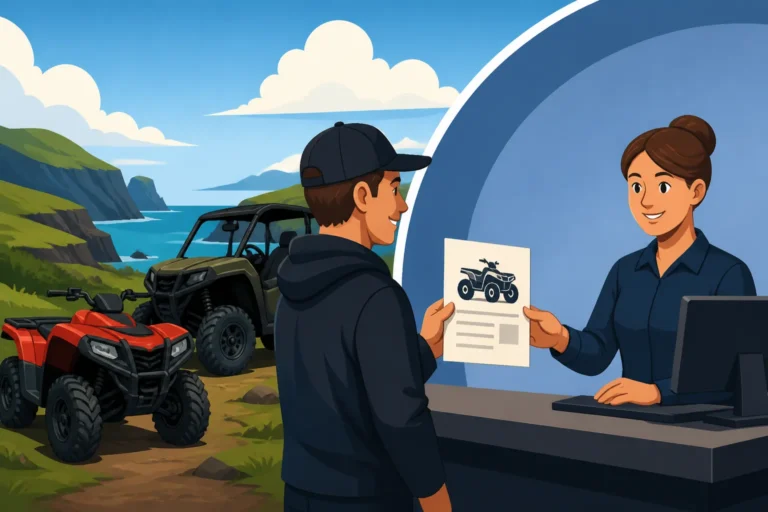
Your dealership plays a critical role in this process, as they are the direct link between the manufacturer and you. When you buy a new ATV or UTV, the dealer is responsible for providing you with the original NVIS document. This usually happens at the time of purchase or delivery. It's not just a courtesy; it's a legal obligation that ensures you can complete your registration.
However, sometimes the NVIS might not be immediately available, or it could be misplaced by either party. It's a scenario that can cause immense stress when you're eager to get out on the trails. Always double-check that you receive this document before leaving the dealership with your new machine. If there's a delay, make sure you get a clear explanation and a firm timeline for when you can expect it. For peace of mind, consider making a checklist of all necessary paperwork before you even head to the dealership for pickup. [Newfoundland Dealer Paperwork at Delivery] covers what other documents you might expect from a dealer.
Registering Your Brand-New Machine in Newfoundland
Once you've got your NVIS in hand, along with the excitement of your new machine, the next step is to get it officially registered. This involves a trip to the provincial Motor Registration Division, and while it might seem like a bureaucratic hurdle, it's a straightforward process if you're prepared. Understanding what to bring and what to expect can save you a lot of time and frustration.
The Core Documents You'll Need Beyond the NVIS
While the NVIS is the cornerstone for a new machine, it's not the only piece of paper you'll need. Motor Registration requires a comprehensive set of documents to ensure everything is above board. Firstly, you'll need a valid bill of sale from the dealer. This document confirms your purchase, the price paid, and details of the machine. It's proof that you legally acquired the vehicle.
Secondly, you'll need personal identification, usually a valid driver's license or another government-issued photo ID. This is to confirm your identity as the new owner. If the machine is being registered in multiple names, all owners will need to provide identification. You'll also need proof of your Newfoundland and Labrador address. Lastly, be prepared for any provincial sales tax (HST) forms or declarations, as this is typically calculated and collected during the registration process. It's always a good idea to bring originals and make copies of everything for your records. For a full breakdown, check out [Newfoundland Registration Paperwork Explained].
The Step-by-Step Process at Motor Registration
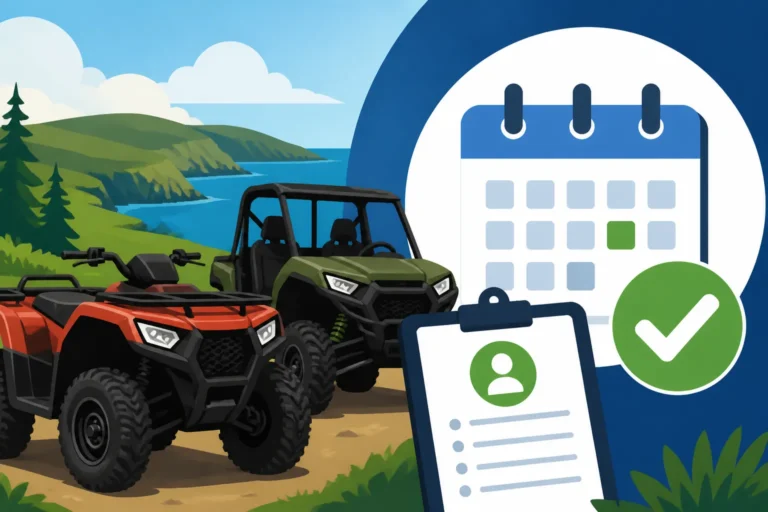
Registering your new machine usually begins with booking an appointment at a Motor Registration office. This has become standard practice and can save you from long wait times. You can typically do this online or by phone. At your appointment, a clerk will review all your documents meticulously. They'll verify the VIN on your NVIS matches the machine, that your bill of sale is complete, and that your identification is valid.
You'll then pay the applicable registration fee. For an ATV, for instance, there's a fixed fee to register it, while side-by-sides fall under a different category with their own specific registration cost. [Newfoundland Charges $95 for an ATV] details the fee for quads, and [Registering a Side-by-Side in Newfoundland] clarifies the process for UTVs. The clerk will process your application, inputting all the vehicle and owner information into the provincial database. Once approved, you'll be issued your registration permit and a unique identification plate, which you then need to affix to your machine. It's a relief to walk out knowing your new ride is officially legal! Learn more about scheduling your visit with [Newfoundland Registration by Appointment].
Common Challenges and Solutions with NVIS and New Machine Registration
Even with all the right intentions, sometimes things don't go as smoothly as planned. When it comes to the NVIS and registering a new off-road vehicle, some challenges commonly pop up. Knowing what these potential roadblocks are and how to address them can save you a lot of stress and prevent unnecessary delays in getting your machine on the trail.
Lost or Missing NVIS: What Are Your Options?
One of the most anxiety-inducing situations for a new ORV owner is realizing that the NVIS is lost or was never provided. This can happen for various reasons, from a simple oversight by the dealer to the document genuinely going missing after you took possession. Your first and best course of action is to immediately contact the dealership where you purchased the machine. They are often able to request a duplicate NVIS from the manufacturer or importer. Be prepared to provide proof of purchase and the machine's VIN.
If the dealership is unresponsive or no longer in business, the situation becomes more complex. You might need to contact the manufacturer directly, though this path can be challenging as manufacturers often prefer to deal with authorized dealers. In some rare cases, if all avenues for an NVIS fail, Motor Registration might accept a sworn affidavit from the dealer or even from you, attesting to the machine's new status and the reason for the missing NVIS. While LawDepot offers templates for various legal documents, like bills of sale or affidavits for general purposes, a direct NVIS replacement isn't something they would provide, as it's a manufacturer-issued document. However, their affidavit templates could be useful if Motor Registration instructs you to submit a sworn statement about why the NVIS is missing, though this is rare for new machines.
Discrepancies Between NVIS and Machine Details
Another frustrating hurdle can arise if there's a mismatch between the information on your NVIS and the actual details of your machine, or even the information on your bill of sale. Common discrepancies include an incorrect VIN, a different model year, or even a wrong engine size. These errors, no matter how minor they seem, can halt your registration process dead in its tracks. Motor Registration staff are meticulous, and any inconsistency will lead to your application being denied until corrected.
If you spot a discrepancy, your immediate step should be to go back to the dealership. It's their responsibility to ensure all documentation accurately reflects the machine they sold you. They will typically need to issue a corrected NVIS or provide an official letter explaining the error. Always verify the VIN on the NVIS against the physical VIN plate or sticker on your machine before you even leave the dealership. This simple check can prevent a world of headaches later on. Take photos of the VIN plate as additional proof, just in case you ever need it.
The Importance of a Clear Paper Trail for Your New Machine
Securing your NVIS and registering your new off-road vehicle isn't just about meeting immediate legal requirements. It's about establishing a solid, verifiable paper trail that protects you as the owner throughout the entire lifespan of your machine. This foresight can prevent significant headaches down the road, whether you're dealing with insurance, selling the machine, or even addressing legal challenges.
Why Accurate Registration Protects You in the Long Run
Having accurate and up-to-date registration records provides a robust layer of protection. Firstly, in the unfortunate event of theft, a properly registered machine with a clear VIN linked to your ownership significantly increases the chances of recovery. Law enforcement relies on these records to identify stolen vehicles and return them to their rightful owners. Without registration, tracing ownership becomes a much more arduous, if not impossible, task.
Secondly, clear registration is vital for insurance purposes. Your insurance company will almost certainly require proof of valid registration before issuing a policy or processing a claim. Any discrepancies in your paperwork could lead to a claim being denied, leaving you financially vulnerable. Lastly, accurate registration simplifies any future interactions with Motor Registration, such as address changes or requesting duplicate documents. Remember, in Newfoundland, [Newfoundland Registration Valid While You Own It], meaning you only pay once, but the details must remain accurate.
Planning for Future Ownership Changes
While you're likely focused on enjoying your new machine right now, it's wise to consider the future, particularly if you ever plan to sell it. A comprehensive and accurate paper trail, starting with the NVIS and your initial registration, makes the selling process much smoother. When a buyer knows that the machine has a clean history and all its documents are in order, it instills confidence and can even enhance the resale value.
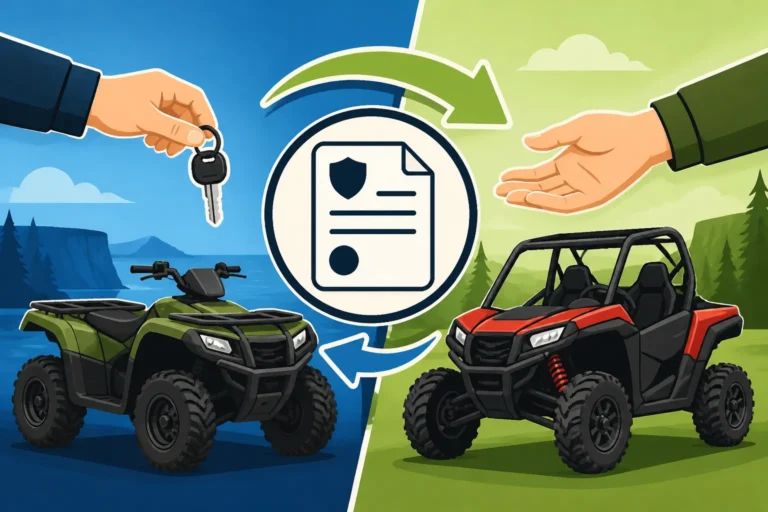
Conversely, trying to sell a machine with missing or incorrect registration documents can be a significant deterrent to potential buyers. It raises red flags and can make them question the machine's history and legality. Keep all your original registration documents, including the NVIS, bill of sale, and the registration permit, in a safe place. When the time comes to sell, having these ready will expedite the [Newfoundland Transfer of Ownership Explained] process and make your machine a much more attractive prospect for a new owner.
Costs and Fees Associated with New Machine Registration
Understanding the financial side of registering your new off-road vehicle is just as important as knowing the paperwork. While the joy of a new machine is priceless, the government fees and taxes are definitely not! Knowing what to expect financially can help you budget accordingly and avoid any unwelcome surprises at the Motor Registration counter.
Breaking Down the Registration Fee for ATVs and Side-by-Sides
When you register your new ATV or side-by-side in Newfoundland, you'll encounter a fixed registration fee. This fee is a one-time charge for as long as you own the machine, which is fantastic news for riders! However, the amount varies depending on the type of off-road vehicle you are registering. For example, a typical ATV will have one registration cost, while a side-by-side will have a different, often higher, fee due to its classification and sometimes larger engine or seating capacity. Trail bikes also have a significantly different, lower fee.
It's crucial to confirm the exact fee for your specific machine type by checking the provincial government's official Motor Registration website or by calling them directly before your appointment. This way, you can ensure you have the correct payment method ready. While I can't give you exact figures, rest assured that once this initial fee is paid, you won't be hit with annual renewal fees – a unique benefit in Newfoundland that sets it apart from many other provinces.
Understanding the HST Component of Your Purchase
Beyond the registration fee, you'll also need to account for the Harmonized Sales Tax (HST) on your new machine purchase. In Newfoundland and Labrador, this tax applies to the purchase price of your off-road vehicle, just like any other large consumer good. When you buy from a licensed dealer, the HST is typically calculated and added to the purchase price on your bill of sale. This means you will likely pay the HST to the dealership directly, and they will remit it to the government.
However, during the registration process, Motor Registration will often verify that the appropriate taxes have been paid. If you were to purchase a new machine in a less conventional way (though this is rare for truly new machines), or if there were any questions regarding the tax collection, you might be required to pay or confirm the HST payment at the time of registration. Always keep your bill of sale handy, as it will clearly show the HST paid. Understanding [Newfoundland HST on an ATV Purchase] is key to budgeting for your new ride.
| Document Type | New Machine (Dealer Purchase) | Used Machine (Private Sale) | Purpose |
|---|---|---|---|
| New Vehicle Information Statement (NVIS) | Required (Original) | Not applicable | Proof of new vehicle status, initial manufacturing details |
| Bill of Sale | Required (From Dealer) | Required (From Private Seller) | Proof of purchase, sale price, buyer/seller details |
| Proof of Identity | Required (e.g., Driver's License) | Required (e.g., Driver's License) | Verifies owner's identity |
| Proof of Address | Required (e.g., Utility Bill) | Required (e.g., Utility Bill) | Confirms current residency for registration |
| Previous Registration Permit | Not applicable (for new) | Required (from previous owner) | Shows previous ownership, registration details (for transfer) |
| Provincial Sales Tax (HST) | Collected by dealer (verified at registry) | Paid at registry (based on sale price) | Government sales tax on purchase |
| Lien Search (Recommended) | Not typically needed for new from dealer | Highly Recommended | Checks for outstanding debts on the machine |
| Sworn Affidavit | Only in rare cases if NVIS permanently unavailable | May be required if previous registration/BoS is missing | Legal statement attesting to facts when primary docs are absent |
Disclaimer
This article is for general informational purposes only and does not constitute professional advice. Laws, prices and regulations vary by location and change over time. Consult a qualified professional for guidance on your specific situation.