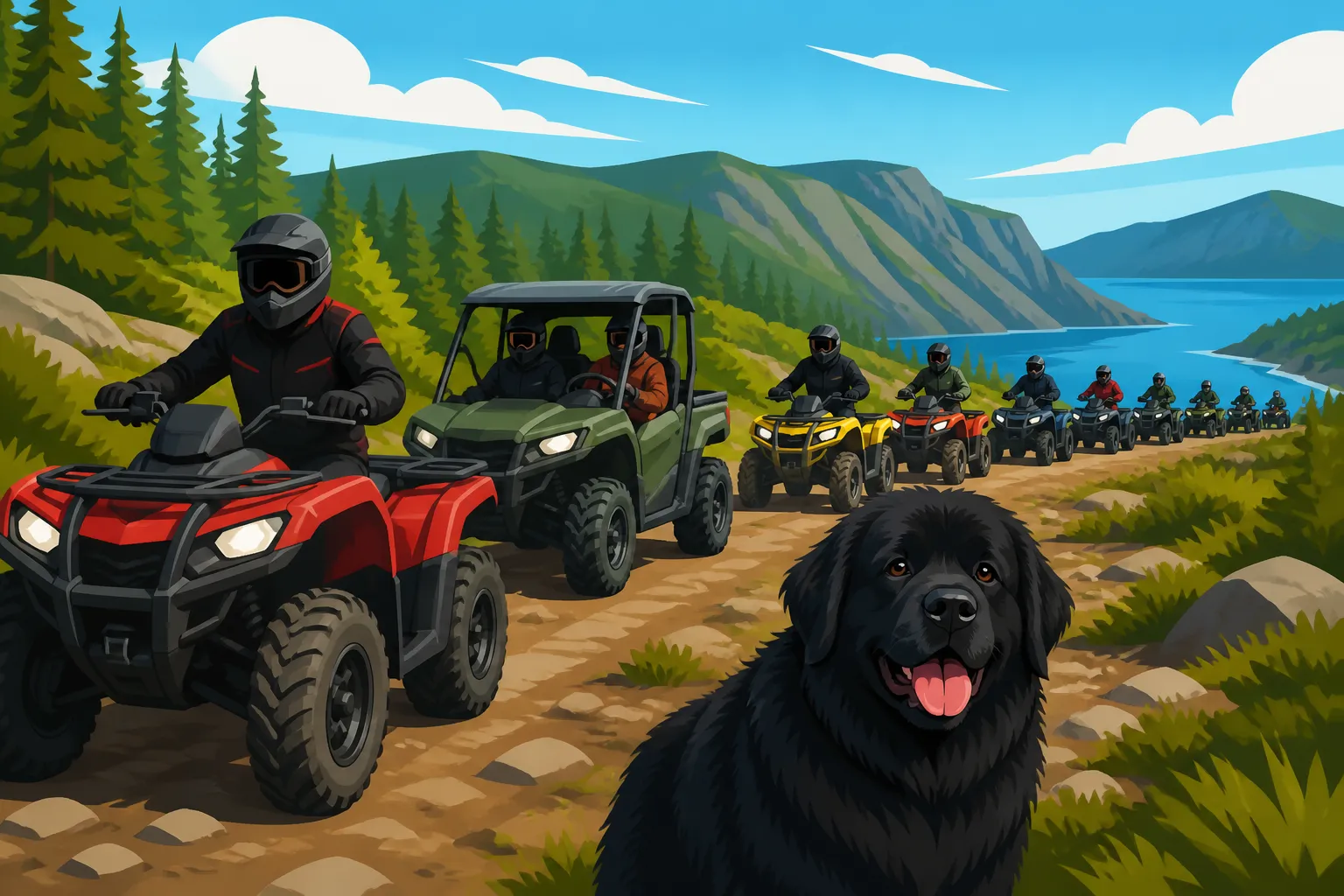
Newfoundland Riding With a Group of Ten
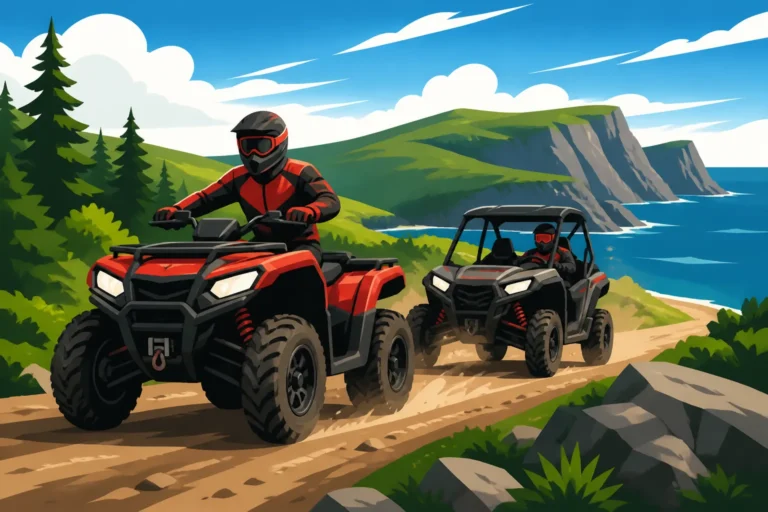
A ten-machine ride can feel less like a day out and more like a moving traffic jam if riders arrive separately, lose cell service, or discover a trail restriction halfway through. Planning a Newfoundland group ride means coordinating machines, riders, fuel, and route choices before unloading. This guide covers practical ways to keep a group of ten together while respecting local access rules and sharing the trail safely.
Plan the route for the group, not just the lead rider
A route that is straightforward for one experienced rider may be tiring or confusing for ten machines with different capabilities. Before choosing a trail, agree on the group’s pace, the least experienced rider’s comfort level, and a realistic turnaround point. In Newfoundland, terrain and weather can change quickly, so a shorter route with room for delays is often a better choice than an ambitious loop.
Check access and trail conditions before setting a meeting place
First, confirm that the route is open to the type of machines in your group. A trail shown on a general map is not automatically open or appropriate for every ATV or side-by-side. Check the current information from the relevant land manager, trail operator, municipality, or other authority, and pay attention to posted signs once you arrive. The rules can differ between managed trails, Crown land, private land, and municipal roads.
This matters when a route crosses different kinds of land. A trail may pass through an approved area and then approach a restricted area, private parcel, or seasonal closure. Do not assume that permission for one section grants permission for the next. Review [Newfoundland Crown Land Access Rules] and [Newfoundland Restricted Area Permissions] before planning a route that crosses Crown land or an area with specific access conditions.
For a group of ten, confirm access details early enough to change plans if needed. Ask the trail operator or land manager whether the proposed route is open, whether a sticker or other proof is required, and whether any local limits or conditions apply to organized group rides. The group size alone does not tell you what rules apply; the location, trail operator, land status, and event arrangements may matter too.
Build a route with simple landmarks and sensible alternatives
Choose a main route with recognizable stopping points, such as a trailhead, junction, bridge, or community where the group can regroup safely. Give every rider the same route notes, including the planned start, turnaround point, fuel stop, and a backup route. If a section becomes unsafe or is closed, the group should know where it can turn around without improvising at the trail entrance.
Digital mapping tools can help riders compare route options and keep a route plan available offline. Some groups use onX Offroad to review mapped trails and mark waypoints before leaving, but a recreational map should not replace checking official access information or posted signs. Save the route before cell service becomes unreliable, and carry a paper map or written directions as a backup. [Carrying a Paper Map Where There Is No Signal] is especially relevant when the ride takes you beyond dependable coverage.
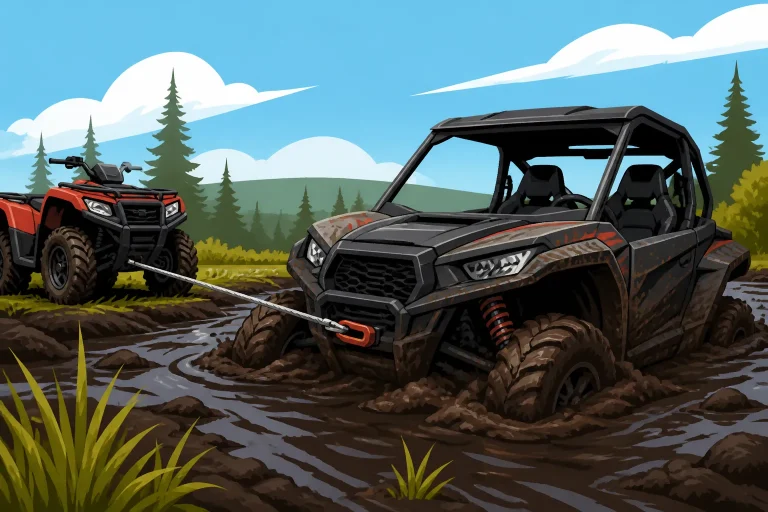
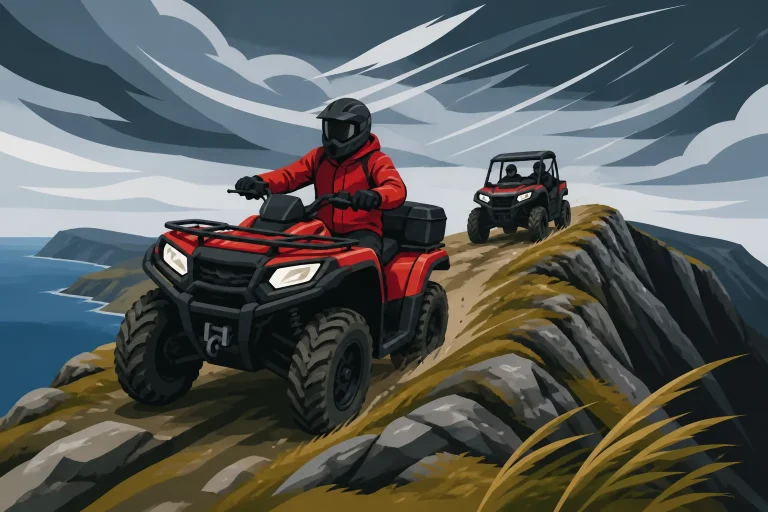
Plan conservatively around Newfoundland conditions. A firm-looking trail can turn into deep mud, standing water, or a slow bog crossing, and exposed areas can become unpleasant in fog or heavy wind. A route that allows the group to turn back before conditions worsen is more useful than a tightly timed itinerary with no alternatives. For more seasonal planning, see [Newfoundland Trail Conditions Before You Ride].
Organize ten riders before the machines start moving
A group ride runs more smoothly when everyone understands the plan before engines are started. Ten riders can easily become scattered during unloading, gearing up, or checking machines. A short briefing at the meeting point helps prevent avoidable confusion once the group is underway.
Assign clear roles and agree on a regrouping plan
Choose a lead rider who knows the route and a sweep rider who stays behind the last machine. The lead should set a pace that is manageable for the whole group, not just the fastest riders. The sweep should know the route too and should have a reliable way to contact the lead if someone stops, has a mechanical problem, or needs assistance.
Before departure, agree on what happens at junctions. One simple approach is for riders to stop at each major turn and wait until the next person has seen the correct direction. Do not rely on a single rider waving from far ahead; the group may stretch out over a long section, and a signal can be missed. At a confusing intersection, wait in a safe location where stopped machines do not block other trail users.
Set a plan for breakdowns and separation as well. If a rider has to stop, the sweep can stay with them while the lead pauses at the next agreed regrouping point. Make sure every rider knows that point and has the route information. A mapping app such as onX Offroad can support navigation and waypoint planning, but it should not be the only way the group knows where to meet.
Check documents, training, equipment, and machine readiness
Before the ride, remind each participant to confirm the requirements that apply to their machine, riding area, and circumstances. Newfoundland riders may need to consider registration, insurance, training proof, and any managed-trail sticker requirements. Requirements can vary with the rider and location, so check the details rather than assuming everyone’s machine is covered because one participant has checked theirs. Start with [Newfoundland Managed Trail Rules] and [Newfoundland Safety Training Is Mandatory].
Ask riders to inspect their machines before the group leaves: tires, brakes, lights, belts, fuel, and any equipment needed for the planned terrain. Side-by-sides should have seat belts available and used as required, and each rider should bring appropriate protective gear. If a machine has a warning light, damaged tire, unreliable throttle, or other known issue, it is better to address it at home than to discover it deep into a group route.
A shared checklist can keep the briefing practical without turning it into a long lecture:
| Before departure | What the group should confirm |
|---|---|
| Route and access | Open trail, permitted machine types, closures, and any operator requirements |
| Rider information | Names, emergency contact details, and who is riding each machine |
| Navigation | Saved route, meeting points, backup route, and paper directions |
| Machine checks | Fuel, tires, brakes, lights, belts, and basic recovery equipment |
| Safety and paperwork | Applicable registration, insurance, training proof, and required trail sticker |
| Group roles | Lead rider, sweep rider, regrouping points, and breakdown plan |
A rider who is new to the area may need extra time to check requirements and prepare. Keep the conversation friendly and specific: “Do you have the documents and equipment needed for this route?” is more useful than assuming everyone knows what to bring. For a closer look at the safety requirements, review [Newfoundland Proof Carried While Riding].
Keep the group together without blocking the trail
Ten machines take up space, make more noise, and can create dust or visibility problems for other trail users. A thoughtful formation and disciplined stops help the group travel safely while leaving room for hikers, cyclists, snowmobilers, and other riders.
Ride in a controlled formation and leave room to react
Avoid crowding the machine ahead. Each rider needs enough space to see the trail and respond to a sudden stop, obstacle, or change in terrain. The right spacing depends on visibility, speed, surface, and conditions. Increase the gap on dusty roads, around blind corners, and anywhere a rider may need more room to brake.
On a narrow trail, do not spread out so much that the group loses contact, but do not bunch up to keep sight of every machine. Use agreed regrouping points instead. If the group is delayed by a slower section, let the lead know at the next safe stop rather than pushing a rider to go faster than they are comfortable with.
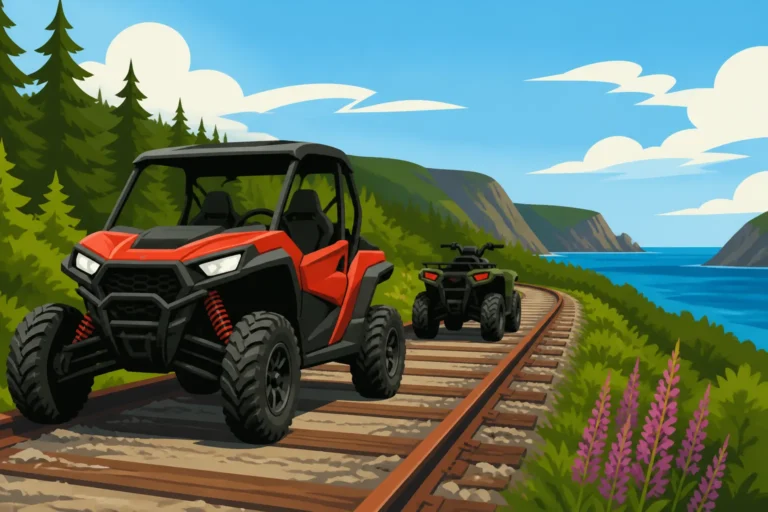
The lead should ease off when visibility drops or the trail gets rough. The sweep should avoid pressuring the last riders to catch up. If the group encounters other trail users, reduce speed, communicate calmly, and give them room to pass where it is safe. On a shared railbed, courtesy matters as much as navigation; see [Riding Etiquette on a Shared Railbed] for practical ways to share the corridor.
Make stops safe and useful
A stop should be planned, visible, and clear of the trail. Avoid stopping just beyond a blind corner or at a narrow junction where other users may not see the machines in time. When the group needs to regroup, move to a broad, stable area and park in a way that leaves room for others to pass.
Use stops to check more than the time. Ask whether anyone needs fuel, water, a gear adjustment, or a slower pace. Look for signs that conditions are changing, such as rising water, worsening fog, or a trail surface becoming harder to manage. A short check-in can prevent a minor problem from becoming a long recovery.
Keep the break routine simple. The lead confirms the next segment, the sweep confirms everyone is present, and riders share any concern before moving again. Avoid letting the group divide into fast and slow sections without a clear plan for where they will meet. If someone has to turn back, make sure at least one other rider accompanies them or that the group has agreed on another safe arrangement.
Prepare for Newfoundland weather and unexpected delays
A group ride can take longer than expected because of trail conditions, navigation mistakes, a mechanical issue, or a rider needing a break. In Newfoundland, changing weather and weak or nonexistent cell coverage can make those delays more consequential. Planning for a slower day is not pessimism; it gives the group more options if the route does not go as expected.
Pack for a long day and a possible change of plan
Each rider should carry essentials for their own needs rather than assuming someone else has enough for everyone. Useful items can include water, food, weather-appropriate layers, first-aid supplies, a charged phone, a flashlight, and basic tools suited to the machine. The group should also consider recovery gear, but riders need to know how to use it safely. A tow strap is not helpful if nobody understands where it can be attached or how to keep people clear during a recovery.
Tell someone who is not on the ride where you are going and when you expect to return. Share the route and the group’s contact plan, and update that person if the plan changes significantly. Where service is unreliable, agree on what the group will do if it becomes separated or delayed instead of expecting a phone call to solve every problem.
Use a conservative turnaround time. If a group of ten reaches a junction later than planned, it may be safer to shorten the ride rather than hurry through the remaining route. Weather, daylight, and the condition of the slowest machine should shape that decision. A mapping tool such as onX Offroad may help you keep route notes and waypoints organized, but leave room in the plan for conditions that a map cannot show.
Know when to stop, reroute, or call the ride
Do not push onward just because the group has already driven a long way to reach the trail. Turn back or choose a safer alternative if the route is closed, access is unclear, a rider is injured, weather reduces visibility, or a machine cannot continue reliably. The lead should invite concerns rather than waiting for someone to insist that they cannot go on.
A group of ten can also magnify the impact of a poor decision. If machines are spinning in a wet area, stop and reassess rather than letting the whole group churn the trail into deeper ruts. Avoid entering a section that the machines cannot cross safely, and do not treat a difficult crossing as a challenge that everyone must attempt. Protecting the trail and getting everyone home matter more than completing the planned loop.
After the ride, check that every rider has returned and that no machine or gear has been left behind. If you encountered a closure, unsafe section, or confusing access point, pass the information to the appropriate operator or land manager. A useful report can help the next group plan more responsibly. The best ride with ten machines is not necessarily the one that covers the most ground; it is the one where everyone understands the plan, respects the route, and finishes safely.
Disclaimer
This article is for general informational purposes only and does not constitute professional advice. Laws, prices and regulations vary by location and change over time. Consult a qualified professional for guidance on your specific situation.