Newfoundland Trail Damage and Bog Ruts
A Newfoundland bog can look firm from the seat and turn into a deep rut in seconds. That is frustrating for riders, hard on machines, and damaging to trails that may take a long time to recover. This guide explains why bog ruts form, how to avoid making them worse, and what to do when a trail becomes soft or your ATV or UTV gets stuck.
Why Newfoundland trails develop bog ruts
Peat and wet ground behave differently from gravel
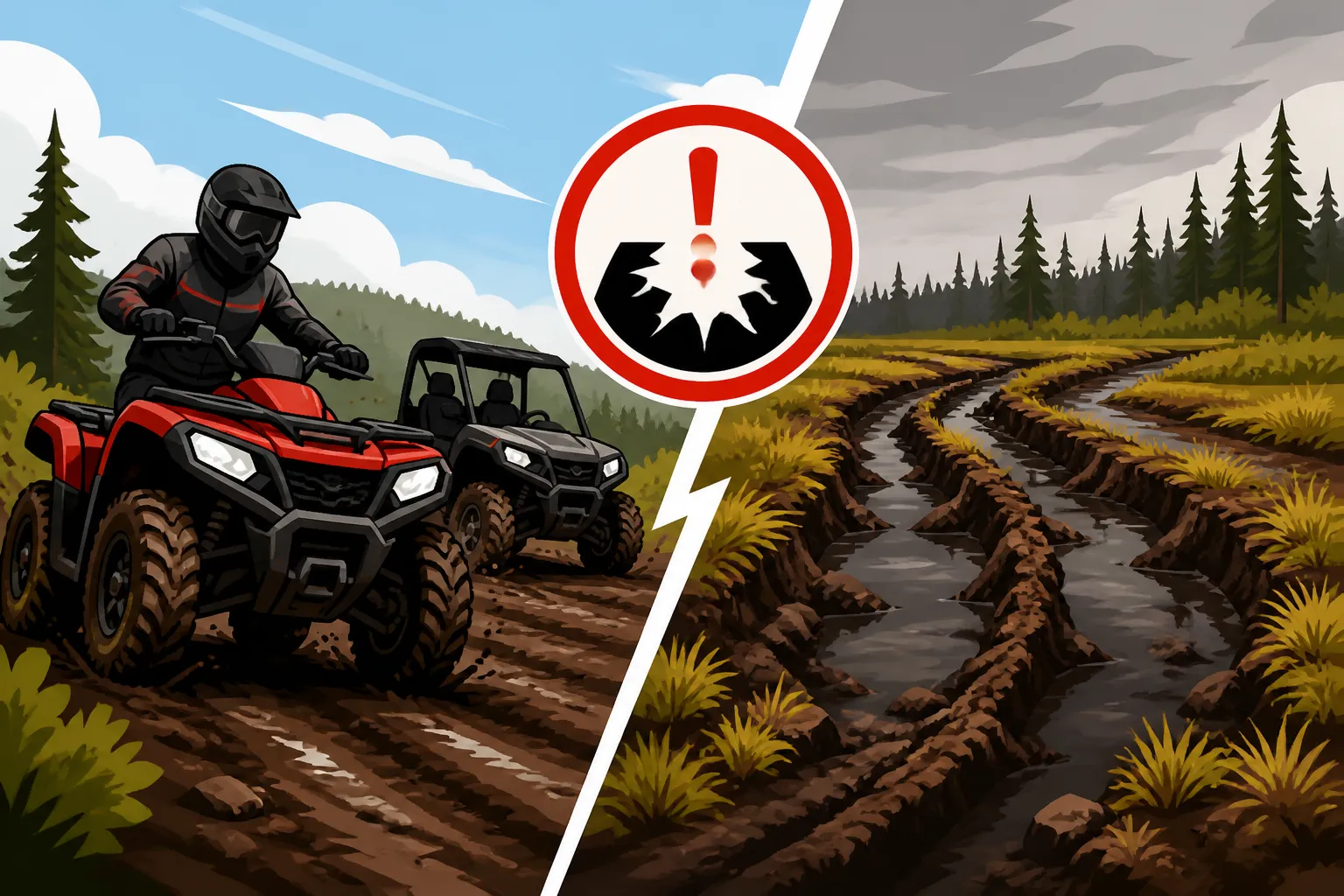
A gravel road usually gives you a fairly clear warning: loose stones shift under the tires, or a washout is visible ahead. Peat and saturated soil are less predictable. The surface may look solid while a thin layer of vegetation is holding together waterlogged ground underneath. Once a tire breaks through that layer, it can sink, push soil aside, and leave a rut that channels water into the damaged area.
That damage can build quickly. One machine may leave shallow tire marks that seem harmless; repeated passes can deepen them, loosen the ground around them, and make the route harder to travel without spinning. A rut then encourages the next rider to follow it, and the same vulnerable strip gets worked over again. What began as a short stretch of soft ground can become a boggy obstacle with standing water and exposed soil.
Newfoundland’s mix of bog, wetland, barrens, and former rail corridors means conditions can change over a short ride. A route that was passable during a dry spell may be soft after sustained rain or snowmelt. If you are planning a longer outing, check route information before leaving and avoid treating a line shown on a map as proof that the ground is firm or open. [Newfoundland Trail Conditions Before You Ride] is a useful companion when you are thinking through changing conditions.
Wheelspin turns a soft patch into a larger problem
When a machine starts to lose traction, it is natural to add throttle. Unfortunately, spinning tires can dig down faster than the machine moves forward. The tires churn the surface, throw mud onto nearby vegetation, and may deepen the rut until the frame, skid plate, or tires are caught against its edges. A passenger or another rider may then try to pull the machine out, widening the damage further.
The instinct to keep going is especially strong when the soft patch is only a few metres long. But if the machine is barely advancing, continuing to spin is usually a sign to stop and reassess. Backing out along the same track, if it can be done safely, may be less damaging than powering forward into softer ground. If the machine is bogged down, a controlled recovery is generally kinder to the trail than repeated attempts to claw free.
Ruts also change where water flows. A deep groove can act like a small channel, concentrating runoff and carrying soil away. Even after the trail dries, the rut may remain as a weak spot that catches water the next time it rains. That is one reason a muddy track is not simply a cosmetic issue. [Newfoundland Wetland Protection Rules] offers relevant context for riders considering how sensitive ground and machine use intersect.
How to spot trouble before you enter a bog
Read the surface and the approach
Before entering a soft section, look beyond the first few metres. Check whether the track narrows, dips, or passes through standing water. Look for fresh, deep tire marks, exposed peat, broken vegetation, or water flowing along the route. A small puddle can hide a firm base, but it can also conceal a deep rut; if you cannot judge the surface, do not assume it is safe just because another machine has gone through.
The approach matters, too. A machine entering quickly may be difficult to stop once the tires start sinking. Slow down before the soft patch, keep enough distance from the rider ahead to avoid being forced into the same line, and be prepared to turn around. If a trail is already deeply rutted, do not ride around the edge into undisturbed vegetation simply to avoid the mud. That can create a second damaged track and make the affected area wider.
Route-planning tools can help you understand the broad shape of an outing, but they do not tell you whether a particular bog is firm today. Riders may use onX Offroad to review available route information or plan a track, then confirm access and conditions with reliable local or trail-operator information. A digital line should never be treated as permission to ride or as a guarantee that a wet section is passable.
Choose a line without widening the trail
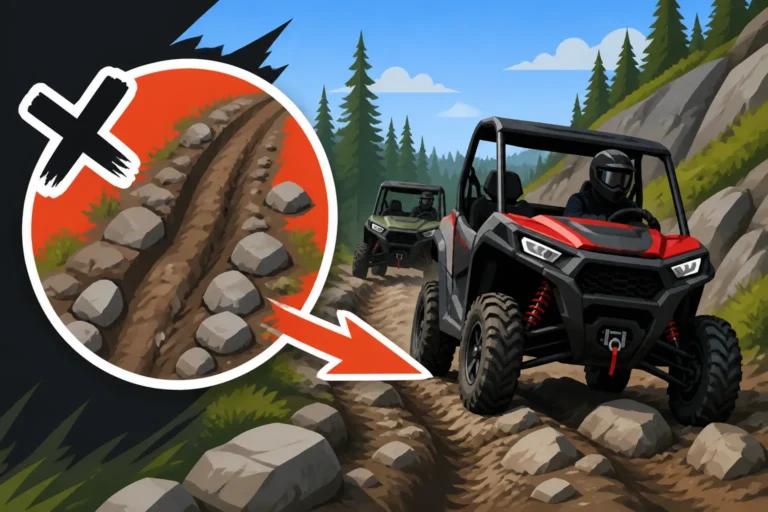
On a soft trail, the least damaging choice is not always obvious. Staying in an existing track can help keep impact concentrated, but if that track has become a deep, water-filled rut, following it may put your machine at risk. On the other hand, veering onto the side can crush intact vegetation and create another rut. Pause, look at the whole section, and choose a safe option that does not turn a narrow problem into a wide one.
If there is a stable, established route around the trouble, use it only when it is clearly part of the trail and riding is permitted there. Avoid cutting across plants or making a fresh bypass. If the only apparent way through is to spin, force your way through deep water, or leave the marked route, turn around and report the condition to the appropriate trail operator or land manager.
| What you notice | What it may mean | A lower-impact response |
|---|---|---|
| Fresh, deep tire marks | The surface may be soft or repeatedly churned | Stop before the section and assess the full route |
| Water running down a rut | The track may be channeling runoff | Avoid adding more wheelspin; report serious damage |
| Vegetation pushed aside | Riders may be creating a wider bypass | Stay on an established route or turn back |
| A machine barely moving | Tires may be digging rather than gaining traction | Ease off, stop, and consider a careful recovery |
| A narrow trail with no firm line | Any attempt may cause damage or risk a breakdown | Do not force through; choose another route |
Weather changes can make yesterday’s route advice unreliable. A track log from a previous ride, including one saved with onX Offroad, can help you remember where a soft section was, but it cannot confirm today’s ground firmness. Check again before setting out, and be willing to shorten the ride if conditions have deteriorated.
What to do when your machine gets stuck
Stop the wheelspin and make a calm plan
As soon as you realize the machine is not moving, ease off the throttle. Continuing to spin can dig the tires in, bury the machine’s undercarriage, and make recovery more difficult. Put the machine in a safe state according to its controls and the situation, then look around for hazards: other trail users, unstable ground, water, branches, and the direction the machine may move if it comes free.
Ask everyone to stand clear of the tires and any recovery line. Decide whether the machine can be backed out along its own track without force. If it cannot, use recovery equipment and methods you understand, following the equipment manufacturer’s instructions. Do not improvise by attaching a strap to a weak or unsuitable point, and do not stand in the path of a tensioned line. A recovery should be controlled, with clear communication between the person operating the machine and anyone assisting.
Avoid dragging the machine through vegetation or across the edge of the trail simply because that route seems firmer. A difficult recovery can tempt riders to take shortcuts, but those shortcuts may leave a larger scar than the original rut. If the machine is deeply stuck, damaged, or unsafe to recover with the equipment and people available, stop and arrange appropriate help rather than escalating the situation.
Recover along the existing track when practical
When it is safe and feasible, try to recover the machine along the line it entered. That helps limit the affected area. Use a gradual pull rather than a sudden jerk, and keep bystanders away from the recovery line and attachment points. If the machine is on a slope or near water, be especially cautious: a small movement can change the load or cause the machine to shift unexpectedly.
Once free, do not immediately drive back through the same soft patch at speed. Check the tires, undercarriage, and controls for mud or debris, and make sure the machine is operating normally. If the route remains unsafe or the surface has been badly disturbed, turn around by a safe method or use another permitted route. Repeated attempts to cross the same bog can deepen the rut and increase the chance that another rider will get stuck.
It can help to record the location and condition of a serious obstruction so you can tell the trail operator or land manager where it is. A saved waypoint or note in onX Offroad may help you describe the spot, provided you confirm that the operator accepts that kind of location information. Keep the report factual: describe the visible damage, whether water is moving through the rut, and whether the route appears passable without leaving the trail.
How to ride responsibly on shared and sensitive trails
Stay on permitted routes and avoid creating bypasses
A boggy section does not automatically mean riders can choose their own route around it. Some land is restricted, some trails are managed, and access can vary by location. Before riding, confirm that the route is open and permitted. Pay attention to signs and closures, and do not assume that a route used by someone else is authorized. [Newfoundland Crown Land Access Rules] and [Newfoundland Restricted Areas and Approved Trails] can help you understand why route choice matters beyond the condition of the ground.
A map app can be useful for planning, but it is only one part of the check. Riders using onX Offroad should compare what they see with current local access information, posted signs, and any direction from the trail operator. A line on a screen cannot replace an on-the-ground closure notice. If there is a conflict or uncertainty, do not ride into the area until you have clarified access.
This caution also applies when a familiar route appears to have a new side track. It may be a legitimate trail, or it may be a fresh bypass around a wet spot. Look for signs and ask the appropriate operator rather than assuming that visible tire marks make a route acceptable. [Newfoundland Managed Trail Rules] is relevant when a ride includes managed trails with their own requirements.
Give the trail time to recover
Repeated traffic through saturated ground can cause more harm than a single careful pass, so consider postponing a ride when conditions are particularly wet. This can be disappointing when you have planned a weekend, loaded the trailer, or driven a long way to the trailhead. Still, continuing simply because the trip is underway can turn a brief inconvenience into damage that affects other riders and the surrounding ground.
If you ride with a group, make the decision together before reaching a vulnerable section. A lead rider can stop at a safe place and let everyone know what has been spotted. Keep the group from bunching up at the edge of the bog, where machines may be forced to stop on soft ground or crowd one another into a poor line. On shared corridors such as the T’Railway, remember that other trail users may also be nearby. [Riding Etiquette on a Shared Railbed] provides useful context for sharing a route respectfully.
After the ride, report significant washouts, deepening ruts, or blocked sections to the trail operator or responsible land manager. Do not attempt unapproved trail work or fill a rut with branches, rocks, or other material; that can redirect water, create hazards, or conflict with management plans. A clear report gives the people responsible for the route a chance to assess the issue and decide whether maintenance, a closure, or a warning is appropriate.
Preparing for Newfoundland conditions before you ride
Plan for weather, distance, and a change of route
Build flexibility into the day. A planned loop may need to become an out-and-back ride if a section is too wet, and a route that looks short on a map may take longer when the surface is rough or visibility is poor. Tell someone where you intend to go, carry the basics for a delay, and avoid relying on a single route if the trail network offers another permitted option.
Check the forecast and local trail information before loading up, then check again before you enter a remote section. Rain, fog, and changing ground conditions can affect both traction and visibility. A map tool such as onX Offroad may help you review route options or note a location for your group, but keep a paper map or another backup if you may lose service. Do not rely on a phone screen as your only way to navigate or communicate.
Group leaders should set expectations before the ride: no racing into blind or soft sections, no pressure to cross a bog that feels unsafe, and no leaving the route to get around an obstacle. Make sure everyone knows who is carrying recovery equipment and how the group will communicate if a machine stops. These conversations are much easier to have at the trailhead than while a machine is sinking.
Finish with a quick machine and trail check
At the end of the outing, check the machine for packed mud around the tires, suspension, radiator area, and underside. Mud buildup can hide damage or interfere with parts that need to move or cool properly. Clean the machine where appropriate, dispose of wash water and waste responsibly, and avoid carrying peat or plant material from one area to another.
Also take a moment to consider what you saw on the route. Did a section become noticeably softer? Was water flowing through a rut? Did the group need to turn around? Make a brief note while the details are fresh, including a reliable location description. If the trail is managed, share relevant information with the operator instead of posting an unverified claim that a route is closed or unsafe.
Responsible riding is not about avoiding every muddy patch. It is about recognizing when the ground is giving way, resisting the urge to power through, and choosing a response that protects both people and the trail. A few minutes spent reassessing a bog can prevent a much harder recovery and help keep a Newfoundland route usable for the next group.
Disclaimer
This article is for general informational purposes only and does not constitute professional advice. Laws, prices and regulations vary by location and change over time. Consult a qualified professional for guidance on your specific situation.