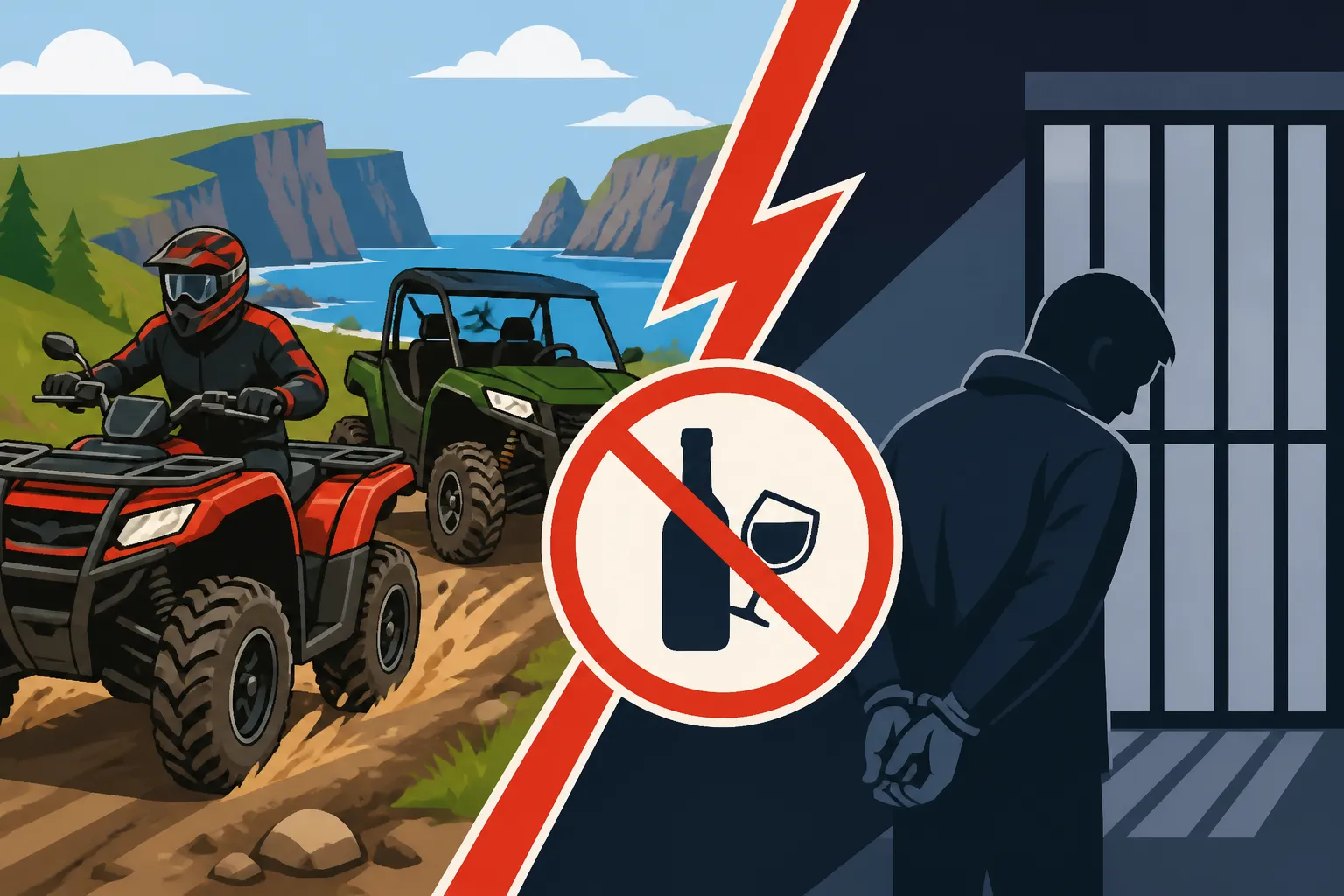
Impaired Operation and Jail
Riding an ATV or UTV in Newfoundland and Labrador is an incredible experience, offering unmatched freedom and access to our stunning wilderness. However, that freedom comes with immense responsibility, especially when it comes to operating your machine safely and soberly. Too often, riders might mistakenly believe that off-road laws are somehow more lenient, or that getting caught impaired on a trail won't lead to the same severe consequences as impaired driving on a highway. Let me tell you, that's a dangerous misconception that can – and does – lead directly to jail time and a life-altering criminal record. This guide is here to lay out the stark reality of impaired operation penalties in our province, helping you understand the very real risks and why making the right choice every time is non-negotiable.
The Gravity of Impaired Operation in Newfoundland
It’s easy to get caught up in the fun and camaraderie of a group ride, maybe around a cabin or after a fishing trip. But when the drinks come out, the lines can blur, and suddenly, what seemed like a harmless short spin becomes a criminal offence with potentially devastating consequences. The law in Newfoundland and Labrador doesn't distinguish between operating a car on a paved highway and operating an off-road vehicle (ORV) on a backwoods trail when it comes to impaired driving. The penalties are equally severe because the risk to life and limb is just as real, if not more so, given the challenging terrain and lack of safety features in many ORVs compared to modern cars.
Understanding "Impaired Operation" Beyond Alcohol
When we talk about impaired operation, most folks immediately think of alcohol, and rightly so. Driving or riding under the influence of alcohol has been a serious offence for a long time, and the message about its dangers is pretty clear. However, the legal definition of impairment is much broader than just a few beers. It encompasses any substance that affects your ability to safely operate your machine.
This includes illicit drugs, of course, but it also extends to prescription medications and even over-the-counter drugs that carry warnings about operating machinery. Think about it: that strong cold medicine that makes you drowsy, or certain pain medications that cloud your judgment. If these impair your ability to react quickly, judge distances, or maintain control of your ATV or side-by-side, you could be deemed impaired under the law. The crucial factor isn't what you've taken, but how it affects your faculties. Riding an ORV demands quick reflexes, sharp focus, and sound judgment – qualities that any impairing substance can compromise, turning a scenic ride into a potential disaster.
Why ORVs Aren't Exempt from Impaired Driving Laws
There's a persistent myth out there that because you're "off-road," you're somehow outside the jurisdiction of serious traffic laws. This simply isn't true, especially for impaired operation. [Newfoundland's Off-Road Vehicles Act] explicitly covers the safe operation of ATVs, UTVs, snowmobiles, and other off-road machines. While some aspects of the Act deal with registration, equipment, and where you can ride, it is absolutely clear that general criminal laws regarding impaired operation apply fully to ORVs.
Whether you're on a managed trail, a woods road, your own property, or even just crossing a short section of highway, if you're operating your machine while impaired, you are subject to the same Criminal Code of Canada charges as if you were driving a car. This means the police have the authority to pull you over, demand breath samples, and lay charges. The idea that a remote trail provides immunity is a dangerous fantasy. In fact, many serious accidents on trails are linked to impaired operation, often with tragic outcomes for riders and their passengers. It's a sobering thought, but one we all need to take seriously before we even think about turning the key after a drink or any impairing substance.
Immediate Consequences: Roadside to the Station
The moment a peace officer suspects impaired operation on your ORV, things can escalate very quickly. This isn't just about a simple ticket; it involves a criminal investigation that can swiftly lead to an arrest, the seizure of your machine, and a trip to the police station. Understanding this process, and your obligations during it, is crucial – even though we all hope to never experience it firsthand.
The Police Stop and Investigation Process
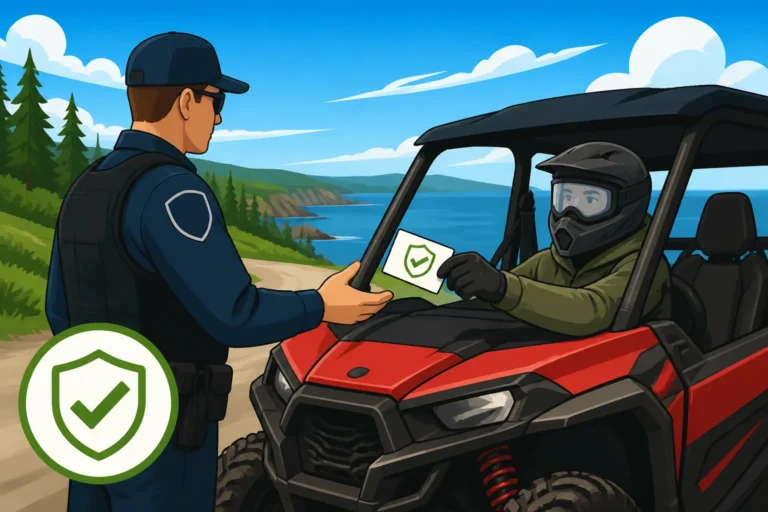
Imagine you're out for a ride, perhaps coming back from the cabin, and you see flashing lights behind you or an officer motions for you to stop. This is where the seriousness of the situation begins. An officer can pull you over if they have reasonable grounds to suspect you've committed an offence under the Off-Road Vehicles Act, or if they observe signs of impairment. These signs might be obvious, like swerving or erratic driving, or more subtle, such as bloodshot eyes, slurred speech, or the smell of alcohol.
If impairment is suspected, the officer will likely ask questions and conduct standardized field sobriety tests. Refusing these tests can lead to charges just as serious as an impaired driving charge itself. They also have the right to demand a breath sample using an approved screening device. Again, refusal to provide a sample is a criminal offence. If the screening device indicates you're over the legal limit, or if the officer has further grounds to believe you are impaired by alcohol or drugs, you will be arrested. At this point, your ride is over, and your day takes a very sharp, unwelcome turn. You'll be taken to the detachment for further testing, typically a breathalyzer test for alcohol or a demand for a blood sample for drug impairment. Compliance is not optional; it's a legal requirement.
Machine Seizure and Impoundment
One of the most immediate and often surprising consequences of an impaired operation charge involving an ORV is the seizure of your machine. The police don't just send you home with a ticket; they take possession of the vehicle. [Newfoundland Machine Seizure Rules] are quite clear on this. Your ATV or UTV will be towed away and impounded, often at your expense.
This means that not only are you facing a criminal charge, but you also have to deal with the logistical and financial headache of getting your machine back. Towing fees can be substantial, especially if you're in a remote area, and impoundment fees accrue daily. Getting your machine released often requires a court order or the successful resolution of your case, which can take weeks or even months. This process adds significant stress and unforeseen costs to an already dire situation. It's not just a minor inconvenience; it's a very real penalty that hits you immediately, reminding you that the province takes impaired operation on any vehicle very seriously.
The Judicial System: Charges and Penalties
Once you've been arrested and charged with impaired operation, you're officially in the criminal justice system. This is where the consequences truly begin to bite, moving far beyond a simple fine. The penalties are designed to deter future offences and reflect the gravity of putting yourself and others at risk.
First Offence Penalties: Beyond Fines
Even for a first offence of impaired operation, the consequences are severe and multifaceted. While there will certainly be fines, these are often just the tip of the iceberg. The minimum fine is substantial, but what often impacts people more immediately is the mandatory driver's licence suspension. This isn't just a suspension of your ORV operating privileges; it typically affects all your driving licences, meaning you can't drive a car, truck, or any other motorized vehicle. This can wreak havoc on your daily life, making it difficult to get to work, run errands, or pick up kids.
But here's the kicker that many people don't fully grasp: a first offence can, and often does, lead to jail time. While a judge might consider various factors, a short custodial sentence is absolutely on the table. Moreover, an impaired driving conviction results in a criminal record. This isn't something that just fades away; it follows you. It can impact your ability to travel to certain countries (like the United States), affect employment opportunities, and even limit volunteer activities. It's a stain that takes a long time, and often a lot of legal effort, to address. [Newfoundland Fine Ranges by Offence] exist, but the non-monetary penalties are often far more impactful.
Escalating Penalties for Repeat Offences
If you're convicted of impaired operation more than once, the penalties become significantly harsher. The judicial system views repeat offenders with increasing severity, aiming to remove them from the roads (and trails) for longer periods and to impose more stringent deterrents. This is where [Impaired Operation and Jail] becomes an almost certainty, not just a possibility.
For a second offence, the minimum jail sentence is typically thirty days, and it goes up sharply from there for subsequent offences. The driving prohibitions also become much longer, potentially spanning several years. Fines escalate dramatically, and you might face mandatory participation in remedial programs designed to address substance abuse issues. The cumulative effect of these penalties can truly derail a person's life, making it extremely difficult to maintain employment, personal relationships, and financial stability. The system is designed to send a clear message: impaired operation will not be tolerated, and repeat offenders will face increasingly dire consequences.
The Impact on Your Driving Privileges
It's worth reiterating the impact on your driving privileges, as this often catches people off guard. A conviction for impaired operation on an ORV does not just mean you can't ride your quad anymore. It results in a complete suspension of your driver's licence for all types of vehicles. If you depend on your car for work, family responsibilities, or simply maintaining your independence, losing your licence is a crushing blow.
The duration of this suspension varies, but it's often a minimum of one year for a first offence, and much longer for subsequent convictions. Reinstating your licence isn't a simple matter either. It often involves paying significant fees, completing mandatory rehabilitation or education programs, and potentially installing an ignition interlock device in any vehicle you drive once your suspension is lifted. This device prevents your vehicle from starting if it detects alcohol on your breath. The whole process is costly, inconvenient, and a constant reminder of the consequences of impaired operation.
Far-Reaching Personal and Financial Ramifications
Beyond the immediate legal battles and court appearances, a conviction for impaired operation can cast a long shadow over your entire life. It affects not just your wallet and your freedom to drive, but also your personal reputation, future opportunities, and relationships with those around you.
The Cost of a Criminal Record
A criminal record is one of the most enduring consequences of an impaired operation conviction. It’s not merely a notation in a file; it’s a public record that can significantly impact various aspects of your life. For instance, traveling to many countries, particularly the United States, can become a serious hurdle. Border officials can deny entry based on a criminal record, turning family vacations or business trips into impossible dreams.
In terms of employment, a criminal record can close doors to many jobs, especially those requiring a clean background check, driving, or working with vulnerable populations. Even if you already have a job, a conviction might impact your professional standing or lead to disciplinary action, depending on your profession. Your personal reputation within your community can also take a hit, affecting how friends, family, and neighbours perceive you. It can be a difficult burden to carry, affecting self-esteem and future prospects for many years to come.
Legal Fees and Insurance Premiums
Fighting an impaired operation charge is not cheap. The legal system is complex, and navigating it requires experienced legal counsel. Legal fees for an impaired driving defence can quickly run into the thousands, or even tens of thousands, of dollars. This financial strain comes at a time when you might also be dealing with lost income due to licence suspension or other penalties.
Then there's the inevitable hit to your insurance. After an impaired driving conviction, your vehicle insurance premiums for all your vehicles – car, truck, and ORV – will skyrocket. Many insurance companies may even refuse to insure you, forcing you to seek out high-risk insurance providers, which come with exorbitant costs. This increased financial burden can last for many years, adding a significant ongoing expense to your budget. It's a stark reminder that the cost of impaired operation extends far beyond any court-imposed fine. You might also find yourself asking, [Can You Get Back a $95 Newfoundland Registration Fee]? The answer is almost always no, and that's just a small fraction of the financial pain.
Impact on Family and Community
Perhaps one of the most overlooked, yet profoundly painful, consequences of impaired operation is the impact on your family and community. An arrest and conviction bring stress, worry, and often shame to your loved ones. Family members may have to shoulder extra responsponsibilities due to your licence suspension, or they may feel the stigma of your criminal record. The emotional toll can be immense, affecting relationships and creating lasting tension.
Within your community, especially in smaller towns where everyone knows everyone, a conviction can alter how you are perceived. Trust can be eroded, and your reputation as a responsible citizen might be severely tarnished. Beyond your immediate circle, impaired operation directly contributes to accidents, injuries, and even fatalities, impacting the broader community through increased emergency service strain and tragic losses. Choosing to operate an ORV while impaired isn't just a personal decision; it has ripples that affect many others, and the community will remember it. It's crucial that we all understand these profound consequences and choose to ride responsibly, every single time.
| Consequence Category | Description (Non-Specific Figures) |
|---|---|
| Legal Penalties | Substantial fines, mandatory driver's licence suspension (for all vehicles), potential jail time (even for a first offence), and a mandatory criminal record. Penalties escalate significantly for repeat offences, leading to longer jail terms and driving bans. |
| Machine Seizure | Immediate impoundment of your ATV/UTV at the time of arrest. Involves towing and daily storage fees, adding significant unexpected costs. Retrieval often requires court orders or case resolution. |
| Licence Suspension | Automatic suspension of all driving privileges, not just ORV operation. Typically for a year or more for a first offence, much longer for subsequent offences. Reinstatement involves fees, programs, and potentially an ignition interlock device. |
| Criminal Record | A permanent mark that can hinder international travel (especially to the US), impact employment opportunities, and affect professional standing or volunteer work. Takes significant effort and time to address or mitigate. |
| Financial Burden | High legal defence fees, escalating fines, increased insurance premiums (or inability to get insurance), towing and impoundment costs, and potential loss of income due to licence suspension. |
| Personal Impact | Significant stress, emotional toll on family and loved ones, damage to personal reputation within the community, and potential strain on relationships. Loss of independence and convenience due to inability to drive. |
This article is for general informational purposes only and does not constitute professional advice. Laws, prices and regulations vary by location and change over time. Consult a qualified professional for guidance on your specific situation.