Labrador’s Fire Season Starts Two Weeks Later
Labrador’s fire season begins later than Newfoundland’s, which can make a spring ride seem less restricted there. But the calendar date is only one part of the picture: local fire danger, burn restrictions and trail closures can change what you may do. Here’s how to understand the timing and plan an ATV or UTV trip without treating the start date as a blanket permission.
How Newfoundland and Labrador’s fire seasons differ
The provincial fire season opens on the island of Newfoundland on May 1. In Labrador, it starts about two weeks later, in mid-May. Both seasons end on September 30. That difference matters when you are planning a spring trip, but it does not mean every outdoor fire is allowed before the Labrador season begins, or that every kind of riding is restricted once it does.
| Area | Fire season begins | Fire season ends | What ATV and UTV riders should keep in mind |
|---|---|---|---|
| Newfoundland | May 1 | September 30 | Check current fire notices before setting out or lighting a fire |
| Labrador | Mid-May, about two weeks after Newfoundland | September 30 | The later opening is not a guarantee that local conditions are safe or that fires are unrestricted |
The dates describe the provincial fire season, a period when forest-fire prevention rules and controls apply. They are useful for trip planning, but they are not a daily assessment of fire danger. Weather, vegetation, wind and active fires can lead to restrictions or advisories that affect a particular area at a particular time.
The island and Labrador are also different trip-planning regions, not simply two points on one continuous trail. A rider crossing between them may face different local conditions and notices even when the calendar is the same. Before travelling, check the current official fire information for the area where you will ride, rather than relying only on the season’s opening date. For the basic calendar, see Newfoundland Fire Season Dates.
What the fire-season dates mean for riding
A fire-season start date is not, by itself, a riding-season opening date or an automatic ATV trail closure. It is also not a reliable shortcut for deciding whether you can have a campfire. Those are separate questions, and the answers can depend on the location, the activity and any current restrictions.
For riders, the practical distinction is between travelling on a route and creating a potential ignition source. You may be able to ride a route while a separate notice limits open burning in the area. Conversely, a trail or land-use restriction can affect where you may travel even if you do not intend to light a fire. Check each issue on its own.
Riding and fire restrictions are not the same thing
A fire-season notice does not necessarily prohibit all ATV or UTV use. But it is unwise to interpret that as permission to ride anywhere. Access rules still apply, and a local closure or restriction may affect a trail or land area independently of the fire-season calendar. Review Newfoundland Crown Land Access Rules and check for local notices before entering an area.
Also pay attention to conditions along the route. Dry vegetation, strong winds and a recent stretch without rain can raise the risk of a small spark or hot component starting a fire. A machine may be permitted on a route while the conditions still call for extra caution. If authorities issue a restriction or closure, follow that notice rather than assuming your usual route remains open.
For route-specific planning, check Newfoundland Trail Conditions Before You Ride. A map or a familiar trail can help with navigation, but neither confirms that current access or fire restrictions allow a ride.
Campfires need a separate check
Do not assume that you may light a fire just because the season has not started in that region. Nor should you assume that the end of fire season automatically means every fire is unrestricted. Local restrictions, weather and the type of land can all matter.
If your plans include cooking or warming up at a trail stop, find out what rules apply to that location and activity before you leave. Newfoundland Burning Permits for a Campfire on the Trail covers the permit question; for your specific trip, confirm current requirements with the appropriate official source. When the status is unclear, choose a no-flame option rather than relying on the calendar.
Planning a spring ride in Labrador
The later start in Labrador can be useful when comparing trip dates with an outing on the island. It is not a promise that a particular trail will be open, that the ground will be suitable, or that a fire will be allowed. Spring conditions can change quickly, and your route may cross areas with different access rules or local notices.
A practical check before travelling is to confirm three things:
- The fire-season and restriction status. Check current official fire information for the specific part of Labrador you plan to visit. Look for restrictions or advisories that apply to your travel dates, not just the season-opening date.
- The route and land access. Confirm that the trail or area is open to your kind of machine and that no separate restriction applies. Do not treat a fire-season calendar as proof of access.
- Your overnight and cooking plans. If you expect to make a campfire, verify the applicable rules for the exact location. Have a non-fire backup for meals and warmth.
These checks are especially worthwhile if you are hauling a machine a long distance or planning an overnight trip. A change in wind or dry conditions can affect fire risk after you have already left home. Check again shortly before departure, and be ready to change the plan if an official notice changes.
If you are travelling between the island and Labrador, do not carry assumptions from one region into the other. Newfoundland’s season opens May 1; Labrador’s begins about two weeks later, in mid-May. The shared September 30 end date does not erase differences in local conditions or restrictions. Newfoundland Fire Season Riding Restrictions is a useful starting point for understanding how riding plans can intersect with fire-season rules, but local notices still matter.
Ride with fire prevention in mind
Whether the fire season has begun or not, sensible habits reduce avoidable risk. Keep your machine in good working order, follow the manufacturer’s guidance and do not park or stop in dry grass or other easily ignited material. Avoid actions that could create sparks, and take extra care around dry vegetation. If you see smoke or an unattended fire, move to a safe place and contact the appropriate emergency service.
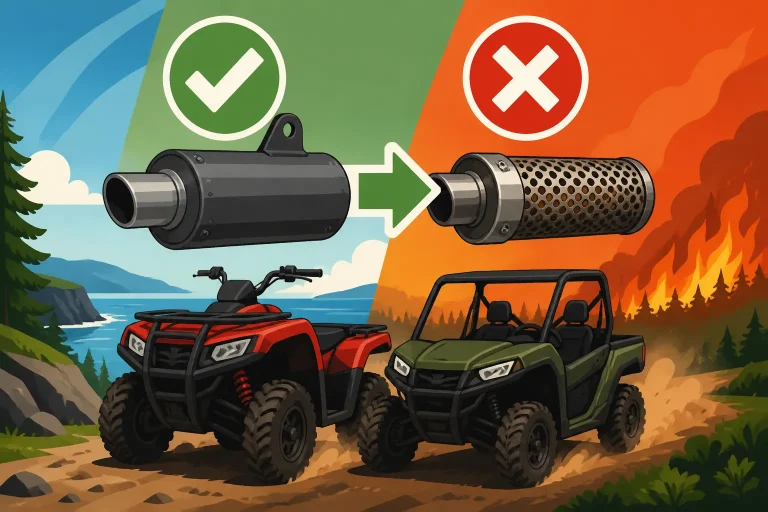
A campfire is not the only possible source of risk. A hot exhaust or other machine component can come into contact with combustible material when you stop. Choose a clear, stable place to park, and do not leave a running or recently used machine unattended in dry vegetation. If conditions are very dry or wind is picking up, consider postponing any activity involving an open flame.
Pack for a plan that does not depend on a fire. Bring food that can be eaten without cooking, suitable layers for changing weather, and a way to communicate or navigate if your route takes you beyond reliable service. These steps are helpful on any remote ride and become especially important when fire restrictions make your original plans impractical.
The key is to treat the season dates as a starting point, not a decision tool by themselves. Labrador’s later opening offers a calendar difference, not a blanket exemption from fire rules, access restrictions or changing conditions. Confirm the current rules for your destination, check again before the ride, and adjust your plans when the conditions call for it.
Disclaimer
This article is for general informational purposes only and does not constitute professional advice. Laws, prices and regulations vary by location and change over time. Consult a qualified professional for guidance on your specific situation.